

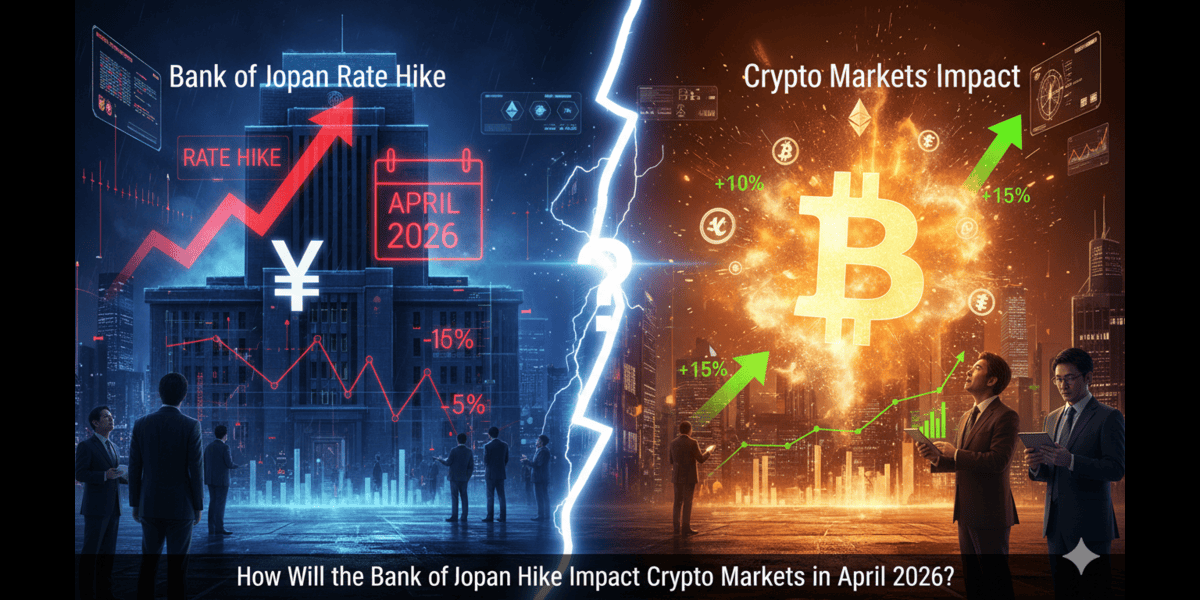
The potential Bank of Japan rate hike crypto impact is looming large over the digital asset market as the central bank is expected to raise interest rates to 1% as early as April 2026. This move, following a previous hike to 0.75% in January 2026, signals a definitive end to decades of ultra-loose monetary policy and threatens to unwind the massive “yen carry trade” that has historically supported risk assets. This guide analyzes the projected liquidity squeeze, historical price drawdowns for Bitcoin, and whether concurrent U.S. Federal Reserve cuts can cushion the blow.
Why Is the Bank of Japan Tightening Policy in 2026?
The Bank of Japan (BoJ) is shifting its monetary strategy to combat domestic inflation and stabilize the currency. The expected hike to 1% in April 2026 is a continuation of the tightening cycle that began earlier in the year.
- January 2026 Hike: The BoJ already raised rates to 0.75%, signaling to global markets that the era of “free money” in Japan is over.
- April 2026 Projection: Economists predict a further increase to 1%, which would effectively increase the cost of borrowing Yen—a currency often used to fund purchases of higher-yielding assets like Bitcoin and Ethereum.
How Does the “Yen Carry Trade” Unwind Crash Crypto Prices?
The primary mechanism driving the bearish sentiment is the unwinding of the yen carry trade. For years, investors have borrowed Japanese Yen at near-zero interest rates to buy high-growth, risk-on assets. When the BoJ raises rates, this strategy becomes expensive, forcing a massive sell-off.
- Liquidity Squeeze: As borrowing costs rise, the Yen strengthens against the dollar. Traders are forced to sell their liquid assets (Bitcoin, XRP, Solana) to repay their Yen-denominated loans, draining liquidity from the crypto market.
- Projected Downside: Analysts from Bank of America Global Research warn that if the April hike proceeds, Bitcoin could face an immediate 4% to 5% decline.
- Price Targets: This sell pressure could potentially push Bitcoin prices down toward the $60,000 support level, testing the resolve of the ongoing bull market.
What Do Historical Precedents Tell Us About BoJ Hikes?
History confirms that BoJ policy shifts are often bearish catalysts for the cryptocurrency sector. Previous tightening cycles have coincided with significant percentage drops in Bitcoin’s value.
- March 2024: Immediately after the BoJ ended its negative interest rate policy, Bitcoin dropped roughly 23% as markets adjusted to the new liquidity reality.
- July 2024: A surprise rate hike to 0.25% triggered a violent sell-off, sending Bitcoin tumbling from approximately $65,000 to $50,000—a massive 23-25% drop within days.
- January 2026: The recent hike to 0.75% resulted in a more modest but immediate 3% dip, proving that the market remains highly sensitive to Japanese monetary policy.
Can U.S. Federal Reserve Cuts Offset the Damage?
While the outlook appears bearish due to Japan’s tightening, there is a potential counterbalance. The U.S. Federal Reserve is concurrently expected to implement interest rate cuts throughout 2026.
- Policy Divergence: While Japan is pulling liquidity out (tightening), the U.S. may be injecting liquidity in (loosening).
- Dollar Liquidity: If the Fed cuts rates aggressively, it could weaken the dollar and inject enough global liquidity to partially cushion the impact of a stronger Yen, preventing a total market collapse.
Frequently Asked Questions
1. Why does a Bank of Japan rate hike cause Bitcoin to fall?
A Bank of Japan rate hike increases the cost of borrowing Yen. Since many institutional traders borrow cheap Yen to buy crypto (the yen carry trade), higher rates force them to sell their crypto holdings to pay back their loans, creating immense selling pressure and driving prices down.
2. How low could Bitcoin go if the BoJ raises rates to 1% in April 2026?
Analysts project that a hike to 1% could trigger a 4% to 5% decline in Bitcoin prices in the short term. Depending on broader market conditions, this liquidity crunch could push Bitcoin down to test major support levels around $60,000.
3. Will the yen carry trade unwinding affect Ethereum and other altcoins?
Yes, the yen carry trade unwinding affects all risk assets, not just Bitcoin. In fact, Ethereum and smaller altcoins often experience even higher volatility and steeper percentage drops than Bitcoin during liquidity squeezes, as traders rush to exit their riskiest positions first.
Conclusion
The expected Bank of Japan rate hike to 1% in April 2026 represents a critical liquidity event for the global cryptocurrency market. While U.S. Federal Reserve cuts may offer some relief, historical data from 2024 and Jan 2026 clearly indicates that tightening Japanese monetary policy triggers volatility and price drawdowns. Investors should remain vigilant, monitoring the Yen exchange rate and preparing for potential downside risk as the “easy money” from Japan dries up.
Disclaimer: The information provided is not trading advice, Bitcoinworld.co.in holds no liability for any investments made based on the information provided on this page. We strongly recommend independent research and/or consultation with a qualified professional before making any investment decisions.
