

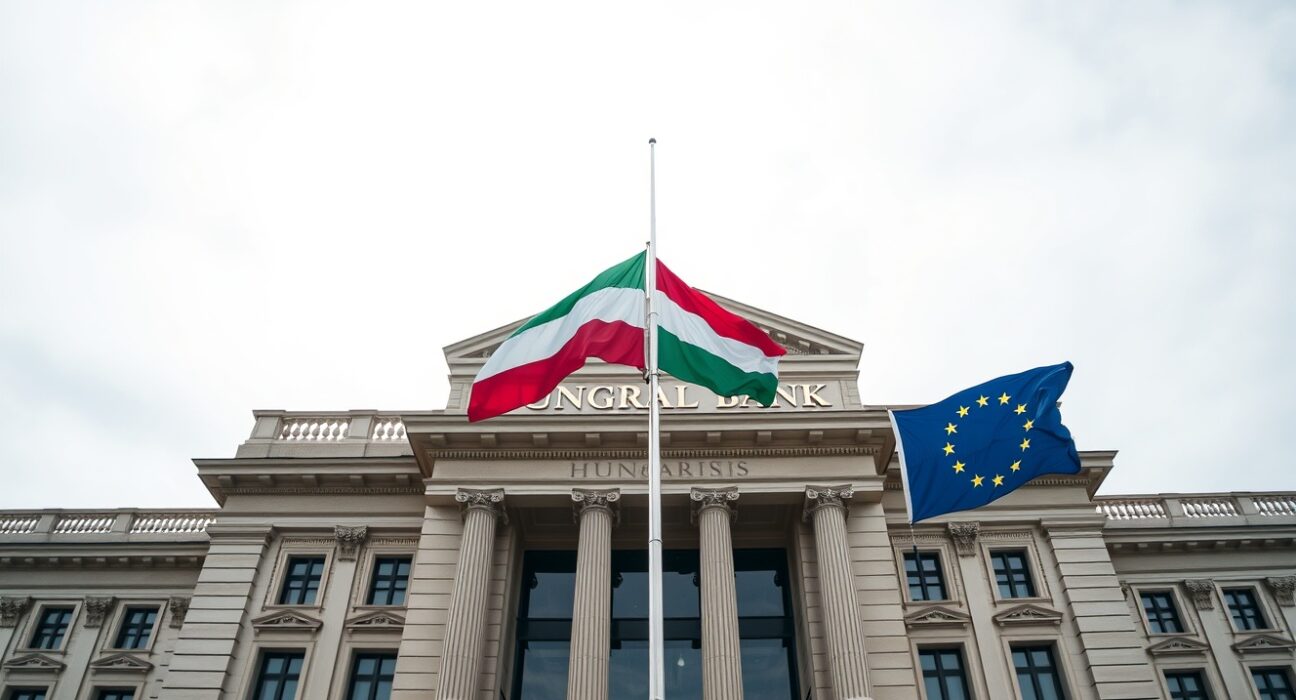
Hungary’s central bank, the Magyar Nemzeti Bank (MNB), has issued a decisive statement emphasizing that Hungary euro adoption requires careful preparation. This announcement arrives amid renewed debates about the country’s eventual transition from the forint to the euro. The bank’s leadership insists that rushing the process without proper economic groundwork could undermine national stability.
Why Hungary Euro Adoption Requires Careful Preparation
The central bank’s position is rooted in a thorough analysis of past EU expansions. Hungary must meet the Maastricht criteria before joining the eurozone. These criteria include low inflation, sustainable public finances, stable exchange rates, and long-term interest rate convergence. Currently, Hungary’s inflation rate remains above the EU average. This gap creates a significant hurdle. The MNB argues that premature adoption would lock Hungary into a monetary policy that does not fit its economic cycle.
Key Maastricht Criteria for Hungary
- Price stability: Inflation must not exceed 1.5% above the three best-performing EU states.
- Sound public finances: Government deficit below 3% of GDP; debt below 60% of GDP.
- Exchange rate stability: Forint must stay within the ERM II band for two years without devaluation.
- Convergence of interest rates: Long-term rates must not exceed 2% above the three best-performing states.
Hungary’s public debt currently stands at approximately 75% of GDP. This figure exceeds the 60% threshold. The central bank’s careful preparation strategy involves reducing this debt burden first. Without this step, joining the eurozone could strain the country’s fiscal autonomy.
The Economic Context Behind the Central Bank’s Warning
Hungary has used the forint since 1946. The currency provides independent monetary policy tools. The MNB can adjust interest rates to control inflation or stimulate growth. Adopting the euro would transfer this power to the European Central Bank (ECB). This loss of control is a central concern. The MNB’s careful preparation plan includes building economic resilience to withstand ECB decisions that may not favor Hungary’s unique needs.
Recent economic data supports the bank’s caution. Hungary’s GDP growth slowed to 1.2% in 2024. Meanwhile, the EU average grew at 1.8%. The forint has also experienced volatility against the euro. In 2024, the exchange rate fluctuated between 380 and 410 forints per euro. Such instability complicates the ERM II requirement. The central bank’s careful preparation timeline may span several years to stabilize these metrics.
Comparative Economic Indicators: Hungary vs. Eurozone Average
| Indicator | Hungary (2024) | Eurozone Average |
|---|---|---|
| Inflation Rate | 5.8% | 2.4% |
| Public Debt (% of GDP) | 75% | 90% |
| GDP Growth | 1.2% | 1.8% |
| Unemployment | 4.3% | 6.5% |
This table illustrates the divergences. Hungary’s inflation is more than double the eurozone average. However, its unemployment rate is lower. The central bank’s careful preparation strategy must balance these disparities. A one-size-fits-all monetary policy could harm Hungary’s labor market gains.
Political and Public Opinion on Hungary Euro Adoption
Public sentiment in Hungary remains divided. A 2024 poll by the Publicus Institute found that 52% of Hungarians support euro adoption. Yet, 38% oppose it, citing national pride and fear of price increases. The central bank’s careful preparation message resonates with cautious citizens. They remember the price hikes in other EU states after adopting the euro. For example, Slovakia saw a 15% increase in food prices within two years of joining in 2009.
Political leadership also influences the timeline. Prime Minister Viktor Orbán has been skeptical of deeper EU integration. His government has not set a target date for euro adoption. The MNB’s careful preparation stance aligns with this political reality. It avoids creating false expectations. The bank focuses on technical readiness rather than political deadlines.
Timeline of Hungary’s Euro Adoption Discussions
- 2004: Hungary joins the EU but retains the forint. Initial target for euro adoption is 2008–2010.
- 2008: Global financial crisis delays plans. Hungary receives an IMF bailout.
- 2015: Government declares no target date. Focus shifts to economic convergence.
- 2023: Inflation peaks at 25%. Euro adoption discussions resurface.
- 2025: MNB reiterates careful preparation as essential.
This timeline shows a pattern of delay. Each economic shock resets the timeline. The central bank’s careful preparation approach now emphasizes structural reforms over quick fixes.
Expert Perspectives on the Central Bank’s Strategy
Economists broadly support the MNB’s cautious stance. Dr. Anna Kovács, an economist at the Central European University, states, “Rushing euro adoption without meeting the criteria invites instability. The MNB’s careful preparation is a responsible position.” She points to Greece’s experience. Greece joined the eurozone in 2001 with manipulated data. The result was a debt crisis a decade later. Hungary must avoid this trap.
Another expert, Dr. Péter Szalai from the Hungarian Academy of Sciences, adds, “The forint provides a shock absorber. During crises, Hungary can devalue its currency to boost exports. Losing this tool requires alternative mechanisms.” The central bank’s careful preparation plan includes developing fiscal buffers. These buffers would replace the exchange rate as a safety valve.
Impacts of Delayed Euro Adoption on Hungarian Businesses
Hungarian businesses face uncertainty due to the lack of a clear adoption date. Exporters benefit from a weaker forint. However, importers suffer from higher costs. The central bank’s careful preparation message offers predictability. It signals that adoption will happen only when conditions are right. This reduces speculative behavior in currency markets.
Foreign investors also watch closely. A clear roadmap for euro adoption could increase foreign direct investment (FDI). Currently, Hungary attracts about €6 billion in FDI annually. Comparatively, Poland attracts €12 billion despite also not adopting the euro. The MNB’s careful preparation strategy could boost investor confidence. It demonstrates fiscal discipline and long-term planning.
Comparing Hungary’s Path to Other EU States
Several EU states have adopted the euro after careful preparation. Slovenia joined in 2007 after meeting all criteria. Its inflation rate was 2.5% at the time. Slovakia followed in 2009 with a debt-to-GDP ratio of 28%. These examples show that preparation works. Hungary’s current debt ratio of 75% is higher than both. The central bank’s careful preparation involves reducing this ratio to sustainable levels.
In contrast, states like Croatia joined in 2023 with a debt ratio of 70%. Croatia’s inflation was 4.2% at adoption. Hungary’s inflation is still higher. The MNB’s careful preparation timeline may extend beyond 2028. This timeline allows for gradual convergence without shock therapy.
Conclusion
Hungary’s central bank has made its position clear: Hungary euro adoption requires careful preparation. The MNB’s focus on economic fundamentals over political expediency ensures a stable transition. By meeting the Maastricht criteria, building fiscal buffers, and managing public expectations, Hungary can adopt the euro without risking its economic sovereignty. This strategy protects businesses, investors, and citizens alike. The path to the euro is not a race. It is a journey that demands patience and precision.
FAQs
Q1: What is the main reason Hungary’s central bank insists on careful preparation for euro adoption?
The central bank argues that premature adoption without meeting the Maastricht criteria could destabilize the economy. High inflation and public debt levels require correction first.
Q2: How long will Hungary’s careful preparation for euro adoption take?
There is no fixed timeline. Experts estimate 3–5 years of sustained convergence. The process depends on inflation control, debt reduction, and exchange rate stability.
Q3: What are the Maastricht criteria for euro adoption?
The criteria include price stability, sound public finances, exchange rate stability, and long-term interest rate convergence. Hungary currently fails on inflation and debt thresholds.
Q4: Will Hungary lose control over its monetary policy by adopting the euro?
Yes. The European Central Bank would set interest rates for Hungary. This loss of autonomy is a key reason for the central bank’s careful preparation approach.
Q5: How does public opinion in Hungary view euro adoption?
A 2024 poll shows 52% support adoption, while 38% oppose it. Concerns include price increases and loss of national identity. The central bank’s careful preparation message addresses these fears.
Disclaimer: The information provided is not trading advice, Bitcoinworld.co.in holds no liability for any investments made based on the information provided on this page. We strongly recommend independent research and/or consultation with a qualified professional before making any investment decisions.
