

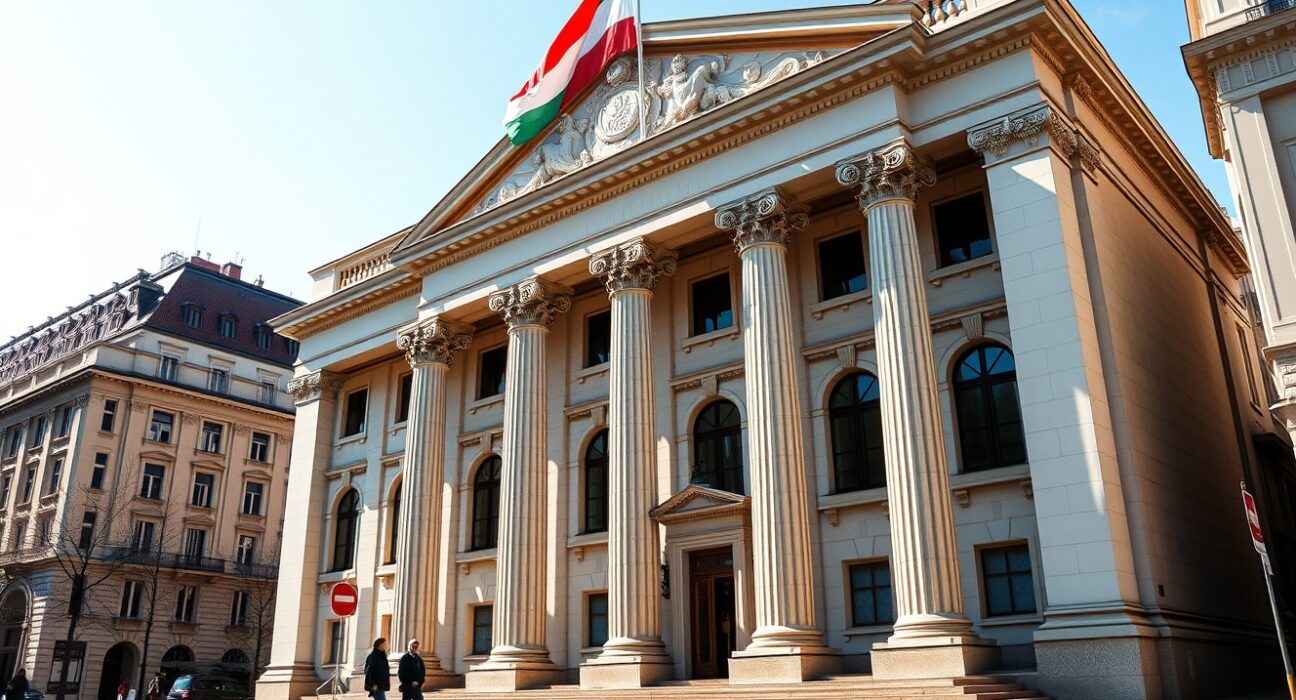
BUDAPEST, March 2025 – Hungary’s unexpectedly low inflation rate presents significant complications for the National Bank of Hungary’s monetary policy path, creating what economists describe as a “policy conundrum” for central bankers navigating post-pandemic economic normalization. Recent data shows inflation has fallen below the central bank’s target band, forcing monetary authorities to balance competing priorities in their rate-setting decisions.
Hungary’s Inflation Landscape Creates Policy Challenges
The Hungarian National Bank faces mounting pressure as inflation metrics continue their downward trajectory. According to the latest statistical releases, Hungary’s consumer price index registered at just 2.8% year-over-year in February 2025. This figure represents a substantial decline from the double-digit inflation experienced during 2022-2023. Consequently, the current rate sits well below the central bank’s 3.0% ± 1 percentage point target range.
Monetary policymakers now confront difficult decisions regarding interest rate adjustments. Traditionally, central banks lower rates to stimulate economic activity during periods of low inflation. However, Hungary’s situation contains additional complexities. The country maintains relatively high policy rates compared to regional peers, creating what analysts term a “policy normalization gap.”
Historical Context and Regional Comparisons
Hungary’s inflation journey over the past decade reveals significant volatility. The country experienced deflationary pressures in 2014-2015, followed by moderate inflation until the pandemic disruption. Post-2021, Hungary witnessed some of Europe’s highest inflation rates, peaking at 25.7% in March 2023. This extreme volatility complicates current policy decisions, as the central bank must consider both recent history and forward-looking projections.
Regional comparisons highlight Hungary’s unique position. Neighboring countries exhibit varied inflation patterns:
- Poland: 3.2% inflation with gradual rate cuts
- Czech Republic: 2.5% inflation amid cautious easing
- Romania: 4.1% inflation maintaining higher rates
- Slovakia: 2.9% inflation with Eurozone alignment pressures
These divergent paths demonstrate the complex regional economic landscape influencing Hungary’s monetary policy decisions.
Economic Analysis of Hungary’s Rate Path Complications
Multiple factors contribute to Hungary’s current monetary policy dilemma. First, core inflation measures excluding volatile food and energy prices show persistent moderation. Second, domestic demand remains subdued despite fiscal stimulus measures. Third, external factors including European Central Bank policy and global commodity prices create additional uncertainty.
The National Bank of Hungary’s baseline deposit rate currently stands at 6.25%. Market participants expected more aggressive easing given the inflation trajectory. However, central bank communications emphasize caution, citing several risk factors:
- Exchange rate volatility potential
- Wage growth exceeding productivity gains
- Services inflation persistence
- Geopolitical uncertainties affecting energy markets
These considerations create what economists call a “reaction function asymmetry” – the central bank responds more cautiously to disinflation than to inflationary surprises.
Expert Perspectives on Policy Trade-offs
Financial institutions including ING Bank provide regular analysis of Hungary’s monetary policy challenges. Their research highlights the delicate balance between supporting economic growth and maintaining price stability. According to their latest assessment, the National Bank of Hungary faces three primary policy options:
| Policy Option | Advantages | Risks |
|---|---|---|
| Aggressive Rate Cuts | Stimulates investment and consumption | Currency depreciation and imported inflation |
| Gradual Normalization | Maintains policy credibility and stability | Restricts economic recovery momentum |
| Extended Pause | Allows more data assessment time | Market uncertainty and communication challenges |
Market participants currently price in a gradual approach, with 75-100 basis points of easing expected through 2025. However, this projection remains data-dependent and subject to revision based on monthly inflation prints.
Structural Factors Influencing Hungary’s Monetary Policy
Beyond cyclical considerations, structural elements shape Hungary’s inflation dynamics and policy responses. The country’s economic transformation since the 1990s created specific characteristics affecting price stability. These include high levels of foreign currency denominated debt, significant foreign direct investment in export-oriented manufacturing, and unique demographic trends.
Additionally, Hungary’s monetary policy framework underwent substantial evolution. The central bank transitioned from direct inflation targeting to a more flexible approach incorporating financial stability considerations. This evolution reflects lessons from previous crises and aligns with global central banking trends toward integrated policy frameworks.
Energy dependency represents another crucial factor. Hungary imports approximately 85% of its natural gas and 65% of its oil requirements. Consequently, global energy price fluctuations transmit rapidly to domestic inflation. Recent diversification efforts including nuclear expansion and renewable investments aim to reduce this vulnerability over the medium term.
Transmission Mechanism Effectiveness
The effectiveness of Hungary’s monetary policy transmission faces ongoing assessment. Research indicates several channels operate with varying strength:
- Interest Rate Channel: Moderately effective with some bank lending rate stickiness
- Exchange Rate Channel: Highly effective given open capital account
- Credit Channel: Constrained by high household debt levels
- Expectations Channel: Improving with enhanced central bank communication
These transmission characteristics influence how rate changes affect the real economy and inflation outcomes. Policymakers must consider these mechanics when designing their policy path.
Forward-looking Scenarios and Economic Implications
Several scenarios could unfold for Hungary’s inflation and rate path in coming quarters. The baseline projection assumes gradual disinflation continues, allowing measured policy normalization. Alternative scenarios include potential inflation reacceleration from wage pressures or external shocks. Conversely, deeper disinflation could necessitate more aggressive easing.
The economic implications extend beyond monetary policy. Fiscal authorities face constraints from European Union deficit rules while supporting growth. Businesses require policy predictability for investment decisions. Households benefit from lower borrowing costs but face real income pressures from moderate nominal wage growth.
International institutions including the International Monetary Fund and European Commission provide regular assessments of Hungary’s economic outlook. Their analyses emphasize the importance of coordinated policy approaches combining monetary, fiscal, and structural measures. Specifically, they recommend continued progress on energy diversification, labor market reforms, and productivity-enhancing investments.
Market Reactions and Investor Sentiment
Financial markets closely monitor Hungary’s policy developments. The forint exchange rate exhibits sensitivity to interest rate differentials and risk sentiment. Government bond yields reflect inflation expectations and credit risk assessments. Equity markets respond to growth prospects influenced by monetary conditions.
Recent market pricing suggests investors anticipate cautious normalization. Forward rate agreements indicate expectations for gradual easing through 2025-2026. Credit default swap spreads remain contained, reflecting moderate perceived sovereign risk. These market signals provide real-time assessment of policy credibility and economic outlook.
Conclusion
Hungary’s low inflation environment presents genuine complications for the National Bank of Hungary’s rate path decisions. Monetary policymakers must navigate between supporting economic recovery and maintaining price stability amid structural transformations and external uncertainties. The current policy conundrum reflects broader challenges facing central banks in post-pandemic normalization periods. Future decisions will significantly influence Hungary’s economic trajectory, requiring careful calibration of multiple factors. Ultimately, Hungary’s inflation management and rate path will serve as important case studies for emerging market monetary policy in volatile global conditions.
FAQs
Q1: What is Hungary’s current inflation rate?
Hungary’s consumer price inflation registered at 2.8% year-over-year in February 2025, below the central bank’s 3.0% ± 1 percentage point target range.
Q2: Why does low inflation complicate Hungary’s rate decisions?
Low inflation typically suggests room for rate cuts to stimulate growth, but Hungary must balance this against currency stability risks, persistent services inflation, and the need to normalize from previously high rates.
Q3: What is the National Bank of Hungary’s current policy rate?
The central bank’s baseline deposit rate stands at 6.25% as of March 2025, following a series of cuts from the peak of 13% reached in late 2022.
Q4: How does Hungary’s inflation compare to neighboring countries?
Hungary’s inflation is slightly below Poland’s 3.2% and Romania’s 4.1%, but similar to the Czech Republic’s 2.5% and Slovakia’s 2.9%, creating diverse regional monetary policy approaches.
Q5: What factors could cause Hungary’s inflation to reaccelerate?
Potential reacceleration drivers include stronger-than-expected wage growth, renewed energy price shocks, exchange rate depreciation, or more robust domestic demand recovery than currently projected.
Disclaimer: The information provided is not trading advice, Bitcoinworld.co.in holds no liability for any investments made based on the information provided on this page. We strongly recommend independent research and/or consultation with a qualified professional before making any investment decisions.
