

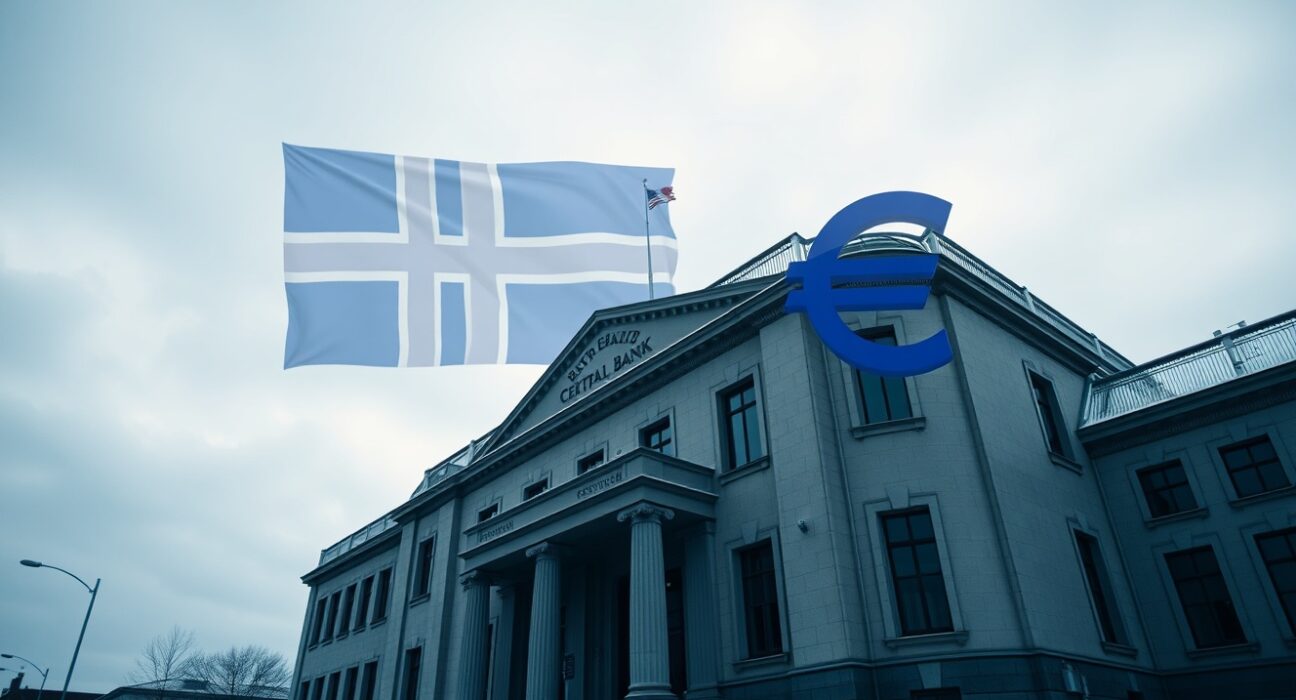
A newly released government report has cast doubt on the long-held assumption that Iceland’s independent currency, the króna, is a net positive for the nation’s economy. The comprehensive analysis, commissioned by the Ministry of Finance and Economic Affairs, concludes that the costs associated with maintaining a separate currency may now outweigh the benefits, reigniting a long-dormant debate about potential euro adoption or other monetary alternatives.
Key Findings of the Report
The report, compiled over 18 months by a panel of economists and policy experts, identifies several key areas where the króna imposes significant economic costs. These include high transaction costs for international trade, persistent exchange rate volatility that deters foreign direct investment, and elevated interest rates that the central bank must maintain to control inflation and defend the currency. The analysis suggests that these factors collectively reduce Iceland’s GDP growth by an estimated 0.5 to 1.0 percent annually.
While the króna has historically been viewed as a crucial tool for independent monetary policy—allowing Iceland to devalue during crises, such as the 2008 financial collapse—the report argues that this flexibility comes at a steep price. It notes that the benefits of an independent currency have diminished as Iceland’s economy has become more integrated with the European Union through the European Economic Area (EEA) agreement, which already requires the country to adopt a significant portion of EU economic regulations.
Historical Context and Political Sensitivity
The debate over Iceland’s currency is deeply rooted in national identity and sovereignty. The króna has been a symbol of independence since Iceland gained full sovereignty from Denmark in 1944. Previous attempts to discuss euro adoption have been politically toxic, with polls consistently showing strong public opposition. However, the current government report, authored by a panel that includes former central bank officials, carries significant weight and may signal a shift in elite opinion.
Iceland’s experience during the 2008 financial crisis is central to this discussion. The country’s ability to let the króna plummet helped exports recover and tourism boom, but it also caused a sharp drop in living standards for ordinary Icelanders. The report acknowledges this trade-off but argues that in an era of globalized finance, the costs of currency volatility are increasingly borne by households and small businesses, not just large exporters.
What This Means for Icelandic Households and Businesses
For the average Icelander, the report’s findings could have tangible implications. If the government were to move toward a more stable currency arrangement, such as adopting the euro unilaterally or joining a formal currency union, consumers could benefit from lower interest rates on mortgages and car loans, reduced prices on imported goods, and greater certainty when traveling abroad. For businesses, particularly those involved in export and import, eliminating exchange rate risk would simplify planning and reduce hedging costs.
However, critics warn that losing the króna would mean surrendering control over monetary policy to the European Central Bank, which sets interest rates based on the needs of the entire eurozone, not just Iceland. This could leave Iceland without a key tool to respond to asymmetric shocks, such as a collapse in tourism or a natural disaster.
Conclusion
The government report does not make a formal recommendation to abandon the króna, but it sets the stage for a more evidence-based conversation. It calls for further research into alternative monetary frameworks, including a potential Nordic currency union or a managed peg to the euro. For now, the political will to change Iceland’s monetary regime remains uncertain. But the report’s publication marks a significant moment in the country’s economic policy discourse, one that could influence future governments and potentially reshape Iceland’s relationship with the global financial system.
FAQs
Q1: What is the main conclusion of the government report on Iceland’s currency?
The report concludes that the costs of maintaining an independent króna—such as high transaction costs, exchange rate volatility, and elevated interest rates—may now outweigh the benefits for Iceland’s economy, potentially reducing annual GDP growth by 0.5 to 1.0 percent.
Q2: Could Iceland actually adopt the euro without joining the EU?
Technically, yes. A country can unilaterally adopt the euro without being a full EU member, as Kosovo and Montenegro have done. However, this would mean Iceland would have no formal say in European Central Bank policy decisions, which is a major political and economic consideration.
Q3: How does the króna affect everyday Icelanders?
The króna’s volatility directly impacts the cost of imported goods, mortgage interest rates (which are often tied to central bank rates), and the value of savings. A weaker króna makes foreign travel and imports more expensive, while a stronger króna benefits consumers but can hurt exporters like the fishing and tourism industries.
Disclaimer: The information provided is not trading advice, Bitcoinworld.co.in holds no liability for any investments made based on the information provided on this page. We strongly recommend independent research and/or consultation with a qualified professional before making any investment decisions.
