

NEW DELHI, October 2024 – India has launched a bold national strategy to capture over $200 billion in artificial intelligence infrastructure investment within the next four years, positioning the South Asian nation as a critical node in the rapidly evolving global AI computing landscape. This aggressive push, announced by IT Minister Ashwini Vaishnaw at the AI Impact Summit, represents one of the most substantial government-led AI investment initiatives worldwide, signaling India’s determination to move beyond its traditional software services role into high-value AI infrastructure and applications.
India’s Comprehensive AI Infrastructure Investment Strategy
The Indian government’s approach combines multiple policy instruments designed to attract global capital and technology. Minister Vaishnaw outlined a comprehensive package during his summit address, attended by senior executives from OpenAI, Google, and Anthropic. The strategy specifically targets three primary investment categories: data center infrastructure, semiconductor manufacturing and supply chains, and supporting systems for AI computing.
Already, U.S. technology giants have committed approximately $70 billion to expand their AI and cloud infrastructure in India. Amazon, Google, and Microsoft have announced significant data center expansions across multiple Indian states. These commitments provide a foundational platform for India’s broader $200 billion target. The government’s pitch emphasizes India’s unique combination of scale advantages, competitive operating costs, and increasingly favorable policy frameworks.
The Policy Framework Driving Investment
India’s investment attraction strategy rests on several key policy pillars implemented over the past year. The government has introduced long-term tax relief specifically for export-oriented cloud services, creating financial incentives for companies establishing AI infrastructure with regional or global service capabilities. Additionally, New Delhi has launched a ₹100 billion (approximately $1.1 billion) government-backed venture program targeting high-risk technology areas including AI and advanced manufacturing.
Earlier this month, the government extended significant regulatory benefits to deep-tech companies. The qualification period for startup status increased to 20 years, while the revenue threshold for accessing startup-specific benefits rose to ₹3 billion (about $33 million). These changes specifically address the longer development cycles and capital requirements of AI and deep-tech ventures. “We have seen venture capitalists committing funds for deep-tech startups,” Vaishnaw noted during a press briefing. “We have seen commitments for big solutions, major applications, and further research in cutting-edge models.”
Expanding Compute Capacity and Infrastructure
Central to India’s AI infrastructure investment strategy is the dramatic expansion of shared computing capacity under the IndiaAI Mission. The government currently operates approximately 38,000 graphics processing units (GPUs) through its shared infrastructure program. Minister Vaishnaw announced plans to add 20,000 additional units in the coming weeks, representing a significant capacity increase for research institutions, startups, and smaller enterprises.
The compute expansion strategy addresses a critical bottleneck in AI development: access to sufficient processing power for training and running sophisticated models. By providing shared infrastructure, India aims to democratize AI development beyond well-funded corporations. This approach mirrors successful models in other technology sectors where shared infrastructure has accelerated innovation ecosystems.
| Investment Category | Projected Amount | Primary Focus Areas |
|---|---|---|
| Core AI Infrastructure | $183 billion | Data centers, chips, supporting systems |
| Deep-Tech & Applications | $17 billion | AI software, specialized applications, research |
| Existing Commitments | $70 billion | Big Tech expansions (included in $183B) |
Moving Up the AI Value Chain
While the majority of projected investment targets physical infrastructure, approximately $17 billion aims to capture higher-value segments of the AI ecosystem. This portion focuses on deep-tech development and AI applications across sectors including healthcare, agriculture, education, and financial services. The bifurcated investment strategy recognizes that infrastructure alone cannot guarantee technological leadership; applications and intellectual property represent critical value capture opportunities.
India’s application-focused investment aligns with its established strengths in software development and digital services. The country already hosts numerous AI startups addressing local and global challenges, from agricultural optimization to language processing for India’s diverse linguistic landscape. Government support through the venture program and regulatory benefits aims to accelerate this existing momentum.
Addressing Structural Challenges and Execution Risks
India’s ambitious AI infrastructure investment timeline faces significant implementation challenges. Energy-intensive data centers require reliable power supplies and substantial water resources for cooling systems. These requirements intersect with India’s broader infrastructure development priorities and environmental considerations. Minister Vaishnaw acknowledged these challenges directly, noting the government’s awareness of pressure on power and water resources.
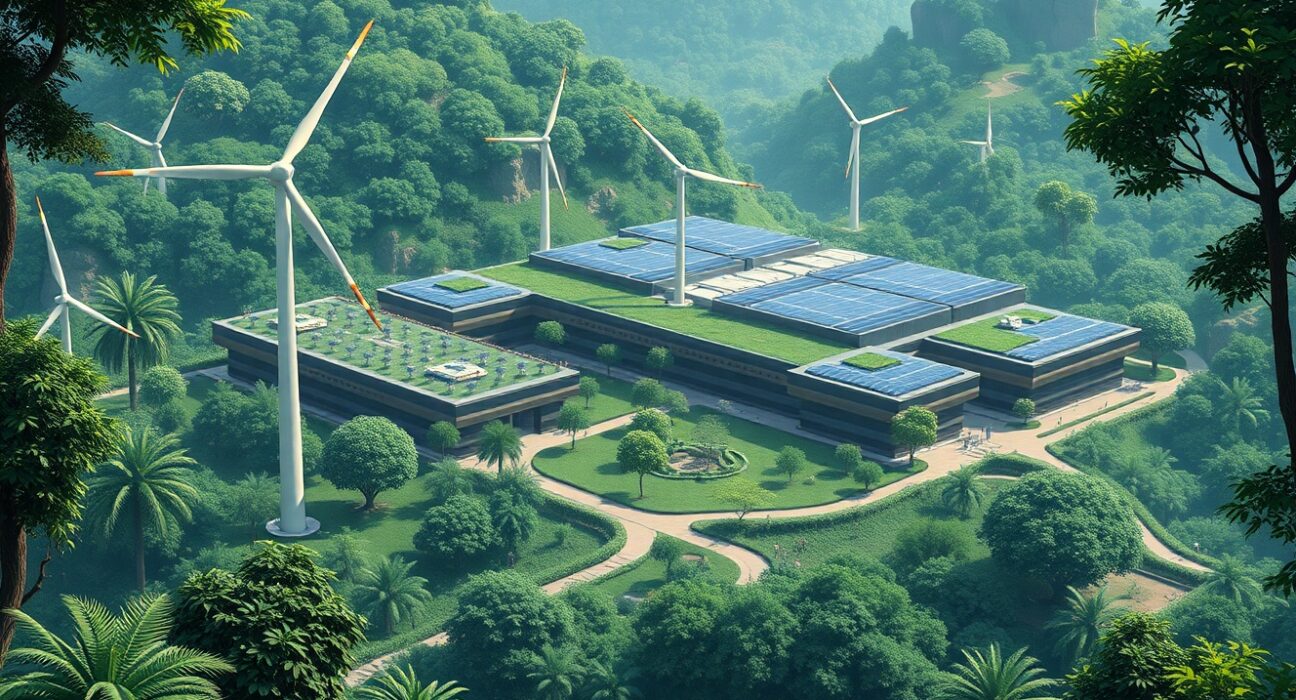
The government points to India’s evolving energy mix as a potential advantage. More than half of India’s installed generation capacity now comes from clean sources including solar, wind, and hydroelectric power. This renewable energy foundation could position India favorably as global technology companies increasingly prioritize sustainable operations and environmental, social, and governance (ESG) criteria in their investment decisions.
Key implementation challenges include:
- Power Infrastructure: Ensuring reliable electricity supply for energy-intensive data centers
- Water Resources: Managing cooling requirements amid regional water scarcity
- Regulatory Coordination: Aligning national and state-level policies and approvals
- Talent Development: Expanding specialized workforce for AI infrastructure operations
Global Context and Competitive Landscape
India’s AI infrastructure investment initiative unfolds against a backdrop of intensifying global competition for AI leadership. Multiple nations have announced substantial AI investment programs, creating a competitive environment for capital, talent, and strategic partnerships. The United States continues to lead in AI research and development funding, while China maintains significant government-backed AI initiatives. European Union countries have collectively committed substantial resources through coordinated programs.
India’s strategy distinguishes itself through several unique elements. The country offers massive scale potential with its population of 1.4 billion and rapidly digitizing economy. Cost advantages remain significant compared to many developed markets. Perhaps most importantly, India presents itself as a politically stable alternative in an increasingly fragmented global technology landscape, appealing to companies seeking geographic diversification of their AI infrastructure.
The Second Phase: Research and Diffusion
Looking beyond initial infrastructure development, Minister Vaishnaw outlined preparations for a second phase of India’s AI Mission. This subsequent stage will emphasize research and development, innovation acceleration, and broader diffusion of AI tools across the economy. The government plans to expand shared compute capacity further while developing specialized programs for AI research institutions and applied innovation centers.
This phased approach recognizes that sustainable AI leadership requires continuous advancement beyond initial infrastructure establishment. By sequencing investments from foundational infrastructure to advanced research, India aims to build a self-reinforcing AI ecosystem where infrastructure enables innovation, which in turn drives demand for more sophisticated infrastructure.
Conclusion
India’s $200 billion AI infrastructure investment target represents a strategic national commitment to position the country at the forefront of global artificial intelligence development. Through coordinated policy measures, financial incentives, and infrastructure expansion, New Delhi aims to transform India from a consumer and applications market into a foundational AI computing hub. The success of this ambitious initiative will depend on effective execution across multiple dimensions including energy infrastructure, regulatory coordination, and talent development. As global AI competition intensifies, India’s scale advantages and policy commitment could reshape the geography of AI infrastructure investment, with implications for technology development patterns worldwide. The coming years will determine whether India can translate its ambitious vision into tangible AI leadership, capturing value across the entire artificial intelligence ecosystem from chips to applications.
FAQs
Q1: What specific incentives is India offering to attract AI infrastructure investment?
India is implementing a multi-pronged incentive package including long-term tax relief for export-oriented cloud services, a ₹100 billion government-backed venture program targeting AI and advanced manufacturing, extended startup benefits for deep-tech companies (20-year qualification period), and increased revenue thresholds for accessing startup-specific benefits.
Q2: How much AI infrastructure investment has India already secured?
U.S. technology giants including Amazon, Google, and Microsoft have committed approximately $70 billion to expand AI and cloud infrastructure in India. These commitments form part of the broader $200 billion target and provide a foundation for additional investment attraction efforts.
Q3: What are the main components of India’s AI infrastructure expansion?
The expansion focuses on three primary areas: data center infrastructure development, semiconductor manufacturing and supply chain enhancement, and supporting systems for AI computing. Additionally, the government is expanding shared compute capacity through its IndiaAI Mission, adding 20,000 GPUs to the existing 38,000-unit infrastructure.
Q4: What challenges does India face in implementing its AI infrastructure plans?
Key challenges include ensuring reliable power supply for energy-intensive data centers, managing water resources for cooling systems, coordinating regulatory approvals across national and state levels, and developing sufficient specialized talent for AI infrastructure operations and maintenance.
Q5: How does India’s clean energy capacity factor into its AI infrastructure strategy?
With more than half of its installed generation capacity coming from clean sources, India positions its renewable energy foundation as a competitive advantage. This aligns with global technology companies’ increasing emphasis on sustainable operations and could make India particularly attractive for environmentally conscious AI infrastructure investment.
Disclaimer: The information provided is not trading advice, Bitcoinworld.co.in holds no liability for any investments made based on the information provided on this page. We strongly recommend independent research and/or consultation with a qualified professional before making any investment decisions.
