

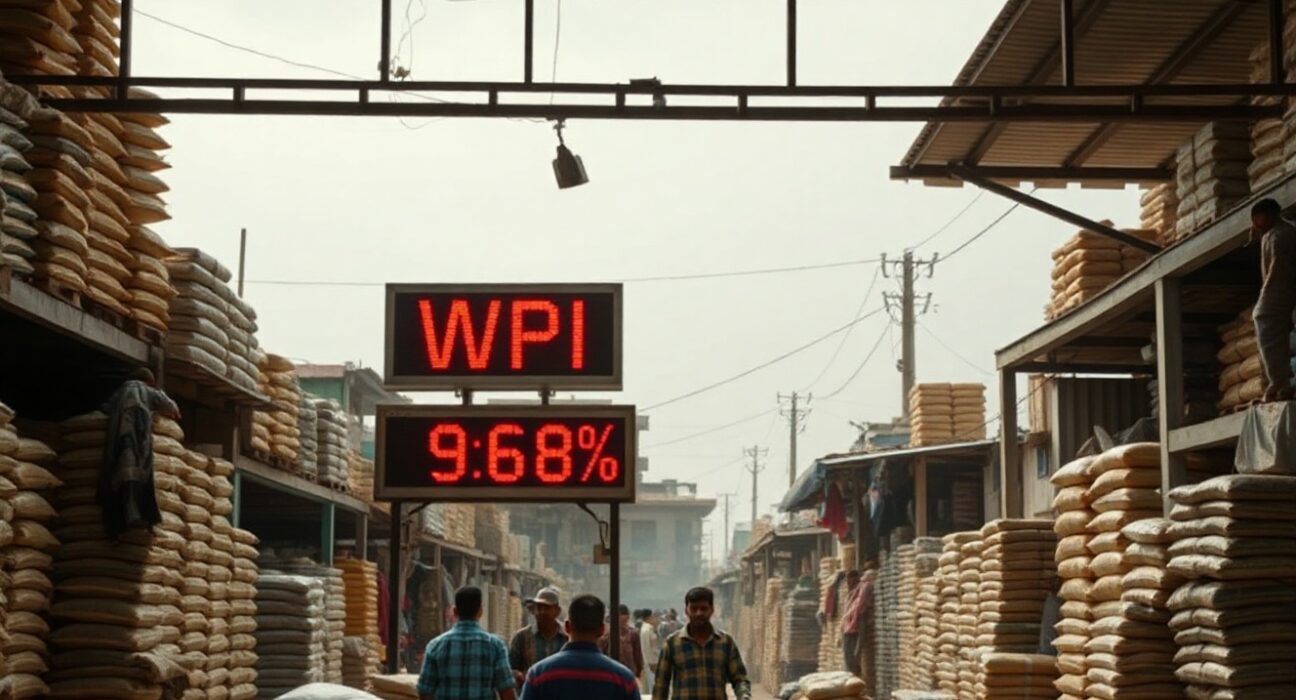
India’s wholesale price index (WPI)-based inflation surged to 9.68% in May, marking a sharp acceleration from the 8.94% recorded in April. The data, released by the Ministry of Commerce and Industry, reflects persistent price pressures in fuel and manufactured goods, even as retail inflation showed signs of moderation.
Key Drivers Behind the Spike
The primary contributors to the May WPI inflation were the fuel and power group, which rose 14.8% year-on-year, and manufactured products, which climbed 9.2%. Food articles, while slightly easing from previous months, remained elevated at 7.1%. The data underscores the ongoing cost-push pressures in the economy, largely stemming from global crude oil volatility and supply chain constraints.
Context and Implications
This is the highest WPI inflation reading since January 2025, when the index touched 9.87%. The divergence between wholesale and retail inflation — the consumer price index (CPI) stood at 6.3% in May — continues to signal that producers are facing higher input costs that have not yet been fully passed on to consumers. For businesses, this margin squeeze could affect profitability, while for policymakers, it complicates the Reserve Bank of India’s (RBI) monetary policy stance.
Impact on Monetary Policy
The RBI, which has held its key repo rate steady at 6.5% since February 2024, now faces renewed pressure. While the central bank primarily targets CPI inflation, sustained high WPI often feeds into retail prices over time. Analysts suggest that a rate cut in the near term is unlikely, especially with core inflation remaining sticky. The May WPI data reinforces the view that the RBI will maintain a cautious, data-dependent approach.
Conclusion
The acceleration in India’s WPI inflation to 9.68% in May signals that price pressures in the wholesale economy remain entrenched. With fuel and manufacturing costs driving the increase, the outlook for both producers and consumers warrants close monitoring. The RBI’s next policy decision, scheduled for August, will be closely watched for any shift in tone or stance.
FAQs
Q1: What is the Wholesale Price Index (WPI)?
WPI measures the average change in prices of goods at the wholesale level. It is a key indicator of inflationary trends in the economy, particularly for producers and businesses.
Q2: Why is WPI inflation higher than CPI inflation in India?
WPI includes a higher weightage for manufactured goods and fuel, while CPI gives more weight to food and services. In May, fuel and manufacturing costs rose sharply, pushing WPI higher than CPI.
Q3: How does WPI inflation affect consumers?
While WPI directly impacts producers, sustained high wholesale inflation often leads to higher retail prices over time as businesses pass on increased costs to consumers.
Disclaimer: The information provided is not trading advice, Bitcoinworld.co.in holds no liability for any investments made based on the information provided on this page. We strongly recommend independent research and/or consultation with a qualified professional before making any investment decisions.
