

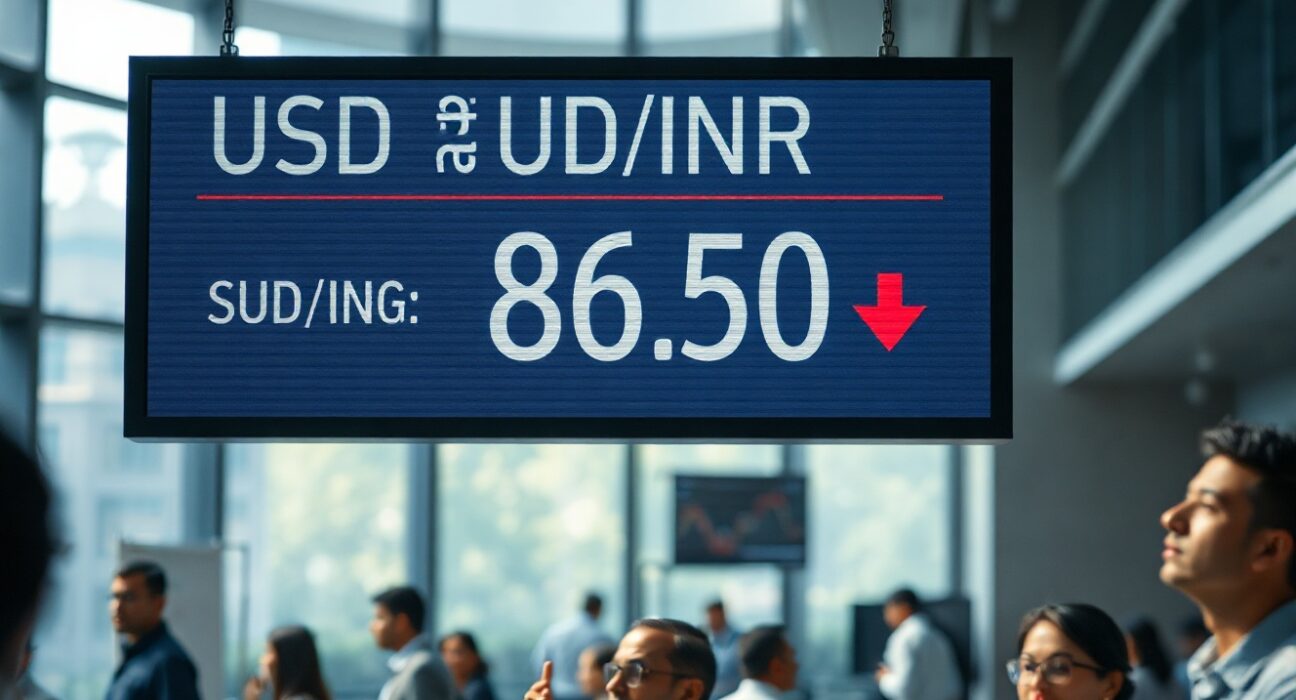
The Indian rupee continues to face depreciation pressure against the US dollar, even as the domestic economy enjoys a rare convergence of favorable factors — robust GDP growth, strong foreign institutional investor (FII) inflows, and a relatively stable current account. The currency’s inability to capitalize on these tailwinds has raised questions about structural vulnerabilities and the effectiveness of the Reserve Bank of India’s (RBI) intervention strategy.
Why the Rupee Is Struggling Despite Strong Fundamentals
India’s macroeconomic fundamentals have rarely looked this resilient. The country recorded GDP growth of over 7% in the last fiscal year, one of the fastest among major economies. FII inflows into equities and debt have been robust, reflecting global investor confidence in India’s growth story. Additionally, the current account deficit remains manageable, and forex reserves are comfortably above $600 billion.
Yet, the rupee has been one of the worst-performing Asian currencies in recent months, depreciating nearly 3% against the dollar since the start of the year. Analysts point to a combination of global and domestic factors that are offsetting the positives.
Key headwinds include:
- Strong US dollar: The Federal Reserve’s hawkish stance and higher-for-longer interest rates have kept the dollar index elevated, putting pressure on all emerging market currencies.
- RBI’s intervention strategy: The central bank has been actively intervening in the forex market to prevent excessive volatility, but its approach of smoothing rather than defending a specific level has allowed a gradual depreciation.
- Crude oil prices: India imports over 80% of its oil needs, and any uptick in crude prices widens the trade deficit, adding to rupee weakness.
- Capital outflows from bonds: Despite strong equity inflows, foreign investors have been net sellers in the bond market, partly due to global rate differentials.
Market Implications and Outlook
The rupee’s decline has implications for importers, consumers, and policymakers. A weaker rupee makes imports more expensive, contributing to imported inflation, particularly for oil, electronics, and machinery. This could force the RBI to maintain a tighter monetary policy stance, potentially impacting growth.
For exporters, the depreciation provides a competitive edge, especially in IT, pharmaceuticals, and textiles. However, the net impact on the economy remains mixed.
Looking ahead, the rupee’s trajectory will depend on several factors:
- Federal Reserve policy: Any signal of rate cuts could weaken the dollar and provide relief to the rupee.
- RBI’s forex strategy: The central bank may allow further gradual depreciation to support exports while managing volatility.
- Domestic inflation: If inflation remains under control, the RBI may have more room to support the currency.
- Global risk appetite: Geopolitical tensions and global trade dynamics will influence capital flows.
What This Means for Investors and Consumers
For investors holding dollar-denominated assets, the rupee’s fall is a positive, boosting returns when converted back to rupees. For those planning overseas travel, education, or medical expenses, the weakening rupee means higher costs. Import-dependent businesses, including electronics retailers and automobile manufacturers, may face margin pressure.
Conclusion
The Indian rupee’s decline despite strong tailwinds underscores the complex interplay of global and domestic forces. While the economy’s fundamentals remain strong, the currency’s trajectory will be shaped by external factors like the US dollar’s strength and crude oil prices, as well as the RBI’s policy choices. For now, the rupee is likely to remain under pressure, with gradual depreciation being the most probable path. Policymakers and investors alike will need to navigate this environment with a focus on managing risks rather than expecting a quick reversal.
FAQs
Q1: Why is the Indian rupee falling when the economy is doing well?
The rupee is under pressure primarily due to a strong US dollar, RBI’s intervention strategy that allows gradual depreciation, and external factors like crude oil prices. Strong GDP growth and FII inflows are positive but are being offset by these headwinds.
Q2: Will the RBI step in to stop the rupee from falling?
The RBI is actively intervening to manage volatility but has not signaled an intent to defend a specific level. Its approach is to smooth excessive fluctuations rather than prevent gradual depreciation, which can support exports.
Q3: How does a weaker rupee affect the common person?
A weaker rupee makes imported goods more expensive, including oil, electronics, and machinery. This can lead to higher inflation, impacting household budgets. It also makes overseas travel, education, and medical expenses costlier.
Disclaimer: The information provided is not trading advice, Bitcoinworld.co.in holds no liability for any investments made based on the information provided on this page. We strongly recommend independent research and/or consultation with a qualified professional before making any investment decisions.
