

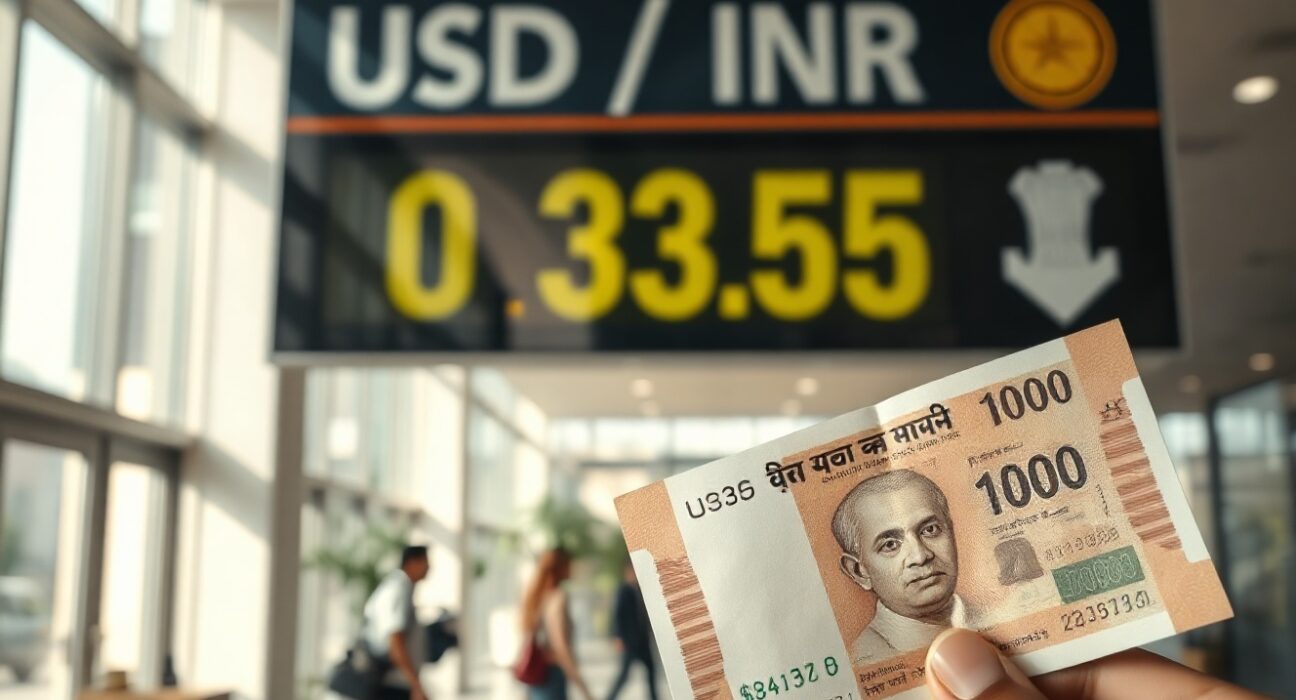
The Indian Rupee edged higher against the US dollar on Tuesday, defying renewed geopolitical uncertainty in the Middle East as market participants turned their attention to upcoming US inflation data. The currency traded in a narrow band, supported by expectations that the Reserve Bank of India (RBI) may step in to curb excessive volatility.
Geopolitical Headwinds and Rupee Resilience
Escalating tensions in the Middle East, particularly involving Iran and Israel, have historically weighed on emerging market currencies. However, the Rupee’s relative stability this week suggests that markets are pricing in a limited direct impact on India’s trade and energy imports. India sources a significant portion of its crude oil from the region, but strategic petroleum reserves and diversified import sources have provided a buffer.
Foreign portfolio outflows, which had pressured the Rupee in recent weeks, have also shown signs of moderation. Data from the National Securities Depository Limited (NSDL) indicates that foreign investors have turned net buyers in Indian debt markets over the past three sessions, providing additional support to the currency.
US CPI Data: The Next Catalyst
The primary focus for currency markets this week is the release of the US Consumer Price Index (CPI) for February, scheduled for Wednesday. A higher-than-expected reading could reinforce the Federal Reserve’s hawkish stance, potentially pushing the dollar higher and capping the Rupee’s gains. Conversely, a softer print may revive expectations of rate cuts later this year, weakening the dollar and providing further room for the Rupee to appreciate.
Economists polled by Reuters expect the headline CPI to rise 0.4% month-on-month, with the core figure increasing by 0.3%. Any deviation from these forecasts is likely to trigger immediate volatility in USD/INR pair.
Impact on Indian Importers and Exporters
A stronger Rupee benefits importers, particularly those in the oil, electronics, and machinery sectors, by reducing their input costs. For exporters, especially in the IT and textile industries, a firmer currency can compress margins. The current level around 83.50 per dollar is seen as a comfortable zone for both sides, but a sustained move below 83.00 could prompt intervention from the RBI to prevent excessive appreciation that might hurt export competitiveness.
Conclusion
The Indian Rupee’s recent gains reflect a combination of improving domestic fundamentals, reduced portfolio outflows, and a wait-and-see approach ahead of key US data. While Middle East risks remain a wildcard, the near-term trajectory will likely be dictated by the US CPI print and the subsequent repricing of Fed rate expectations. Traders should brace for increased volatility in the USD/INR pair through the end of the week.
FAQs
Q1: Why is the Indian Rupee gaining despite Middle East tensions?
The Rupee is benefiting from reduced foreign portfolio outflows, expectations of RBI intervention, and a temporary reprieve in oil price spikes as markets assess that the conflict may not severely disrupt India’s energy supplies.
Q2: How does US CPI data affect the Indian Rupee?
The US CPI influences the Federal Reserve’s interest rate decisions. A higher CPI suggests tighter policy, strengthening the dollar and weakening the Rupee. A lower CPI may lead to rate cut expectations, weakening the dollar and supporting the Rupee.
Q3: What is the RBI’s role in managing the Rupee?
The Reserve Bank of India intervenes in the forex market through dollar sales or purchases to prevent excessive volatility. It aims to maintain an orderly movement in the currency rather than targeting a specific level.
Disclaimer: The information provided is not trading advice, Bitcoinworld.co.in holds no liability for any investments made based on the information provided on this page. We strongly recommend independent research and/or consultation with a qualified professional before making any investment decisions.
