

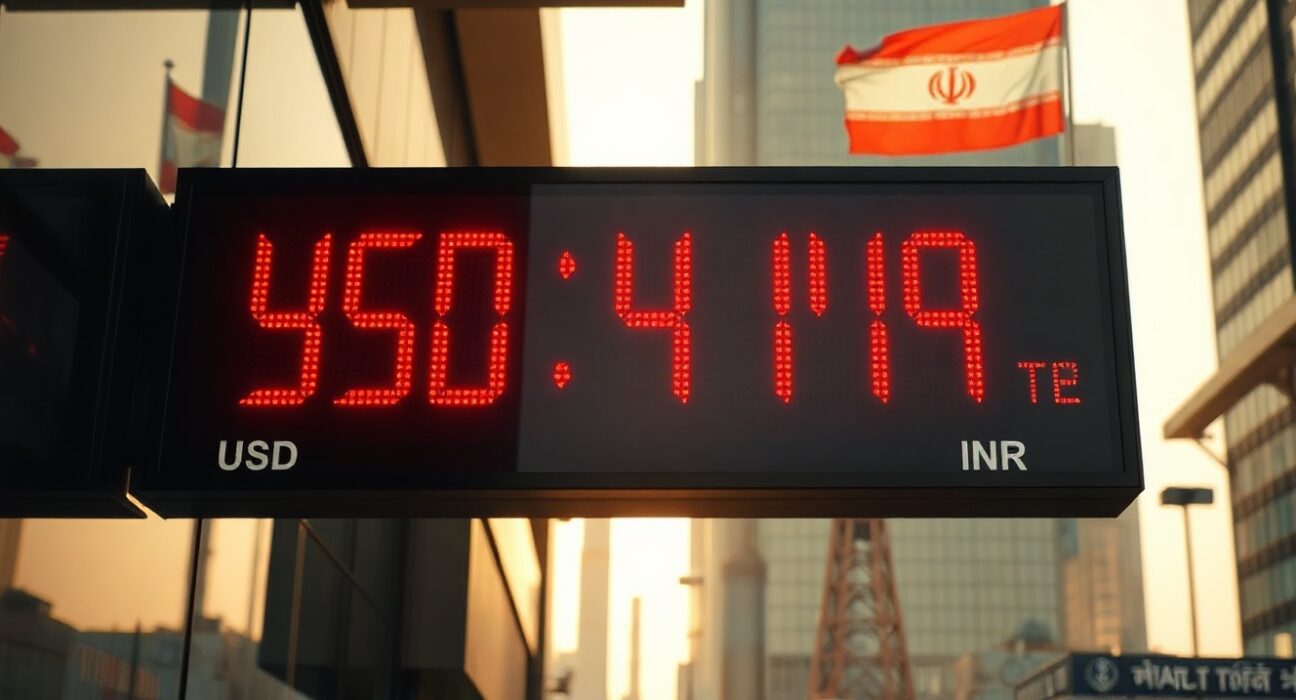
The Indian rupee struggled to extend its recent recovery against the US dollar on Wednesday, as renewed uncertainty surrounding the US-Iran nuclear deal triggered a fresh wave of risk aversion in global markets. The currency gave up early gains to trade near the 83.50 mark against the greenback, reflecting persistent headwinds from geopolitical tensions and elevated crude oil prices.
Geopolitical Jitters Weigh on Emerging Market Currencies
Reports emerged late Tuesday that negotiations between Washington and Tehran had hit a fresh impasse, with key disagreements over uranium enrichment limits and sanctions relief remaining unresolved. The development dampened hopes for a swift diplomatic resolution, sending Brent crude futures above $85 per barrel. For India, the world’s third-largest oil importer, higher crude prices directly translate into a wider trade deficit and increased demand for dollars, putting downward pressure on the rupee.
The rupee had shown signs of stabilization in recent sessions, supported by expectations of foreign portfolio inflows and a softer US dollar globally. However, the latest geopolitical twist has reversed some of those gains. Traders noted that state-run banks were seen offering dollars on behalf of the Reserve Bank of India (RBI) to prevent excessive volatility, but the intervention has only slowed the pace of depreciation rather than reversing it.
Oil Prices and the Rupee’s Vulnerability
The link between crude oil prices and the Indian rupee remains one of the most critical dynamics in the currency market. Every $10 per barrel increase in oil prices adds roughly $15-18 billion to India’s annual import bill, according to analysts. With the US-Iran deal now appearing less likely in the near term, oil markets are pricing in a prolonged period of supply tightness, especially as OPEC+ maintains production cuts.
This scenario leaves the rupee particularly exposed. While the RBI has built a comfortable foreign exchange reserves buffer—currently above $600 billion—repeated interventions can only do so much if the underlying trade imbalance widens. Market participants are now watching for any signs of a shift in RBI’s currency management strategy, including potential adjustments to the rupee’s reference rate.
Broader Market Impact
The rupee’s weakness is not occurring in isolation. Other Asian currencies, including the Indonesian rupiah and the South Korean won, have also come under pressure as the dollar strengthens on safe-haven flows. However, India’s higher dependence on imported energy makes the rupee more sensitive to oil price shocks than many of its peers.
Domestic equity markets have also felt the pinch. Foreign institutional investors (FIIs) turned net sellers in the cash market on Wednesday, pulling out roughly $200 million, as the combination of a stronger dollar and higher oil prices dampened risk appetite. This selling pressure further weighs on the rupee by reducing demand for Indian assets.
Conclusion
The Indian rupee faces a challenging near-term outlook as the US-Iran deal uncertainty keeps oil prices elevated and risk sentiment fragile. While the RBI’s intervention can smooth volatility, structural factors—namely the trade deficit and energy import dependence—remain the dominant drivers. Traders will closely monitor any fresh diplomatic signals from Washington and Tehran, as well as upcoming US economic data that could influence the dollar’s broader trajectory. For now, the rupee appears stuck in a range, with upside limited until geopolitical clarity emerges.
FAQs
Q1: Why does the US-Iran deal affect the Indian rupee?
A: India is a major oil importer. Uncertainty around the US-Iran deal pushes oil prices higher, increasing India’s import bill and demand for US dollars, which weakens the rupee.
Q2: Can the RBI prevent the rupee from falling further?
A: The RBI can intervene by selling dollars from its reserves to stabilize the rupee, but this is a short-term measure. If oil prices stay high, the rupee may continue to face downward pressure.
Q3: What is the current USD/INR level?
A: As of Wednesday’s trading session, the rupee was hovering near 83.50 against the US dollar, after giving up earlier gains.
Disclaimer: The information provided is not trading advice, Bitcoinworld.co.in holds no liability for any investments made based on the information provided on this page. We strongly recommend independent research and/or consultation with a qualified professional before making any investment decisions.
