

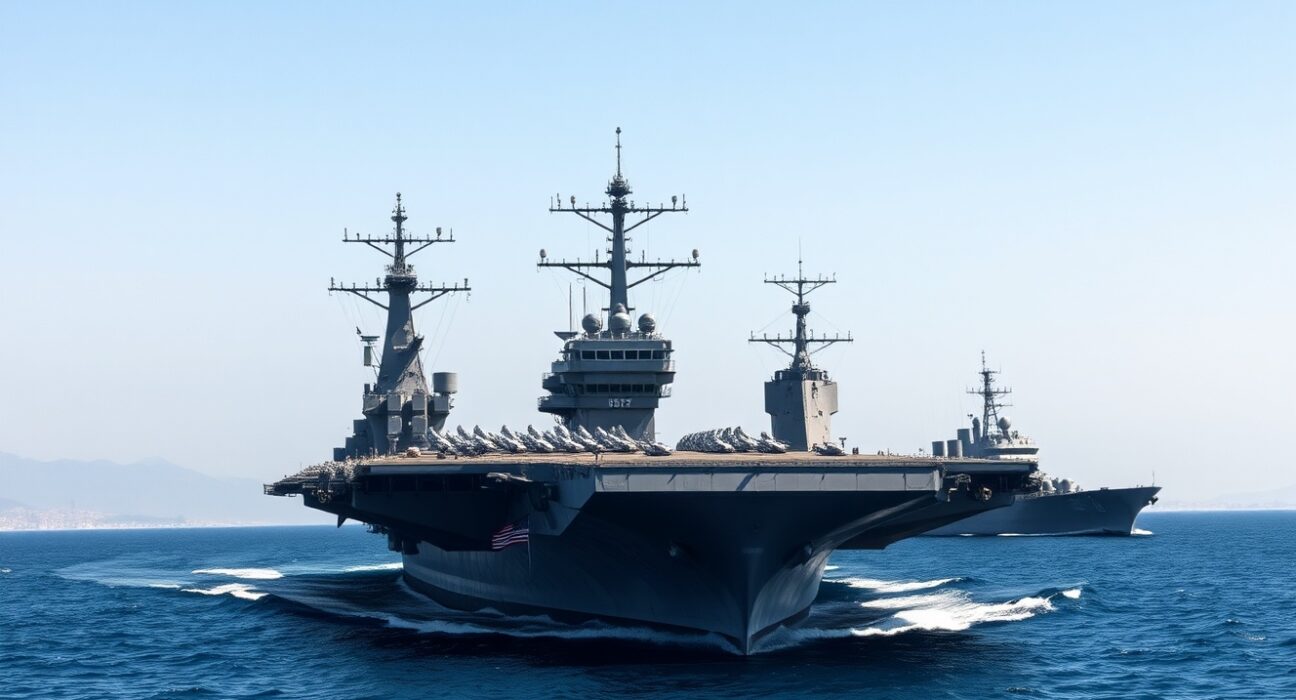
In a decisive escalation of maritime tensions, the United States Treasury Secretary has announced that the Iran blockade will continue until freedom of navigation returns to its pre-February 27 state. This bold declaration, made via social media platform X on May 1, underscores Washington’s firm grip over the Strait of Hormuz—a critical chokepoint for global oil shipments.
US Treasury Secretary Delivers Stark Warning on Iran Blockade
Scott Besant, the U.S. Treasury Secretary, outlined what he termed the “reality of the situation” in a series of pointed statements. He emphasized that the United States now holds complete control over the Strait of Hormuz, effectively blockading Iranian maritime traffic. This move, he argued, stems from Iran’s alleged blockade of information and its leadership’s refusal to engage with international norms.
According to Besant, the Iranian leadership is operating with blocked information, meaning they lack a clear picture of the economic and diplomatic pressure mounting against them. He listed several key points to support his stance: the U.S. controls the strait, Iran faces a severe shortage of hard currency (U.S. dollars), food and gasoline have moved to a rationing system, and the entire international community has turned against Iran. The blockade, he stressed, will persist until freedom of navigation is restored to its pre-February 27 state.
Strategic Implications of the Strait of Hormuz Blockade
The Strait of Hormuz, a narrow waterway between the Persian Gulf and the Gulf of Oman, handles about 20% of the world’s oil transit. Any disruption here sends shockwaves through global energy markets. The Iran blockade, therefore, carries immense geopolitical and economic weight.
Experts note that the U.S. Navy’s Fifth Fleet, based in Bahrain, has the capability to enforce such a blockade effectively. However, the legality under international maritime law remains contested. The United Nations Convention on the Law of the Sea (UNCLOS) guarantees freedom of navigation, but blockades can be justified under self-defense or UN Security Council resolutions. As of now, no such resolution explicitly backs the U.S. action.
Impact on Iran’s Economy and Domestic Stability
Inside Iran, the blockade exacerbates existing economic woes. The shortage of hard currency means Iran cannot easily import essential goods. Food and gasoline rationing, already in place, will likely tighten further. This creates a fertile ground for public discontent, which the Iranian government has historically managed through subsidies and propaganda.
Analysts at the Atlantic Council suggest that the blockade could push Iran to accelerate its nuclear program as a bargaining chip. Alternatively, it might force Tehran to negotiate from a weaker position. The pre-February 27 navigation freedom reference hints at a specific baseline—perhaps before Iran’s recent seizures of commercial vessels in the strait.
Global Oil Markets React to the Iran Blockade News
Oil prices surged by 3% within hours of Besant’s announcement. Brent crude futures jumped above $85 per barrel, while West Texas Intermediate (WTI) approached $81. Traders fear a prolonged blockade could disrupt supplies from Saudi Arabia, Iraq, Kuwait, and the UAE, all of which rely on the Strait of Hormuz for exports.
However, the U.S. has assured allies that it will maintain the flow of oil for non-Iranian vessels. This selective enforcement aims to punish Iran without triggering a global energy crisis. Nevertheless, shipping insurance premiums have already spiked, and some tanker operators are rerouting via longer, costlier paths.
| Key Impact Areas | Before Blockade | After Blockade |
|---|---|---|
| Oil Price (Brent) | $82/barrel | $85+/barrel |
| Iranian Hard Currency Reserves | Estimated $20 billion | Severely depleted |
| Strait of Hormuz Traffic | ~17 million barrels/day | Reduced by 20-30% |
International Reactions and Diplomatic Fallout
The international community’s response has been mixed. European Union foreign policy chief Josep Borrell called for de-escalation, warning that the blockade could lead to a humanitarian crisis in Iran. Russia and China, both close to Tehran, condemned the move as a violation of international law.
Conversely, Saudi Arabia and the United Arab Emirates have privately welcomed the U.S. stance, as it curbs Iranian influence in the region. Israel, too, has expressed support, viewing the blockade as a non-military way to pressure Iran’s nuclear ambitions.
Pre-February 27 Navigation Freedom: What Does It Mean?
The specific reference to “pre-February 27 navigation freedom” is intriguing. February 27, 2025, marks the date when Iran allegedly began harassing commercial vessels more aggressively. Restoring the status quo ante would mean ending Iran’s pattern of seizures and inspections, which have spiked since early 2025.
According to maritime security firm Dryad Global, Iran conducted at least 10 such incidents in March 2025 alone. The U.S. demand, therefore, is not just about ending the blockade but also about halting Iranian provocations.
Conclusion
The Iran blockade announced by U.S. Treasury Secretary Scott Besant represents a high-stakes gambit to force Tehran back to the negotiating table. By controlling the Strait of Hormuz and demanding a return to pre-February 27 navigation freedom, Washington aims to cripple Iran’s economy without direct military confrontation. However, the blockade risks escalating into a broader conflict, disrupting global oil markets and testing international alliances. As the situation unfolds, the world watches to see whether diplomacy or further coercion will prevail.
FAQs
Q1: What is the Iran blockade?
A: The Iran blockade is a U.S.-led maritime operation controlling the Strait of Hormuz, preventing Iranian vessels from freely navigating and cutting off Iran’s access to hard currency and essential imports.
Q2: Why did the US Treasury Secretary announce this blockade?
A: Scott Besant stated that the blockade is a response to Iran’s leadership operating with blocked information and its failure to restore freedom of navigation to pre-February 27 standards, which the U.S. sees as necessary for regional stability.
Q3: How does the blockade affect global oil prices?
A: The blockade has already pushed oil prices up by 3%, with Brent crude above $85 per barrel, due to fears of supply disruptions from major Gulf exporters.
Q4: What does “pre-February 27 navigation freedom” mean?
A: It refers to the state of maritime security before Iran escalated its harassment and seizures of commercial vessels in the Strait of Hormuz around February 27, 2025.
Q5: Is the blockade legal under international law?
A: The legality is contested. While UNCLOS guarantees freedom of navigation, the U.S. may argue self-defense or rely on UN Security Council authorization, though none has been granted yet.
Disclaimer: The information provided is not trading advice, Bitcoinworld.co.in holds no liability for any investments made based on the information provided on this page. We strongly recommend independent research and/or consultation with a qualified professional before making any investment decisions.
