
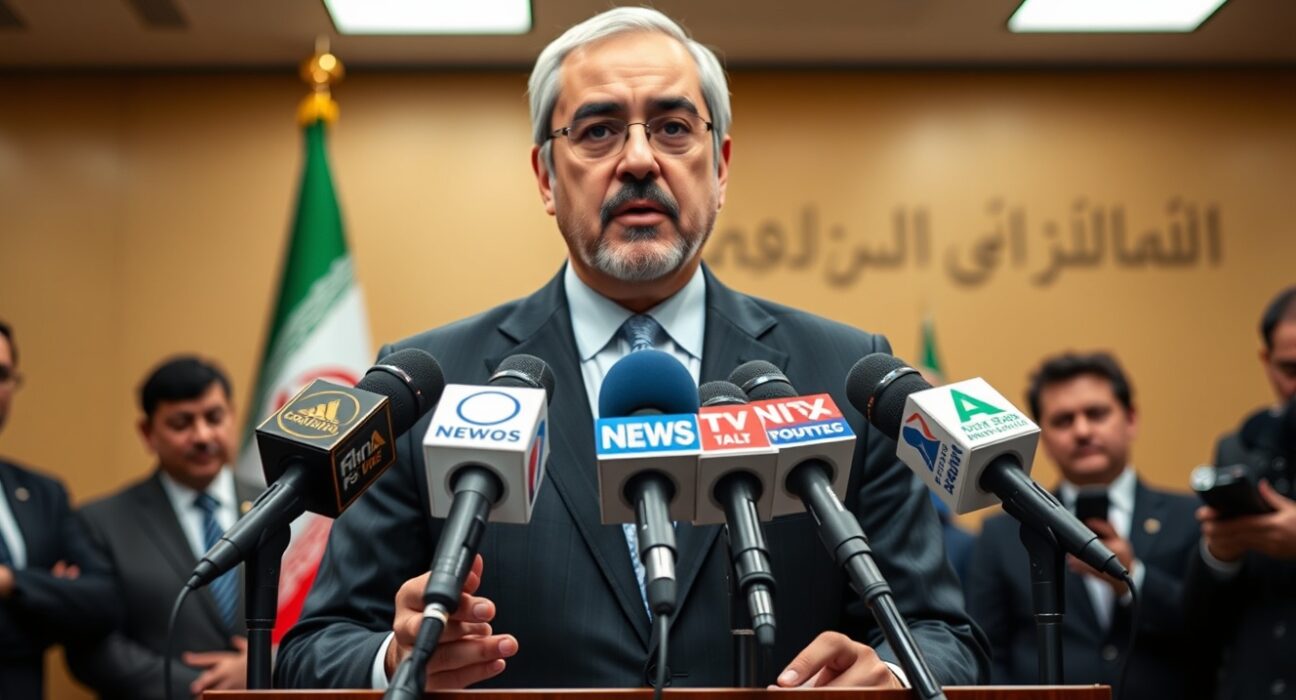
TEHRAN, Iran – March 2025: Iranian Foreign Minister Hossein Amir-Abdollahian has categorically denied recent reports suggesting direct communication with United States Special Envoy for Iran, Robert Witkoff. This denial comes amid heightened regional tensions and ongoing diplomatic efforts to address multiple security concerns. Consequently, the statement has significant implications for Middle Eastern stability and international relations. The minister’s remarks directly contradict anonymous sources cited in Western media outlets earlier this week.
Iranian Foreign Minister Denies US Communication Reports
During a press conference in Tehran on Tuesday, Minister Amir-Abdollahian addressed journalists with definitive clarity. “There has been no direct communication between myself and the American envoy,” he stated firmly. Furthermore, he emphasized that all diplomatic channels remain consistent with Iran’s established foreign policy framework. The minister specifically referenced Robert Witkoff, who assumed the special envoy role in late 2024. Additionally, Amir-Abdollahian criticized what he called “unverified leaks” designed to create false narratives about Iran’s diplomatic engagements.
The denial follows a Reuters report citing three unnamed Western diplomats claiming “backchannel discussions” had occurred. However, Iranian officials have consistently maintained that any communication with the United States must occur through established multilateral frameworks. These frameworks primarily include negotiations surrounding the Joint Comprehensive Plan of Action (JCPOA) and regional security dialogues mediated by Oman or Qatar. The timing of these reports coincides with increased military activity in the Persian Gulf and Red Sea regions.
Historical Context of Iran-US Diplomatic Relations
Understanding this denial requires examining the complex history between Tehran and Washington. Diplomatic relations have remained largely frozen since the 1979 Iranian Revolution. However, several key periods of engagement have occurred:
- 2015 Nuclear Deal: The JCPOA represented the most significant diplomatic breakthrough, involving direct negotiations between US Secretary of State John Kerry and Iranian Foreign Minister Mohammad Javad Zarif.
- 2021-2023 Vienna Talks: Indirect negotiations through European mediators attempted to revive the nuclear agreement after the US withdrawal in 2018.
- 2024 Prisoner Exchange: A carefully negotiated swap involving Qatari mediation resulted in the release of several detained citizens from both nations.
Currently, communication typically occurs through intermediaries rather than direct ministerial contact. The United States maintains its Special Envoy for Iran position specifically to coordinate policy across agencies and with international partners. Meanwhile, Iran’s diplomatic apparatus remains centralized under the Foreign Ministry, with all external communications requiring approval from Supreme National Security Council officials.
Expert Analysis of Diplomatic Signaling
Regional analysts interpret this public denial as strategic diplomatic signaling. Dr. Sanam Vakil, Director of the Middle East and North Africa Programme at Chatham House, explains the significance. “Public denials of communication serve multiple purposes in Iran-US relations,” Vakil notes. “They allow Iran to maintain its principled stance against direct engagement while potentially leaving room for verified indirect talks.” She further observes that such statements often precede actual diplomatic movements through third parties.
Additionally, the denial addresses domestic political considerations within Iran. Hardline factions consistently criticize any appearance of rapprochement with the United States. Therefore, public clarity becomes necessary for maintaining political cohesion. Conversely, the Biden administration faces its own domestic pressures regarding Iran policy, particularly from congressional opponents of renewed engagement.
Regional Security Implications and Broader Context
The communication denial occurs against a backdrop of escalating regional security challenges. Several concurrent developments increase the importance of clear diplomatic channels:
| Security Issue | Current Status | Potential for Escalation |
|---|---|---|
| Persian Gulf Navigation | Increased Iranian naval exercises | High – Commercial shipping routes affected |
| Yemen Conflict | Houthi attacks on shipping continue | Medium – Regional proxy dynamics |
| Nuclear Program | Advanced centrifuges operational | Very High – International monitoring concerns |
| Syria Presence | Iranian advisors maintain positions | Medium – Israeli strikes ongoing |
Military experts note that the absence of direct communication channels increases miscalculation risks during tense incidents. For instance, close encounters between naval vessels in congested waterways could escalate without established deconfliction protocols. Similarly, misunderstandings about military exercises or weapons tests might provoke disproportionate responses from either side.
International Reactions and Verification Challenges
International responses to the denial have varied significantly. European Union spokesperson Peter Stano expressed continued support for diplomatic engagement. “We believe dialogue remains essential for addressing regional security concerns,” Stano stated. Meanwhile, Israeli officials welcomed the apparent lack of direct communication, viewing any US-Iran engagement with suspicion regarding nuclear negotiations.
Verifying communication claims presents inherent challenges in diplomatic reporting. Intelligence agencies typically monitor diplomatic traffic, but distinguishing between direct and indirect communication proves difficult. Moreover, third-party mediators often facilitate messages without creating formal records. Consequently, conflicting reports frequently emerge before official confirmations or denials.
The United States State Department has maintained its standard position regarding Iran communications. “We do not comment on specific diplomatic exchanges,” said spokesperson Matthew Miller during a regular briefing. However, he reiterated that the US remains committed to preventing Iran from obtaining nuclear weapons and addressing its destabilizing regional activities.
Media Responsibility in Diplomatic Reporting
This incident highlights ongoing debates about media responsibility when reporting unverified diplomatic claims. Professor Lawrence Pintak, founding dean of the Edward R. Murrow College of Communication, emphasizes the stakes. “Reporting on sensitive diplomatic matters requires extraordinary verification standards,” Pintak explains. “Unverified claims about US-Iran communication can literally have life-and-death consequences given the military tensions.” He advocates for greater transparency about sourcing while protecting legitimate confidential sources.
Conclusion
The Iranian Foreign Minister’s denial of direct communication with US envoy Robert Witkoff underscores the fragile state of Iran-US relations in 2025. This development reflects broader diplomatic tensions and regional security challenges requiring careful navigation. Furthermore, the incident demonstrates how public diplomacy interacts with unverified reporting in the digital information age. Ultimately, the absence of confirmed direct channels increases risks while maintaining political positions on both sides. The international community continues monitoring for signs of indirect engagement through established mediators as regional stability concerns persist.
FAQs
Q1: Who is Robert Witkoff?
Robert Witkoff serves as the United States Special Envoy for Iran, appointed in late 2024. He coordinates US policy toward Iran across government agencies and with international partners.
Q2: Why would Iran deny communication with the US?
Iran maintains a longstanding policy against direct bilateral engagement with the United States, preferring multilateral frameworks. Public denials also address domestic political pressures from hardline factions opposed to rapprochement.
Q3: How do Iran and the US typically communicate?
Communication usually occurs through third-party mediators like Oman, Qatar, or Switzerland, or within multilateral frameworks like nuclear negotiations. These indirect channels allow necessary coordination while maintaining political positions.
Q4: What are the risks of no direct communication channels?
The primary risk is miscalculation during military incidents, particularly in congested waterways like the Persian Gulf. Without established deconfliction protocols, minor encounters could escalate unintentionally.
Q5: Has there been any recent progress in Iran-US relations?
The 2024 prisoner exchange represented limited cooperation, but broader relations remain strained over nuclear development, regional activities, and sanctions. No major diplomatic breakthroughs have occurred since the 2015 nuclear deal.
Disclaimer: The information provided is not trading advice, Bitcoinworld.co.in holds no liability for any investments made based on the information provided on this page. We strongly recommend independent research and/or consultation with a qualified professional before making any investment decisions.