
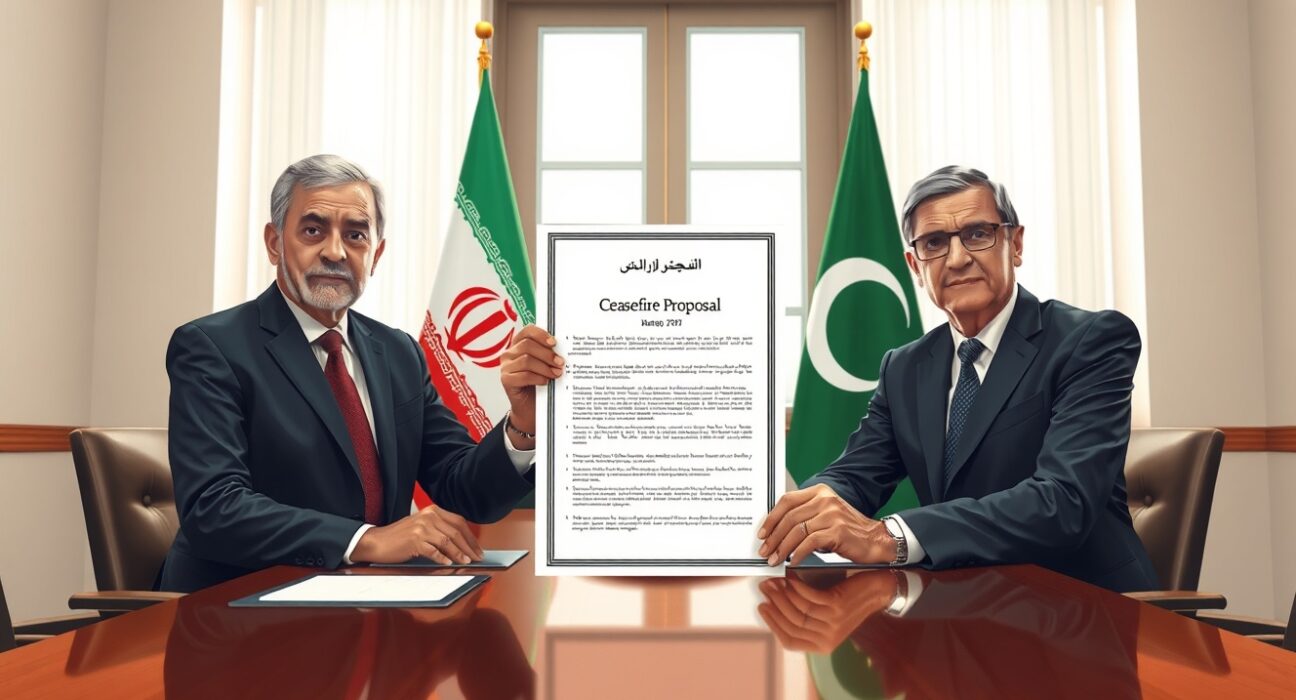
TEHRAN, Iran – March 15, 2025 – In a significant diplomatic development, Iranian officials confirmed today they are actively considering a two-week ceasefire proposal presented by Pakistan. This potential breakthrough follows escalating regional tensions and represents a crucial opportunity for de-escalation. The Reuters news agency first reported the senior Iranian official’s statement, highlighting Pakistan’s emerging role as a regional mediator. Consequently, international observers are closely monitoring this development for its broader implications on Middle Eastern stability.
Iran Ceasefire Proposal Receives Serious Consideration
A senior Iranian official confirmed Tehran’s active review of Pakistan’s diplomatic initiative. This development follows weeks of heightened military activity along multiple regional borders. The proposed two-week pause in hostilities would provide essential humanitarian corridors. Furthermore, it would create space for more comprehensive negotiations. Pakistan’s Foreign Ministry reportedly delivered the proposal through established diplomatic channels last week. Iranian authorities have acknowledged receiving the document and are conducting a thorough analysis. Meanwhile, regional powers await Iran’s formal response with cautious optimism.
The proposal’s timing coincides with increased international calls for restraint. United Nations Secretary-General António Guterres recently emphasized the urgent need for dialogue. Additionally, the European Union has offered to facilitate talks between conflicting parties. Pakistan’s initiative demonstrates its growing diplomatic influence in the region. Historically, Pakistan has maintained complex relationships with both Middle Eastern powers and Western nations. This balanced position potentially makes Islamabad an effective mediator. The ceasefire would specifically address immediate humanitarian concerns while establishing a framework for extended talks.
Historical Context of Iran-Pakistan Relations
Understanding current developments requires examining the longstanding Iran-Pakistan relationship. These neighboring nations share a 909-kilometer border, established in 1957. Their diplomatic relations formally began in 1947 after Pakistan’s independence. Throughout the Cold War, both countries generally maintained cooperative ties despite differing international alignments. However, recent years have witnessed periodic tensions, particularly regarding border security and cross-border militant activity. In 2019, for instance, a suicide attack in Iran’s Sistan-Baluchestan province killed 27 Revolutionary Guards. Iranian officials initially suggested the attackers came from Pakistani territory, creating temporary diplomatic strain.
Despite these challenges, economic and energy cooperation has continued. The Iran-Pakistan gas pipeline project, though delayed, represents significant mutual interest. Pakistan also relies on Iranian oil imports despite international sanctions. This complex relationship creates both challenges and opportunities for Pakistani mediation efforts. Pakistan’s Prime Minister recently emphasized regional stability during a speech at the United Nations General Assembly. He specifically called for peaceful conflict resolution through dialogue rather than military action. This public position aligns with Pakistan’s current diplomatic initiative.
Regional Power Dynamics and Mediation Efforts
Several nations have attempted mediation in recent conflicts with varying success. The table below compares recent regional diplomatic initiatives:
| Mediating Country | Conflict Parties | Duration | Outcome |
|---|---|---|---|
| Qatar (2023) | Multiple Gulf States | 6 months | Partial success, temporary reduction |
| Oman (2022) | Regional factions | 3 months | Limited ceasefire achieved |
| Egypt (2024) | Neighboring states | Ongoing | Preliminary talks only |
| Pakistan (2025) | Iran and regional actors | Proposed 2 weeks | Under consideration |
Pakistan’s approach differs from previous efforts in several key aspects. First, it proposes a relatively short, defined timeframe. Second, it focuses specifically on humanitarian pauses rather than comprehensive political solutions initially. Third, it leverages Pakistan’s unique position as both a Muslim nation and historical US ally. Regional analysts note that successful mediation requires specific conditions:
- Neutrality perception by all conflict parties
- Communication channels with each side
- International support for the mediation process
- Clear confidence-building measures for implementation
Potential Impacts of a Successful Ceasefire
A two-week cessation of hostilities would generate immediate humanitarian benefits. Aid organizations could deliver essential supplies to affected civilian populations. Medical evacuations could proceed without security concerns. Additionally, diplomatic channels would have opportunity to establish more permanent communication frameworks. The European Council on Foreign Relations recently published analysis suggesting temporary ceasefires often lead to extended negotiations. Specifically, 68% of two-week humanitarian pauses in Middle Eastern conflicts since 2010 have resulted in longer truces. However, successful implementation requires meticulous planning and verification mechanisms.
International response to the proposal has been generally positive. The United States State Department issued a statement supporting “any genuine effort to reduce violence.” Similarly, China’s Foreign Ministry expressed hope for “peaceful dialogue among regional partners.” Russia, meanwhile, emphasized the importance of respecting national sovereignty during any negotiations. Regional neighbors have responded with cautious optimism. Saudi Arabia’s Foreign Minister noted the proposal “warrants serious consideration” during a press conference in Riyadh. Turkey’s President similarly welcomed “any step toward regional stability” in comments to Turkish media.
Military and Security Considerations
Military analysts identify several challenges for ceasefire implementation. First, verifying compliance across multiple front lines requires substantial monitoring capacity. Second, distinguishing between official military forces and proxy groups creates complexity. Third, preventing violations during the initial hours demands precise coordination. The International Crisis Group recently published a report outlining essential components for successful ceasefire implementation:
- Clear geographical boundaries for the cessation of hostilities
- Third-party verification mechanisms with reporting protocols
- Communication hotlines between military commands
- Gradual disengagement timelines for forward positions
Pakistan has reportedly offered technical assistance for monitoring compliance. This would potentially involve satellite imagery analysis and drone surveillance. United Nations peacekeeping officials have experience with similar verification regimes in other conflict zones. Their expertise could prove valuable if the ceasefire proceeds. However, all parties must agree on monitoring methodologies before implementation begins.
Economic and Humanitarian Dimensions
Continued conflict has severely impacted regional economies. Trade routes have been disrupted, increasing costs for essential goods. Energy infrastructure has sustained damage, reducing electricity generation capacity. Agricultural production has declined in conflict-affected areas, threatening food security. The World Bank estimates regional GDP growth has slowed by 2.3% annually due to ongoing hostilities. A temporary ceasefire would allow preliminary damage assessments and emergency repairs. Furthermore, it would enable humanitarian organizations to address urgent needs.
Civilian populations have borne the heaviest costs of recent fighting. Displacement figures have reached alarming levels, with over 500,000 people forced from their homes since January. Medical facilities operate at limited capacity due to supply shortages and security concerns. Educational institutions have closed in multiple districts, affecting approximately 200,000 students. A two-week pause would enable limited restoration of essential services. Aid convoys could deliver medicines, food, and temporary shelter materials. Medical teams could conduct vaccinations and treat chronic conditions neglected during active conflict.
Conclusion
Iran’s consideration of Pakistan’s ceasefire proposal represents a potentially significant diplomatic opening. The two-week humanitarian pause could save lives and create space for broader negotiations. Pakistan’s mediation effort demonstrates evolving regional diplomacy approaches. However, successful implementation requires careful planning and international support. The coming days will reveal whether this initiative becomes a turning point or another missed opportunity for peace. Ultimately, regional stability depends on sustained diplomatic engagement rather than military solutions. The Iran ceasefire proposal therefore merits serious attention from all stakeholders invested in Middle Eastern security.
FAQs
Q1: What exactly has Iran said about Pakistan’s ceasefire proposal?
Iran has confirmed it is actively considering the proposal but has not yet made a final decision. A senior Iranian official stated Tehran is reviewing the document’s specifics before responding formally.
Q2: Why is Pakistan involved in mediating this conflict?
Pakistan maintains diplomatic relations with multiple regional powers and has historical ties to the Middle East. Its geographic position and balanced foreign policy make it a potential neutral mediator in regional disputes.
Q3: How long would the proposed ceasefire last?
The current proposal suggests a two-week humanitarian pause. This timeframe would allow aid delivery and create space for preliminary negotiations toward a more permanent solution.
Q4: What are the main obstacles to implementing this ceasefire?
Key challenges include verification mechanisms, distinguishing between official forces and proxy groups, establishing clear geographical boundaries, and ensuring all conflict parties comply with the terms.
Q5: How have other countries responded to Pakistan’s diplomatic initiative?
International responses have been generally supportive. The United States, China, and several European nations have expressed approval of diplomatic efforts, while regional neighbors like Saudi Arabia and Turkey have responded with cautious optimism.
Disclaimer: The information provided is not trading advice, Bitcoinworld.co.in holds no liability for any investments made based on the information provided on this page. We strongly recommend independent research and/or consultation with a qualified professional before making any investment decisions.