
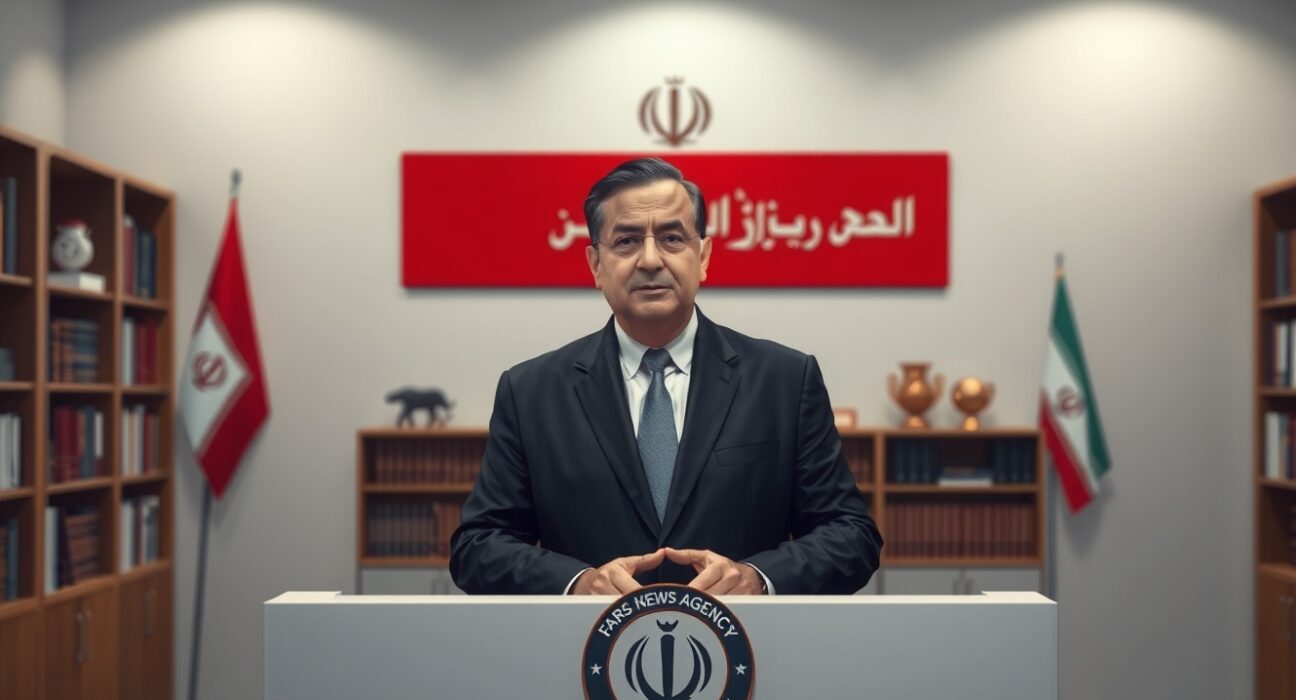
TEHRAN, Iran – March 2025: The Fars News Agency, a prominent Iranian state-affiliated media outlet, has issued a significant statement regarding diplomatic channels with the United States. According to their official declaration, there are currently no direct communications occurring between Tehran and Washington. Furthermore, the agency explicitly stated that no indirect talks are taking place through intermediaries either. This announcement comes at a crucial juncture for regional stability and ongoing international concerns about Iran’s nuclear program.
Analyzing the Fars News Agency Statement on Iran US Relations
The Fars News Agency serves as a key communication channel for Iranian government positions. Their statement about the absence of diplomatic contact carries substantial weight in international relations circles. Historically, Fars has functioned as a semi-official mouthpiece, often conveying messages that reflect the views of Iran’s political and military establishment. Consequently, analysts immediately scrutinized this declaration for its implications on broader Middle East diplomacy.
Several regional experts note that such statements typically signal official Iranian policy positions. The timing coincides with renewed discussions about the Joint Comprehensive Plan of Action (JCPOA), commonly known as the Iran nuclear deal. Additionally, ongoing tensions in the Persian Gulf and Red Sea regions make diplomatic communication particularly vital. The complete absence of channels, as reported by Fars, suggests a potentially frozen diplomatic landscape between the two nations.
Historical Context of US-Iran Diplomatic Communication
Understanding current communication breakdowns requires examining historical patterns. US-Iran relations have experienced significant volatility since the 1979 Iranian Revolution. Diplomatic ties were formally severed that year, creating a persistent communication gap. However, various administrations have established temporary channels during critical moments.
Key Historical Communication Channels
Several notable periods featured indirect or direct talks:
- 1985-1986: The Iran-Contra affair revealed covert arms-for-hostages negotiations
- 2013-2015: Intensive diplomatic efforts led to the JCPOA nuclear agreement
- 2019-2020: Limited communication through Swiss intermediaries as diplomatic protectors
- 2021-2023: Indirect Vienna talks attempting to revive the nuclear deal
The current situation, as described by Fars News Agency, represents a departure from these historical precedents. Notably, even during periods of maximum tension, some communication channels typically remained open through third parties or international organizations. The complete absence described in 2025 marks a significant escalation in diplomatic isolation.
Regional and Global Implications of Communication Breakdown
The Fars statement carries immediate consequences for Middle Eastern stability. Without communication channels, the risk of miscalculation increases substantially in several key areas:
| Area of Concern | Risk Level | Potential Consequences |
|---|---|---|
| Persian Gulf Navigation | High | Increased naval incidents without de-escalation mechanisms |
| Nuclear Program Monitoring | Critical | Reduced transparency and verification capabilities |
| Regional Proxy Conflicts | Elevated | Uncoordinated actions in Syria, Yemen, and Lebanon |
| Energy Market Stability | Moderate-High | Oil price volatility due to security concerns |
International security experts emphasize that communication channels serve as essential safety valves during crises. Former diplomats frequently describe these channels as “circuit breakers” that prevent minor incidents from escalating into major conflicts. The absence of such mechanisms, particularly between nations with substantial military capabilities in close proximity, creates inherently unstable conditions.
Expert Analysis on Diplomatic Silence
Middle East analysts offer varying interpretations of the Fars News Agency announcement. Some view it as a tactical negotiating position, while others interpret it as reflecting genuine diplomatic paralysis. Dr. Leila Rahman, a senior fellow at the Center for Strategic Studies, notes: “Such statements often precede policy shifts. The complete denial of channels could indicate either a hardening of positions or preparation for new diplomatic initiatives through unexpected avenues.”
Conversely, Professor Michael Chen of Georgetown University’s Security Studies Program suggests: “The absence of communication channels represents a dangerous normalization of non-communication. When nations stop talking entirely, they increasingly rely on assumptions about each other’s intentions, which frequently leads to miscalculation.” These expert perspectives highlight the complexity of interpreting such diplomatic signals accurately.
Potential Pathways Forward for Diplomatic Engagement
Despite the current communication void described by Fars, several potential pathways exist for re-establishing dialogue. International organizations frequently serve as neutral intermediaries during such impasses. The United Nations, particularly the Office of the Secretary-General, has historically facilitated communication between adversarial states. Similarly, regional organizations like the Gulf Cooperation Council or neutral nations like Oman and Qatar have previously hosted indirect talks.
The European Union maintains diplomatic relations with both nations, positioning it as another potential facilitator. EU foreign policy chief statements in recent months have emphasized continued commitment to diplomatic solutions regarding Iran’s nuclear program. However, the effectiveness of any intermediary depends fundamentally on both parties’ willingness to engage, which remains uncertain according to the Fars News Agency characterization.
Conclusion
The Fars News Agency statement regarding the absence of direct or indirect Iran US relations communication channels represents a significant development in Middle Eastern diplomacy. This situation increases regional instability risks while complicating international efforts to address security concerns. Historical precedents suggest that complete communication breakdowns between adversarial states rarely persist indefinitely, yet the current impasse appears particularly entrenched. Monitoring how this diplomatic silence evolves will provide crucial insights into future regional dynamics and potential conflict resolution mechanisms. The international community continues watching for signals that might indicate willingness to re-establish even minimal communication channels between Tehran and Washington.
FAQs
Q1: What is the Fars News Agency’s relationship to the Iranian government?
The Fars News Agency operates as a semi-official news organization with close ties to Iran’s Islamic Revolutionary Guard Corps. While not an official government mouthpiece, it frequently reflects establishment viewpoints and sometimes serves as a trial balloon for policy positions.
Q2: Have the United States and Iran ever had direct diplomatic relations?
The United States and Iran maintained formal diplomatic relations until the 1979 Iranian Revolution. Since that time, diplomatic ties have been severed, though various administrations have established temporary communication channels during specific crises or negotiations.
Q3: What are the main obstacles to US-Iran diplomatic communication?
Primary obstacles include disagreements over Iran’s nuclear program, regional military activities, sanctions policies, and differing interpretations of historical events. Mutual distrust and domestic political considerations in both nations further complicate communication efforts.
Q4: How do nations typically communicate without formal diplomatic relations?
Countries without formal relations often use intermediaries such as neutral third-party nations, international organizations, or backchannel communications through intelligence services. They may also communicate through multilateral forums where both parties participate.
Q5: What was the last major diplomatic communication between the US and Iran?
The most significant recent diplomatic engagement involved indirect talks in Vienna from 2021-2023 aimed at reviving the 2015 nuclear deal. Since those talks stalled, communication has reportedly been minimal and primarily focused on prisoner exchanges through Swiss intermediaries.
Disclaimer: The information provided is not trading advice, Bitcoinworld.co.in holds no liability for any investments made based on the information provided on this page. We strongly recommend independent research and/or consultation with a qualified professional before making any investment decisions.