
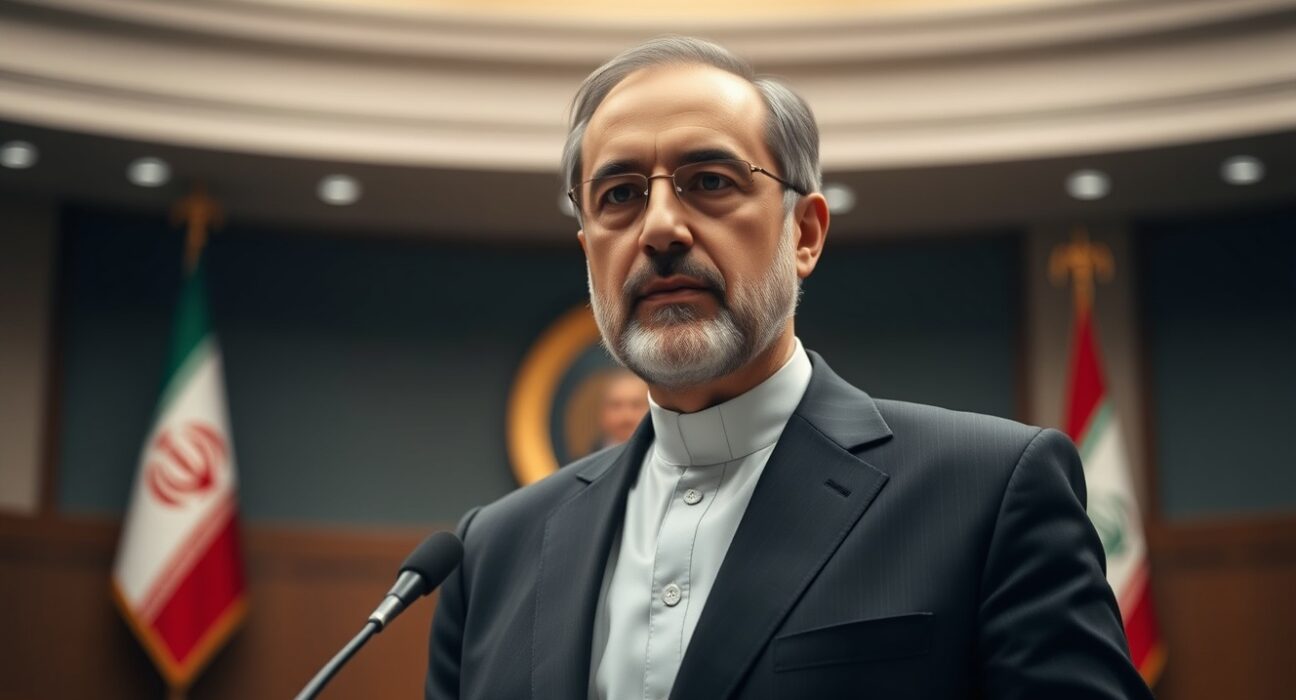
TEHRAN, Iran – Iranian media outlets have issued a firm and categorical denial of reports suggesting Parliament Speaker Mohammad Bagher Ghalibaf engaged in negotiations with the United States. This development follows an initial claim by The Jerusalem Post, creating immediate ripples across diplomatic and media circles. The denial underscores the persistent fragility of Iran-US relations and highlights the complex information warfare surrounding Middle Eastern geopolitics.
Iran US Relations and the Immediate Denial
On Tuesday, prominent Iranian news agencies, including the influential Tasnim News Agency, moved swiftly to counter a foreign media narrative. They explicitly refuted a report alleging covert contact between a senior Iranian official and American representatives. Consequently, this incident reveals the highly sensitive nature of any perceived backchannel diplomacy between the two nations. The Iranian government maintains a consistent public stance against direct negotiations outside established frameworks, particularly following the collapse of the 2015 nuclear deal.
Furthermore, the denial process itself is a significant diplomatic signal. By using state-affiliated media, Iran communicates its position to both domestic and international audiences. This action prevents the foreign report from gaining traction or shaping perceptions. Analysts note that such rapid rebuttals are standard procedure when reports challenge the official narrative on foreign policy.
Analyzing the Source and Context of the Claim
The original report originated from The Jerusalem Post, an Israeli newspaper. The publication cited unnamed sources suggesting communication occurred. However, the lack of named sources or verifiable details immediately raised questions among regional experts. Historically, reports on secret talks often surface during periods of heightened tension or ahead of potential policy shifts.
For context, Speaker Ghalibaf is a major political figure. He is a former commander of the Islamic Revolutionary Guard Corps (IRGC) Air Force and a veteran politician. His potential involvement in foreign talks would carry substantial weight. Nevertheless, his political alignment is traditionally seen as conservative, making unauthorized contact with the US highly improbable under current political dynamics.
Historical Precedents and Diplomatic Channels
Past instances of diplomacy between Iran and the US provide crucial background. Notably, the Obama administration engaged in secret talks facilitated by Oman, which eventually led to the JCPOA negotiations. Currently, no such authorized channel involving parliamentary figures is publicly acknowledged. All diplomatic exchanges, including those regarding the nuclear file, typically occur through neutral parties or in multilateral settings like Vienna.
The table below outlines key recent diplomatic touchpoints:
| Year | Forum/Channel | Primary Issue | Outcome |
|---|---|---|---|
| 2013-2015 | Secret Omani channel / P5+1 | Nuclear Program | JCPOA signed |
| 2021-2022 | Indirect talks in Vienna | JCPOA Restoration | Stalled negotiations |
| 2023-Present | Messages via European intermediaries | Regional tensions, Nuclear limits | Ongoing, no breakthrough |
The Role of Media in Iran’s Foreign Policy
Iranian media, especially outlets like Tasnim, Fars, and IRNA, play a defined role. They are not merely news organizations but instruments of state communication. Their denials are therefore official statements. When they reject a foreign report, they are executing public diplomacy. This serves multiple purposes:
- Domestic Audience Management: Reassuring the public and hardline factions that the government adheres to revolutionary principles.
- International Signaling: Informing other capitals, like Washington or European capitals, of Iran’s displeasure or its red lines.
- Information Control: Preventing alternative narratives from destabilizing the unified governmental front.
Moreover, the speed of the denial indicates the report touched a nerve. It addressed a core taboo: direct, unauthorized contact with the “Great Satan,” a long-standing epithet for the US. This principle remains a cornerstone of the Islamic Republic’s ideology.
Regional Reactions and Geopolitical Implications
The report and its subsequent denial have wider regional consequences. Key players are watching closely. Israel, which published the initial claim, has a vested interest in highlighting any Iran-US dialogue it perceives as threatening. Gulf Arab states, meanwhile, monitor such reports for signs of a potential US-Iran understanding that could affect their security calculus.
Additionally, the incident occurs against a backdrop of ongoing proxy conflicts and nuclear brinkmanship. Any hint of secret talks could alter the calculations of regional actors. For instance, it might affect the behavior of Iranian-backed groups in Iraq, Syria, or Yemen. Therefore, the Iranian denial also aims to reassure its regional allies of its unwavering stance.
Expert Analysis on Credibility and Timing
Dr. Sanam Vakil, Director of the Middle East and North Africa programme at Chatham House, notes the pattern. “Unverified claims of backchannel talks often emerge when formal diplomacy is stalled,” she explains. “They can serve as trial balloons, pressure tactics, or simply misinformation. The vehement denial from Tehran suggests this was not an authorized leak, if it occurred at all.”
The timing is also scrutinized. It comes amidst a delicate period for Iran’s domestic politics and its international isolation. A public revelation of talks could destabilize the internal political balance, especially before elections. Thus, the denial is also a necessary act of political hygiene for the leadership.
Conclusion
The swift denial by Iranian media regarding Parliament Speaker Mohammad Bagher Ghalibaf’s alleged contact with the United States reaffirms the deep-seated tensions and strict protocols governing Iran US relations. This episode demonstrates the critical role of state-affiliated media in managing diplomatic narratives and upholding ideological boundaries. While the truth of the initial report remains unverified, the reaction confirms that any direct dialogue remains politically explosive and tightly controlled. The incident ultimately serves as a reminder of the intricate and often opaque nature of diplomacy in one of the world’s most volatile regions.
FAQs
Q1: What was specifically denied by Iranian media?
Iranian media, led by the Tasnim News Agency, denied a report from The Jerusalem Post which claimed that Parliament Speaker Mohammad Bagher Ghalibaf had been involved in negotiations or contact with United States officials.
Q2: Why is this denial significant for Iran US relations?
The denial is significant because it reinforces the official Iranian position that rejects direct, unauthorized negotiations with the US. It acts as a public reaffirmation of a core foreign policy principle, especially important during a period of prolonged tension and stalled nuclear talks.
Q3: Who is Mohammad Bagher Ghalibaf and why would his involvement be notable?
Mohammad Bagher Ghalibaf is the Speaker of Iran’s Parliament (Majlis). He is a high-ranking conservative politician and former military commander. His alleged involvement would be notable because it would suggest a potential high-level diplomatic opening outside established channels, which is currently politically taboo.
Q4: How does Iranian media typically function in such diplomatic situations?
Outlets like Tasnim and Fars are closely affiliated with state institutions, particularly the IRGC. Their reports and denials are often considered reflections of the official state position. They serve as tools for public diplomacy, signaling to both domestic and international audiences.
Q5: What are the potential consequences of such reports, even if denied?
Even when denied, such reports can influence regional perceptions, potentially causing allies or adversaries to adjust their strategies. They can also create domestic political pressure within Iran, as factions may use them to question the leadership’s adherence to revolutionary ideals.
Disclaimer: The information provided is not trading advice, Bitcoinworld.co.in holds no liability for any investments made based on the information provided on this page. We strongly recommend independent research and/or consultation with a qualified professional before making any investment decisions.