

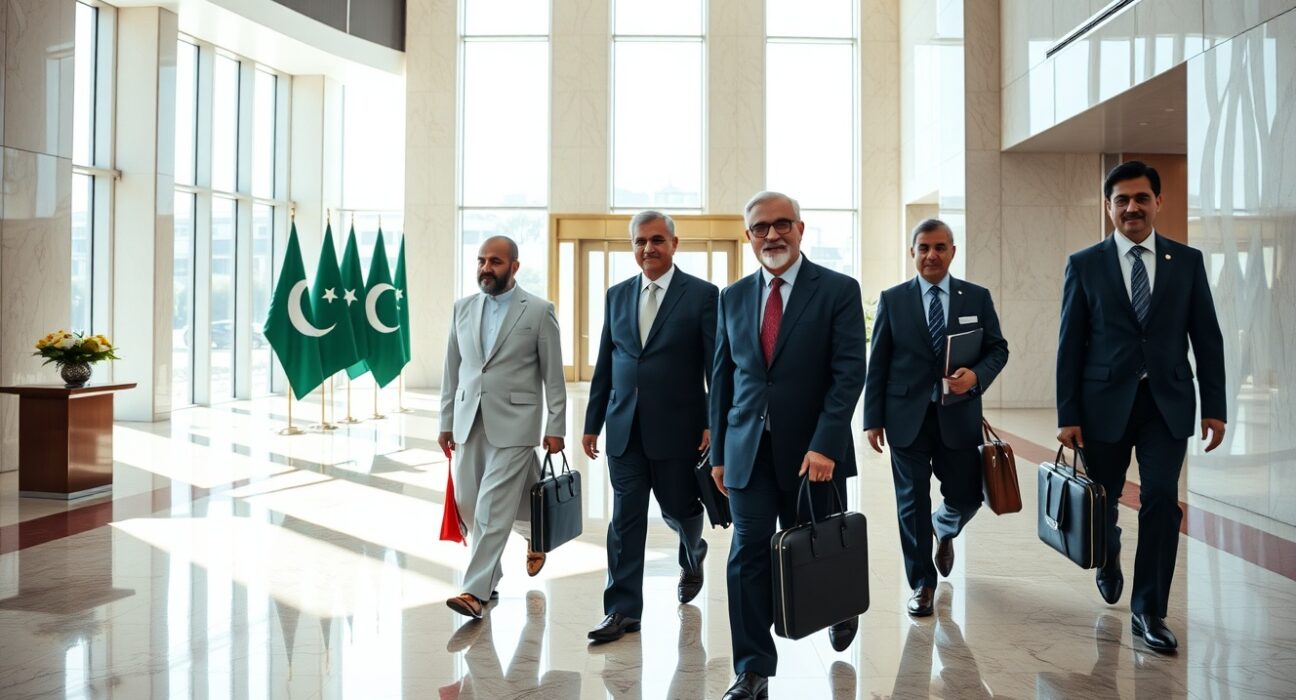
An Iranian delegation has arrived in Islamabad, Pakistan, for a second round of peace talks between the United States and Iran, according to a report by Walter Bloomberg, citing two Pakistani government officials. This development marks a significant step in ongoing diplomatic efforts to address tensions between the two nations. The talks, held in Pakistan, highlight the country’s role as a mediator in international conflicts.
Iranian Delegation Peace Talks: Background and Context
The second round of peace talks follows initial discussions held earlier this year. The first round, which took place in a neutral location, established a framework for dialogue. Now, the Iranian delegation peace talks in Islamabad aim to build on that foundation. The United States and Iran have long-standing disagreements over issues such as nuclear development, regional influence, and sanctions. Pakistan’s involvement offers a fresh platform for negotiation. The choice of Islamabad as the venue signals a strategic move to leverage Pakistan’s diplomatic ties with both nations.
Key Players in the Negotiations
The Iranian delegation includes senior diplomats and security officials. The U.S. team, though not confirmed in this report, likely consists of State Department representatives. Pakistani officials are facilitating the talks, providing logistical support and neutral ground. This trilateral dynamic adds complexity to the discussions. The Iranian delegation peace talks aim to address core issues, including the Joint Comprehensive Plan of Action (JCPOA) and regional security concerns.
Why Pakistan for the Second Round?
Pakistan’s selection as the host country is no accident. The nation maintains diplomatic relations with both Iran and the United States. It also has a vested interest in regional stability. The Iranian delegation peace talks in Pakistan offer a neutral venue, away from the direct influence of either party. Pakistan’s government has a history of mediating in regional conflicts, including between Saudi Arabia and Iran. This experience adds credibility to the process. Additionally, Pakistan’s proximity to Iran facilitates easier travel for the delegation.
Timeline of US-Iran Negotiations
- First Round (2024): Initial talks held in a European city, establishing communication channels.
- Second Round (2025): Iranian delegation arrives in Pakistan for deeper discussions.
- Expected Outcomes: Potential agreements on nuclear inspections, sanctions relief, and regional cooperation.
Potential Impacts of the Talks
The success of the Iranian delegation peace talks could reshape Middle Eastern geopolitics. A breakthrough might lead to reduced tensions in the Persian Gulf. It could also influence global oil markets, as Iran is a major producer. For Pakistan, hosting these talks enhances its international standing. It positions the country as a peace broker, which could attract foreign investment and diplomatic support. However, failure could strain relations between the U.S. and Iran further, potentially escalating conflicts.
Expert Perspectives on the Negotiations
Analysts view the Iranian delegation peace talks as a critical test of diplomacy. Dr. Ahmed Raza, a geopolitical expert, states, “These talks represent a rare opportunity for de-escalation. Pakistan’s role as a mediator is crucial, given its unique position.” Other experts caution that deep mistrust remains. The U.S. demands full compliance with nuclear agreements, while Iran seeks sanctions relief. The talks must address these fundamental disagreements to succeed.
Challenges Ahead for the Iranian Delegation Peace Talks
Several obstacles threaten the progress of the talks. First, internal political pressures in both the U.S. and Iran could limit flexibility. Second, regional actors, such as Israel and Saudi Arabia, may oppose any agreement. Third, the lack of direct communication between the U.S. and Iran adds a layer of complexity. The Iranian delegation peace talks rely on Pakistani intermediaries, which can slow down negotiations. Despite these challenges, the fact that both sides agreed to a second round shows a commitment to dialogue.
What This Means for Regional Stability
A successful outcome could reduce proxy conflicts in Yemen, Syria, and Iraq. It might also pave the way for broader cooperation on energy security and counterterrorism. The Iranian delegation peace talks in Pakistan are a microcosm of larger global efforts to manage U.S.-Iran relations. The world watches closely, as the results could set a precedent for future diplomatic engagements.
Conclusion
The arrival of the Iranian delegation in Pakistan for the second round of peace talks with the U.S. represents a pivotal moment in international diplomacy. These Iranian delegation peace talks, facilitated by Pakistan, offer a chance to address long-standing tensions. While challenges remain, the commitment to dialogue signals hope for a peaceful resolution. The outcomes will have far-reaching implications for the Middle East and beyond, making this a critical event to monitor.
FAQs
Q1: What is the purpose of the Iranian delegation peace talks in Pakistan?
The talks aim to address tensions between the U.S. and Iran, focusing on nuclear issues, sanctions, and regional security. Pakistan is hosting as a neutral mediator.
Q2: Who is part of the Iranian delegation?
The delegation includes senior diplomats and security officials from Iran, tasked with negotiating on behalf of the Iranian government.
Q3: Why was Pakistan chosen as the venue?
Pakistan maintains diplomatic ties with both the U.S. and Iran, offering a neutral and strategic location for the talks.
Q4: What are the expected outcomes of the second round?
Potential outcomes include agreements on nuclear inspections, sanctions relief, and steps toward regional de-escalation.
Q5: How do these talks impact global politics?
Success could reduce Middle Eastern tensions, stabilize oil markets, and enhance Pakistan’s role as a peace broker.
Disclaimer: The information provided is not trading advice, Bitcoinworld.co.in holds no liability for any investments made based on the information provided on this page. We strongly recommend independent research and/or consultation with a qualified professional before making any investment decisions.
