

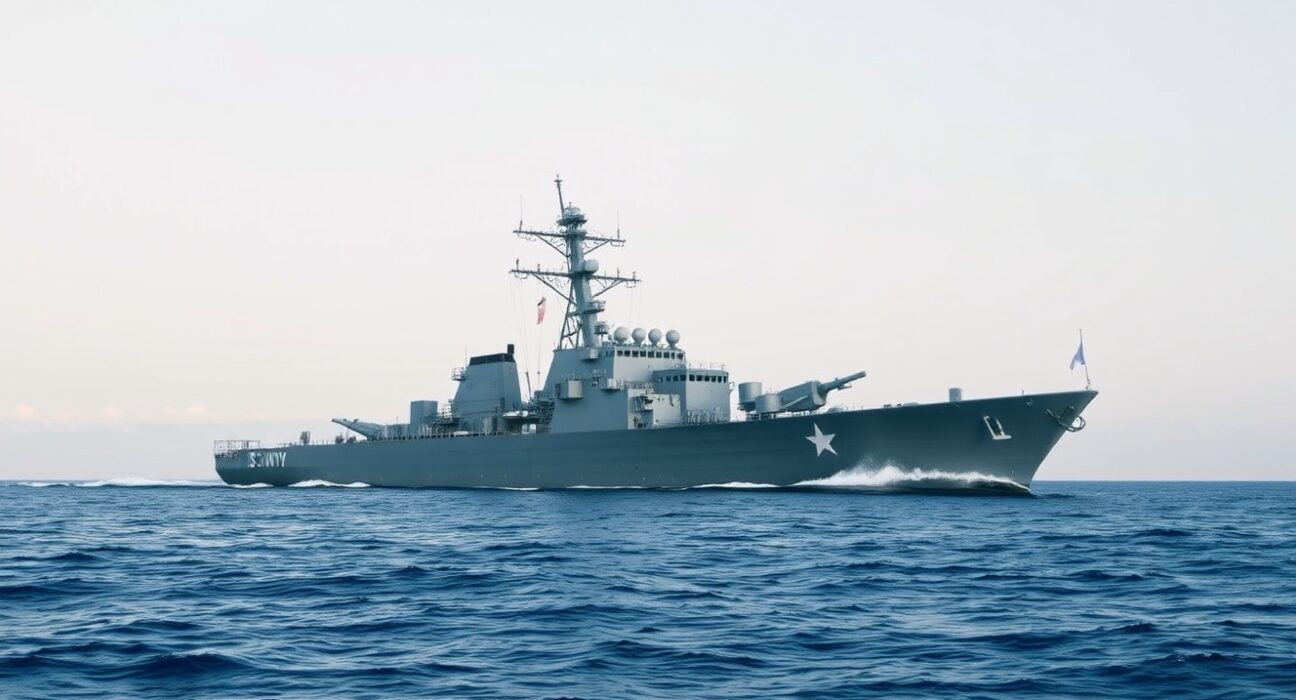
A senior U.S. official has firmly denied claims that an Iranian missile struck a U.S. Navy vessel in the Middle East. This denial comes amid rising tensions in the region. The official spoke on condition of anonymity. They stated categorically that no U.S. ship was hit. The denial directly contradicts earlier reports from regional sources. Those reports suggested a missile attack occurred near the Strait of Hormuz. The U.S. military maintains a strong presence in the area. This presence aims to ensure freedom of navigation. The denial seeks to prevent misinformation from escalating the situation.
Background of the Iranian Missile Strike Claim
The claim of an Iranian missile strike on a U.S. ship first emerged on social media. Unverified accounts posted images of smoke on the horizon. Some users claimed a missile hit a destroyer. These posts quickly spread across multiple platforms. The U.S. Fifth Fleet, based in Bahrain, monitors all regional activity. Fleet officials stated they saw no evidence of an attack. The denial from Washington reinforces this position. The U.S. and Iran have a history of maritime incidents. In 2019, Iran shot down a U.S. drone. In 2020, the U.S. killed Iranian General Qasem Soleimani. These events created a volatile backdrop for any new claim.
Key Timeline of Recent Events
- Day 1: Unverified reports of a missile launch from Iranian territory appear online.
- Day 1 (Hours later): Social media accounts claim a U.S. ship was struck.
- Day 2: A senior U.S. official issues a formal denial to major news outlets.
- Day 2 (Evening): The Pentagon confirms no damage or casualties to any U.S. vessel.
Why the Iranian Missile Strike Claim Emerged
Disinformation often thrives in high-tension environments. The Middle East remains a flashpoint for geopolitical rivalry. Iran frequently conducts military exercises near strategic chokepoints. The Strait of Hormuz sees 20% of the world’s oil transit daily. Any attack on a U.S. ship would disrupt global energy markets. The claim likely originated from sources seeking to provoke a reaction. Some analysts suggest it was a test of U.S. response protocols. Others believe it was simple rumor amplification. The U.S. official’s quick denial aimed to cut off this narrative. Rapid response prevents the claim from gaining legitimacy.
Expert Analysis on the Denial
Defense experts note the importance of official confirmation. “In modern conflict, information is a weapon,” said a retired Navy admiral. “A single false report can trigger real-world consequences.” The U.S. military has protocols for verifying attack claims. These include radar data, satellite imagery, and shipboard sensor logs. None of these systems detected an incoming missile. The denial thus carries significant weight. It is based on hard evidence, not just political messaging.
Impact on Regional Stability
The denial helps stabilize a fragile security situation. Iran and the U.S. have avoided direct military confrontation for years. Both sides use proxies and diplomatic channels. A confirmed attack would force a U.S. response. This could escalate into a broader conflict. The denial removes that immediate risk. However, it does not eliminate underlying tensions. Iran continues to enrich uranium at near-weapons-grade levels. The U.S. maintains sanctions and a naval presence. The region remains on edge. The claim and denial cycle may repeat as long as these conditions persist.
Comparative Table: Recent U.S.-Iran Naval Incidents
| Date | Incident | Outcome |
|---|---|---|
| 2019 | Iran shoots down U.S. drone | U.S. considered but did not retaliate |
| 2020 | U.S. kills Soleimani | Iran launched missiles at U.S. bases |
| 2023 | Iran seizes oil tankers | U.S. Navy increased patrols |
| 2025 | False missile strike claim | U.S. official issues immediate denial |
Role of Misinformation in Modern Conflicts
False claims about military attacks are not new. However, social media amplifies their reach. In 2025, a single viral post can reach millions within minutes. The U.S. government now treats information warfare seriously. The denial was issued quickly and clearly. This strategy limits the claim’s spread. It also reassures allies and markets. Oil prices briefly spiked after the initial claim. They returned to normal after the denial. This shows the real economic impact of such rumors. The U.S. official’s statement served as a circuit breaker for panic.
How the U.S. Verifies Attack Claims
- Radar Systems: Track incoming projectiles from launch to impact.
- Satellite Surveillance: Provides overhead imagery of launch sites.
- Shipboard Sensors: Detect explosions, debris, or hull breaches.
- Communications Intercepts: Monitor Iranian military channels for activity.
- Human Intelligence: Agents on the ground confirm or deny events.
Conclusion
The senior U.S. official’s denial of an Iranian missile strike on a U.S. ship is a critical development. It prevents a false narrative from escalating into real conflict. The claim lacked evidence from any official source. The U.S. military’s robust verification systems confirmed no attack occurred. This incident highlights the dangers of misinformation in tense regions. It also demonstrates the importance of swift, authoritative denials. The situation remains calm, but the underlying tensions persist. The world watches for any real Iranian missile strike or other provocation. For now, the denial stands as the definitive account.
FAQs
Q1: Did an Iranian missile strike actually hit a U.S. ship?
A1: No. A senior U.S. official has denied the claim. The Pentagon confirmed no damage or casualties to any U.S. vessel.
Q2: Why did the claim of an Iranian missile strike spread?
A2: The claim originated from unverified social media posts. It spread quickly due to high regional tensions and the strategic importance of the Strait of Hormuz.
Q3: How does the U.S. verify such attack claims?
A3: The U.S. uses radar, satellite imagery, shipboard sensors, and intelligence intercepts. None of these systems detected a missile launch or impact.
Q4: What are the consequences of this false claim?
A4: The claim briefly spiked oil prices and raised fears of conflict. The denial stabilized markets and prevented escalation. It also highlighted the role of disinformation in modern geopolitics.
Q5: Could a real Iranian missile strike happen in the future?
A5: The risk remains due to ongoing tensions over Iran’s nuclear program and U.S. sanctions. However, both sides have avoided direct confrontation for years. The U.S. maintains a strong deterrent presence in the region.
Disclaimer: The information provided is not trading advice, Bitcoinworld.co.in holds no liability for any investments made based on the information provided on this page. We strongly recommend independent research and/or consultation with a qualified professional before making any investment decisions.
