
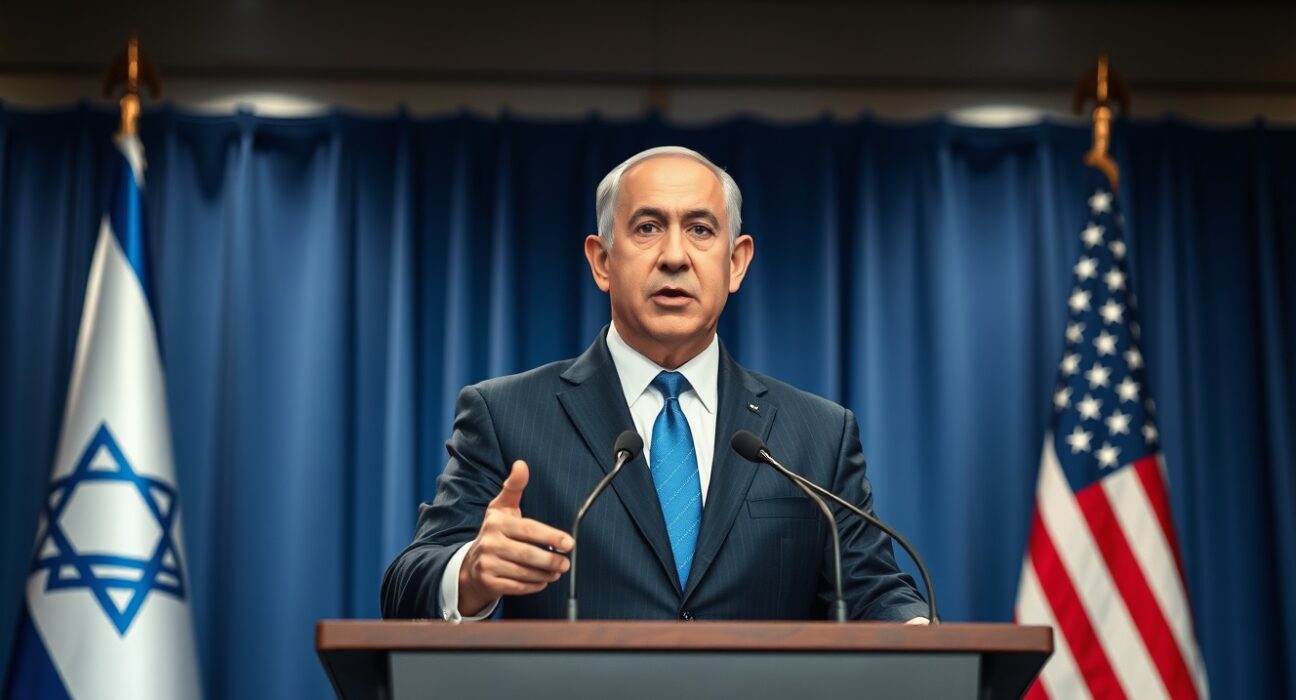
JERUSALEM, 2025 – Israeli Prime Minister Benjamin Netanyahu has publicly endorsed former U.S. President Donald Trump’s policy of containing Iran, marking a significant development in Middle Eastern geopolitics and reaffirming a longstanding strategic partnership between the two nations. This declaration comes amid ongoing regional tensions and evolving security architectures, potentially influencing future diplomatic and military calculations across the volatile region.
Israel’s Endorsement of Trump’s Iran Containment Policy
Prime Minister Netanyahu formally voiced his support for the Trump administration’s approach to Iran during a recent security cabinet meeting. Consequently, this statement reinforces Israel’s consistent position regarding the perceived threat from Tehran. The containment strategy, originally articulated during Trump’s presidency, primarily focuses on applying maximum economic and diplomatic pressure to curb Iran’s regional influence and nuclear ambitions. Furthermore, this policy represents a clear departure from earlier engagement frameworks, emphasizing deterrence over negotiation.
Netanyahu’s endorsement carries substantial weight given Israel’s frontline status against Iranian proxies. Historically, Israeli officials have repeatedly highlighted Iran’s support for groups like Hezbollah and Hamas. Therefore, this alignment with Trump’s policy underscores a continuity in Israel’s national security doctrine. The Prime Minister specifically referenced the need for “unyielding pressure” to prevent nuclear proliferation and destabilizing activities. Subsequently, analysts are examining the potential ripple effects on current U.S. foreign policy directions.
Historical Context of US-Israel Relations on Iran
The relationship between the United States and Israel regarding Iran policy has experienced notable shifts across different administrations. For instance, the Obama administration pursued the Joint Comprehensive Plan of Action (JCPOA) in 2015, which Israel openly opposed. Conversely, the Trump administration unilaterally withdrew from that agreement in 2018, implementing a “maximum pressure” campaign involving severe sanctions. This campaign targeted Iran’s oil exports, financial institutions, and revolutionary guard corps.
Netanyahu consistently praised Trump’s tougher stance, frequently citing shared security concerns. The table below outlines key policy differences:
| Administration | Primary Iran Policy | Israeli Response |
|---|---|---|
| Obama (2009-2017) | Diplomatic Engagement (JCPOA) | Strong Opposition |
| Trump (2017-2021) | Maximum Pressure & Containment | Full Support |
| Biden (2021-2025) | Attempted Return to Diplomacy | Cautious Skepticism |
This historical pattern explains Netanyahu’s recent reaffirmation. The 2025 political landscape, however, introduces new variables including regional normalization agreements and evolving nuclear capabilities.
Regional Security Implications and Expert Analysis
Security analysts immediately began assessing the broader implications of Israel’s stated position. Dr. Elena Greenberg, a senior fellow at the Middle East Institute, notes that such declarations serve multiple strategic purposes. “Firstly, they signal continuity in Israel’s red lines to Tehran,” Greenberg explains. “Secondly, they communicate policy preferences to current Washington policymakers. Finally, they reassure the Israeli domestic audience about national security consistency.”
Regionally, this endorsement could influence several key dynamics:
- Gulf State Calculations: Arab Gulf states balancing relations with both Washington and Tehran.
- Proxy Conflict Management: Potential escalation or de-escalation in Syria, Lebanon, and Yemen.
- Nuclear Negotiations: Impact on any renewed diplomatic talks regarding Iran’s nuclear program.
- Arms Proliferation: Possible acceleration of regional defense partnerships and arms sales.
Moreover, the statement arrives amidst reported advances in Iran’s uranium enrichment levels. International Atomic Energy Agency (IAEA) reports from early 2025 indicate Tehran has accumulated significant quantities of highly enriched uranium. Therefore, Netanyahu’s support for containment aligns with Israel’s longstanding policy of preventing a nuclear-armed Iran by all necessary means.
The Mechanics of Containment: Sanctions and Deterrence
The Trump-era containment policy relied heavily on economic sanctions and military deterrence. Specifically, the administration designated Iran’s Islamic Revolutionary Guard Corps (IRGC) as a foreign terrorist organization. Additionally, it imposed crushing sanctions on Iran’s oil, banking, and shipping sectors. These measures aimed to reduce Iranian revenue available for regional proxy networks and military development.
Israel actively supported these measures through intelligence sharing and diplomatic backing. Notably, reported covert operations targeting Iranian nuclear facilities occurred during this period. The containment strategy also involved strengthening regional alliances against Iran, exemplified by the Abraham Accords. These normalization agreements between Israel and several Arab states created a tacit anti-Iran coalition.
Netanyahu’s recent comments suggest a desire to reinvigorate this multilateral approach. He emphasized that “only combined pressure produces results,” indirectly advocating for coordinated action among regional partners. This perspective assumes that isolation compels Iranian behavioral change, a theory debated among foreign policy scholars.
Domestic Political Dimensions in Israel and the US
Domestic politics in both countries inevitably shape Iran policy. In Israel, security consensus traditionally crosses partisan lines, though tactical differences exist. Netanyahu’s endorsement reinforces his government’s reputation for taking hardline positions on national security. It also appeals to his political base, which prioritizes strong defense policies.
In the United States, Iran policy remains deeply polarized. Republican lawmakers generally applauded Netanyahu’s statement, framing it as validation of Trump’s foreign policy record. Democratic responses were more measured, emphasizing comprehensive diplomacy alongside pressure. This partisan divide ensures Iran policy will feature prominently in future U.S. electoral cycles.
Furthermore, the Biden administration’s attempts to revive nuclear talks have faced multiple obstacles. Regional attacks attributed to Iranian proxies and internal Iranian politics complicated diplomacy. Israel’s public preference for containment adds another layer of complexity for U.S. policymakers seeking balanced engagement with allies while pursuing nonproliferation goals.
Conclusion
Prime Minister Netanyahu’s support for President Trump’s Iran containment policy underscores a consistent and strategic Israeli approach to national security. This endorsement reflects deep-seated concerns about Iranian regional ambitions and nuclear capabilities. Moreover, it highlights the enduring alignment between Israeli and certain American foreign policy perspectives. The evolving Middle Eastern landscape will test the efficacy of containment versus diplomacy. Ultimately, regional stability depends on nuanced strategies that address legitimate security concerns while avoiding escalation. Israel’s clear stance provides important insight into one key actor’s calculations as the international community grapples with the Iran challenge.
FAQs
Q1: What exactly is the “containment policy” that Netanyahu endorsed?
The policy refers to the Trump administration’s strategy of applying maximum economic pressure through sanctions, diplomatic isolation, and military deterrence to limit Iran’s regional influence and nuclear program development, without seeking regime change.
Q2: How does this endorsement affect current U.S.-Israel relations?
It reinforces the strong security partnership between the two nations but may create diplomatic nuances for the current U.S. administration, which has pursued a more mixed approach of pressure and attempted diplomacy with Iran.
Q3: Why does Israel view Iran as such a significant threat?
Israeli security officials cite Iran’s calls for Israel’s destruction, its support for militant proxies like Hezbollah and Hamas on Israel’s borders, its ballistic missile program, and its advancing uranium enrichment activities as existential threats.
Q4: Has Israel’s position on Iran changed with different Israeli governments?
The fundamental assessment of Iran as a primary threat has remained consistent across different Israeli coalitions. Tactical emphases may vary slightly, but the strategic objective of preventing a nuclear-armed Iran is a national consensus.
Q5: What are the potential risks of a containment-only approach?
Analysts suggest potential risks include escalating regional conflict, incentivizing Iran to accelerate nuclear breakout efforts, reducing diplomatic channels for crisis management, and creating friction with European allies who favor engagement.
Disclaimer: The information provided is not trading advice, Bitcoinworld.co.in holds no liability for any investments made based on the information provided on this page. We strongly recommend independent research and/or consultation with a qualified professional before making any investment decisions.