
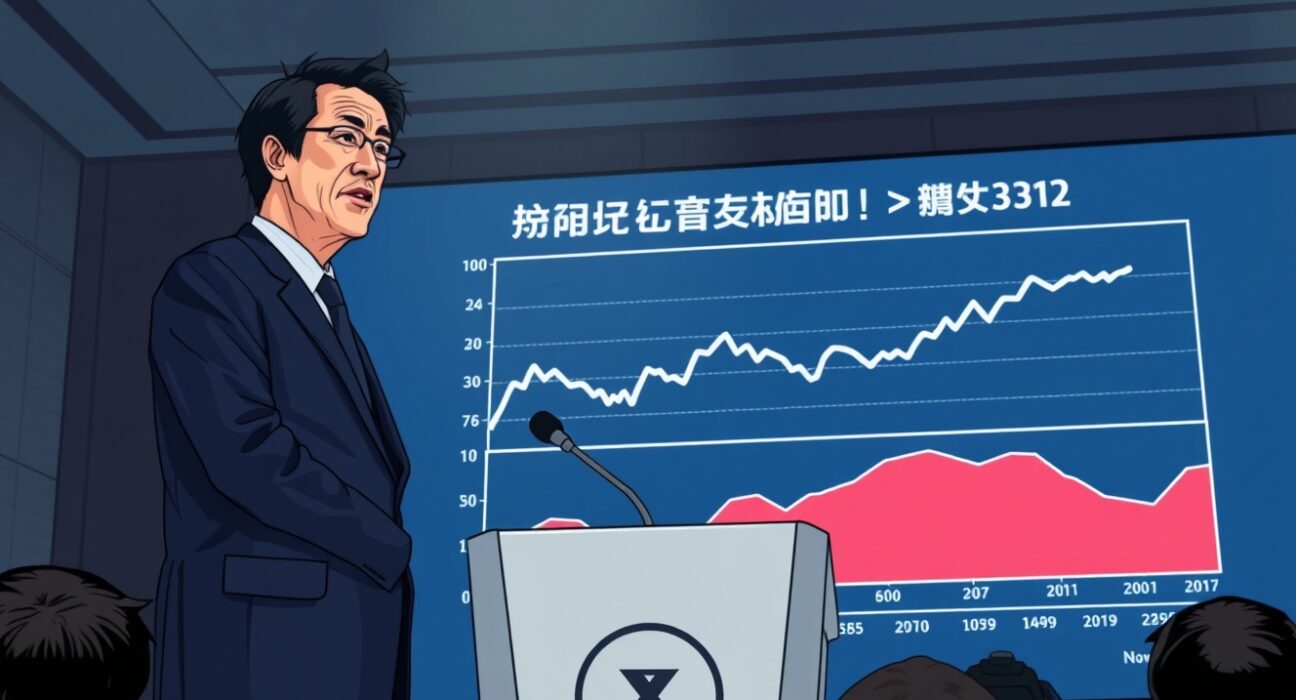
TOKYO, March 2025 – The Japanese Yen has staged a remarkable rally across global currency markets. This surge follows pivotal comments from Bank of Japan Governor Kazuo Ueda, who explicitly kept the door open for future interest rate increases. Consequently, traders and analysts are now recalibrating their long-term forecasts for Japan’s monetary policy trajectory.
Japanese Yen Outperforms on Hawkish BoJ Signals
Governor Ueda’s latest policy communication marks a significant shift in tone. During a scheduled press conference, he acknowledged persistent inflationary pressures exceeding the Bank’s previous projections. Furthermore, he stated the BoJ would not hesitate to adjust policy if trend inflation accelerates convincingly. This statement immediately triggered a wave of buying in the Yen. Market participants interpreted his remarks as the clearest signal yet that the era of ultra-loose monetary policy may be concluding.
The currency’s appreciation was broad-based and swift. For instance, the USD/JPY pair fell sharply, breaking below key technical levels that had held for months. Similarly, the Yen gained ground against the Euro and the British Pound. This movement reflects a fundamental reassessment of yield differentials. Higher interest rates in Japan would narrow the gap with other major economies, reducing the Yen’s traditional role as a funding currency for carry trades.
Analyzing the Bank of Japan’s Evolving Policy Framework
The Bank of Japan’s policy stance has been historically defined by its aggressive quantitative easing program and yield curve control. However, recent economic data has forced a nuanced review. Core inflation in Japan has remained above the 2% target for over two years. While initially driven by cost-push factors like energy imports, there are emerging signs of more durable, demand-driven price increases. Wage growth, a critical metric for the BoJ, has also shown tentative improvement during the recent Shunto spring wage negotiations.
Governor Ueda’s leadership style emphasizes data dependency. Therefore, his comments are not a commitment to an immediate hike but a conditional guidance. The central bank’s upcoming Tankan business sentiment survey and Tokyo CPI data will be critical inputs for the next policy meeting. This analytical, evidence-based approach provides markets with a framework but also introduces an element of uncertainty regarding timing.
The Global Impact of a Normalizing Japanese Monetary Policy
A potential tightening cycle in Japan carries profound implications for global finance. For years, the Yen’s low yield has made it a primary source of cheap capital for investments worldwide. A reversal of this flow could lead to:
- Repatriation of Capital: Japanese investors may bring funds home to benefit from higher domestic yields.
- Increased Volatility: The unwinding of massive short-Yen positions could exacerbate currency swings.
- Shift in Bond Markets: Rising Japanese Government Bond yields may alter global bond benchmarks and investment allocations.
Asian export competitors are watching closely. A stronger Yen could improve the relative price competitiveness of South Korean and Chinese exports. Conversely, it increases the cost burden for Japan’s own export-oriented manufacturers, a sector crucial to its economic health.
Historical Context and the Path Forward for the Yen
Japan’s battle with deflation has spanned decades, making any move toward policy normalization historically significant. The BoJ’s current approach under Ueda is markedly different from the ‘bazooka’ stimulus of his predecessor, Haruhiko Kuroda. The current strategy is one of cautious, incremental normalization aimed at sustaining inflation without shocking the economy.
The timeline for any rate action remains data-contingent. Most economists polled by major financial institutions now see a high probability of a hike in the latter half of 2025. The scale of future moves is also debated. A single, small hike may be sufficient to signal intent, or the BoJ may embark on a slow, multi-year tightening cycle. This uncertainty itself is a key driver of current market volatility.
Conclusion
The Japanese Yen has entered a new phase of strength, directly fueled by the Bank of Japan’s evolving stance under Governor Kazuo Ueda. His explicit openness to interest rate hikes represents a watershed moment for a central bank long synonymous with monetary accommodation. While the exact timing remains uncertain, the directional shift is clear. Global investors must now navigate a financial landscape where one of the world’s most persistent sources of cheap liquidity is gradually being withdrawn, ensuring the Japanese Yen will remain at the forefront of market narratives throughout 2025.
FAQs
Q1: Why did the Japanese Yen strengthen after Kazuo Ueda’s comments?
The Yen strengthened because Governor Ueda’s remarks signaled a higher likelihood of future interest rate increases by the Bank of Japan. Higher rates typically attract foreign investment into a currency, increasing demand and driving up its value.
Q2: What is the Bank of Japan’s current main interest rate?
As of March 2025, the BoJ’s short-term policy rate remains in negative territory, at -0.1%. The discussion initiated by Ueda concerns potentially moving this rate toward zero or into positive territory.
Q3: How do higher interest rates in Japan affect global markets?
Higher Japanese rates could lead to capital flowing back into Japan from overseas investments, potentially raising borrowing costs and increasing volatility in global stock and bond markets, especially in assets that relied on cheap Yen funding.
Q4: What economic data is the BoJ watching most closely?
The Bank of Japan prioritizes data on sustained wage growth and whether inflation is driven by domestic demand rather than temporary cost factors like imported energy. The outcome of annual wage negotiations and core inflation metrics are key indicators.
Q5: Has the Bank of Japan raised interest rates recently?
The BoJ ended its negative interest rate policy in 2024, marking its first hike in 17 years. Ueda’s recent comments focus on the potential for further increases beyond that initial normalization step.
Disclaimer: The information provided is not trading advice, Bitcoinworld.co.in holds no liability for any investments made based on the information provided on this page. We strongly recommend independent research and/or consultation with a qualified professional before making any investment decisions.