
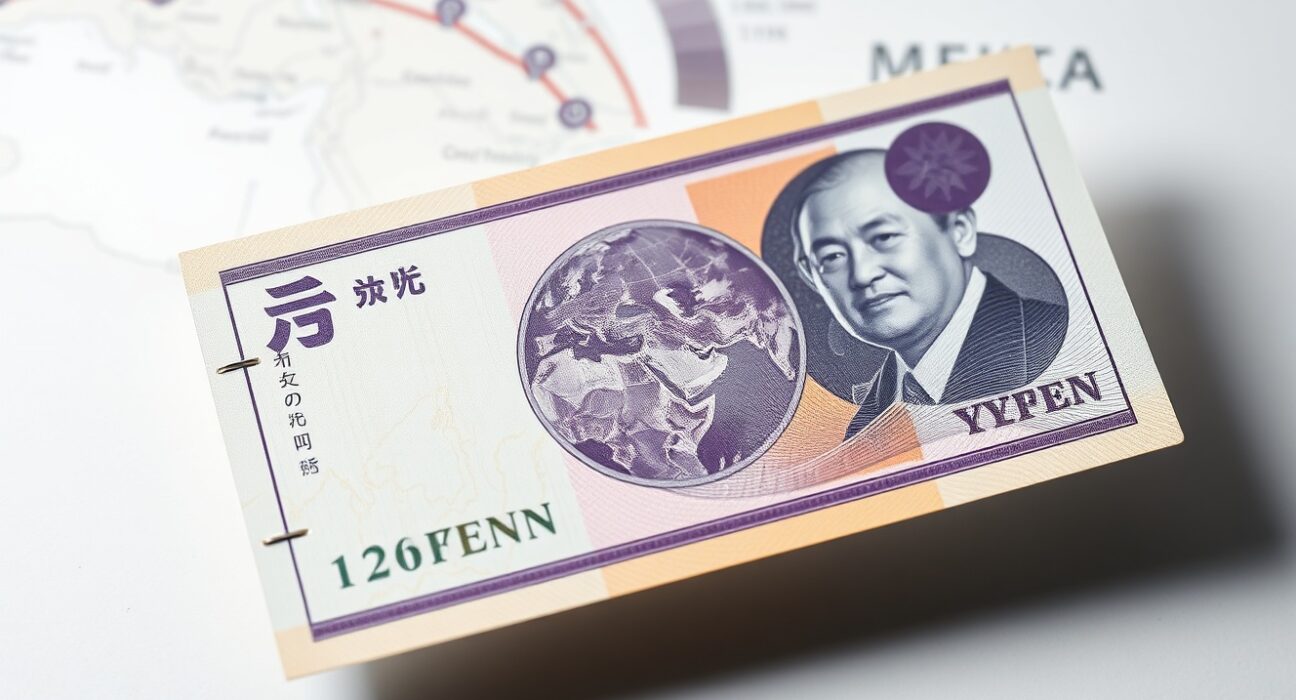
TOKYO, Japan – April 2025 – The Japanese Yen continues its defensive posture in global currency markets despite escalating military conflicts across the Middle East, defying conventional safe-haven expectations that typically drive investors toward traditional refuge assets during geopolitical turmoil. Market analysts observe this unusual behavior with keen interest, as historical patterns suggest the Yen should strengthen during global uncertainty. Instead, the currency remains under pressure against major counterparts, particularly the US Dollar, creating complex dynamics in foreign exchange trading floors worldwide.
Japanese Yen Defies Safe-Haven Expectations
Currency traders anticipated significant Yen appreciation following recent Middle East hostilities. Typically, geopolitical tensions trigger capital flows into perceived safe-haven currencies like the Japanese Yen, Swiss Franc, and US Dollar. However, current market movements contradict these expectations. The Yen has weakened approximately 2.3% against the Dollar since conflict escalation began last month. This counterintuitive movement reflects deeper structural factors influencing Japan’s currency beyond immediate geopolitical concerns.
Several interconnected elements explain this defensive Yen positioning. First, interest rate differentials between Japan and other major economies continue widening. The Bank of Japan maintains ultra-accommodative monetary policy while other central banks sustain higher rates. Consequently, the Yen faces persistent selling pressure in carry trade strategies. Investors borrow Yen at low rates to invest in higher-yielding assets elsewhere, creating constant downward pressure on Japan’s currency regardless of global events.
Middle East Conflict Impact on Currency Markets
The Middle East war escalation presents complex implications for global currency markets. Initially, oil price volatility typically affects Yen valuation significantly. Japan imports nearly all its petroleum requirements, making its currency sensitive to energy price fluctuations. Surprisingly, oil markets have shown relative stability despite regional conflicts, partially explaining limited Yen movement. Market participants have priced in supply disruptions more efficiently than during previous Middle East crises.
Global capital flows reveal another dimension to this currency puzzle. Institutional investors demonstrate preference for the US Dollar as their primary safe-haven asset during current tensions. The Dollar Index has strengthened 1.8% since conflict escalation, while the Yen has weakened. This divergence highlights shifting perceptions about relative currency safety during different types of geopolitical risks. Furthermore, Japanese institutional investors continue substantial overseas investments, creating natural Yen selling pressure that offsets potential safe-haven inflows.
Bank of Japan Policy Constraints
Monetary policy limitations significantly constrain Yen appreciation potential. The Bank of Japan maintains its yield curve control framework, capping 10-year Japanese government bond yields around 1%. This policy prevents normal interest rate adjustments that might otherwise support currency strength during crises. Additionally, Japanese authorities have repeatedly signaled willingness to intervene against excessive Yen weakness, creating asymmetric risk for traders considering long Yen positions.
Historical context provides valuable perspective on current Yen behavior. During the 2014 Ukraine crisis, the Yen appreciated 5.2% against the Dollar in the initial month. Conversely, during 2022 energy price shocks, the Yen depreciated 12.7% despite geopolitical tensions. Current market reactions more closely resemble the latter scenario, suggesting energy market dynamics outweigh pure geopolitical risk considerations in currency valuation models.
Technical Analysis and Market Positioning
Chart patterns reveal consistent Yen weakness across multiple timeframes. The USD/JPY currency pair maintains its upward trajectory, recently testing the 155 resistance level. Technical indicators show sustained bearish momentum for the Yen against most major currencies. Market positioning data from the Commodity Futures Trading Commission indicates speculative accounts maintain net short Yen positions exceeding $12 billion. This positioning creates additional headwinds for any potential Yen recovery.
Regional currency comparisons highlight the Yen’s unique defensive posture. While the Swiss Franc has appreciated 1.3% since conflict escalation, and the US Dollar has gained 1.8%, the Yen has depreciated against both. This relative underperformance suggests country-specific factors outweigh broader safe-haven dynamics. Japanese economic fundamentals, particularly the country’s massive public debt exceeding 250% of GDP, may contribute to reduced safe-haven appeal during prolonged geopolitical stress.
Expert Perspectives on Currency Dynamics
Financial institutions offer varied interpretations of Yen behavior. Goldman Sachs analysts note “structural Yen weakness persists despite geopolitical catalysts.” They emphasize Japan’s negative real interest rates and aging demographics as fundamental constraints. Meanwhile, Nomura Securities highlights “asymmetric intervention risks” that discourage speculative Yen buying. The firm’s research suggests Ministry of Finance currency intervention becomes more likely above 155 Yen per Dollar, creating a psychological ceiling for USD/JPY movements.
Global economic interconnectedness further complicates the Yen’s trajectory. China’s economic slowdown reduces regional trade volumes, negatively impacting Japanese export competitiveness. Additionally, shifting global supply chains gradually reduce Japan’s current account surplus, historically a key Yen support factor. These structural changes may permanently alter the Yen’s safe-haven characteristics, according to International Monetary Fund research published earlier this year.
Future Outlook and Market Implications
Forward-looking analysis suggests several potential Yen catalysts. First, any significant escalation in Middle East conflicts involving major powers could trigger traditional safe-haven flows. Second, Bank of Japan policy normalization, however gradual, might eventually support Yen valuation. Third, global recession risks could prompt repatriation of Japanese overseas investments, boosting domestic currency demand. Market participants monitor these developments closely while managing existing positions.
The Yen’s defensive stance carries implications beyond currency markets. Japanese import costs continue rising, potentially accelerating domestic inflation beyond the Bank of Japan’s 2% target. Exporters benefit from competitive advantages but face uncertainty about sustainable earnings from overseas operations. Policymakers balance these competing considerations while navigating complex global economic conditions.
Conclusion
The Japanese Yen maintains its defensive positioning despite Middle East war escalation, challenging conventional safe-haven assumptions. Structural factors including interest rate differentials, monetary policy constraints, and shifting global economic relationships outweigh immediate geopolitical risk considerations. Market participants must analyze multiple dimensions beyond traditional crisis response patterns when evaluating Yen prospects. The currency’s behavior reflects evolving global financial architecture where historical relationships require constant reassessment against contemporary economic realities.
FAQs
Q1: Why isn’t the Japanese Yen strengthening during Middle East conflicts?
The Yen faces structural headwinds including wide interest rate differentials, Bank of Japan policy constraints, and shifting global capital flows that offset traditional safe-haven demand during geopolitical crises.
Q2: What factors typically make the Yen a safe-haven currency?
Japan’s historical current account surplus, domestic investor repatriation during crises, and low correlation with global risk assets traditionally supported the Yen’s safe-haven status, though these characteristics have diminished recently.
Q3: How does Bank of Japan policy affect Yen valuation?
The Bank of Japan’s yield curve control framework caps Japanese government bond yields, preventing normal interest rate increases that might support currency strength during global uncertainty.
Q4: What level might trigger Japanese currency intervention?
Market analysts suggest the Ministry of Finance becomes increasingly concerned about Yen weakness above 155 Yen per US Dollar, though official intervention thresholds remain undisclosed.
Q5: How do oil prices affect the Japanese Yen during Middle East conflicts?
As a major petroleum importer, Japan’s currency typically weakens when oil prices spike during regional conflicts, though current relative energy price stability has limited this effect.
Disclaimer: The information provided is not trading advice, Bitcoinworld.co.in holds no liability for any investments made based on the information provided on this page. We strongly recommend independent research and/or consultation with a qualified professional before making any investment decisions.