

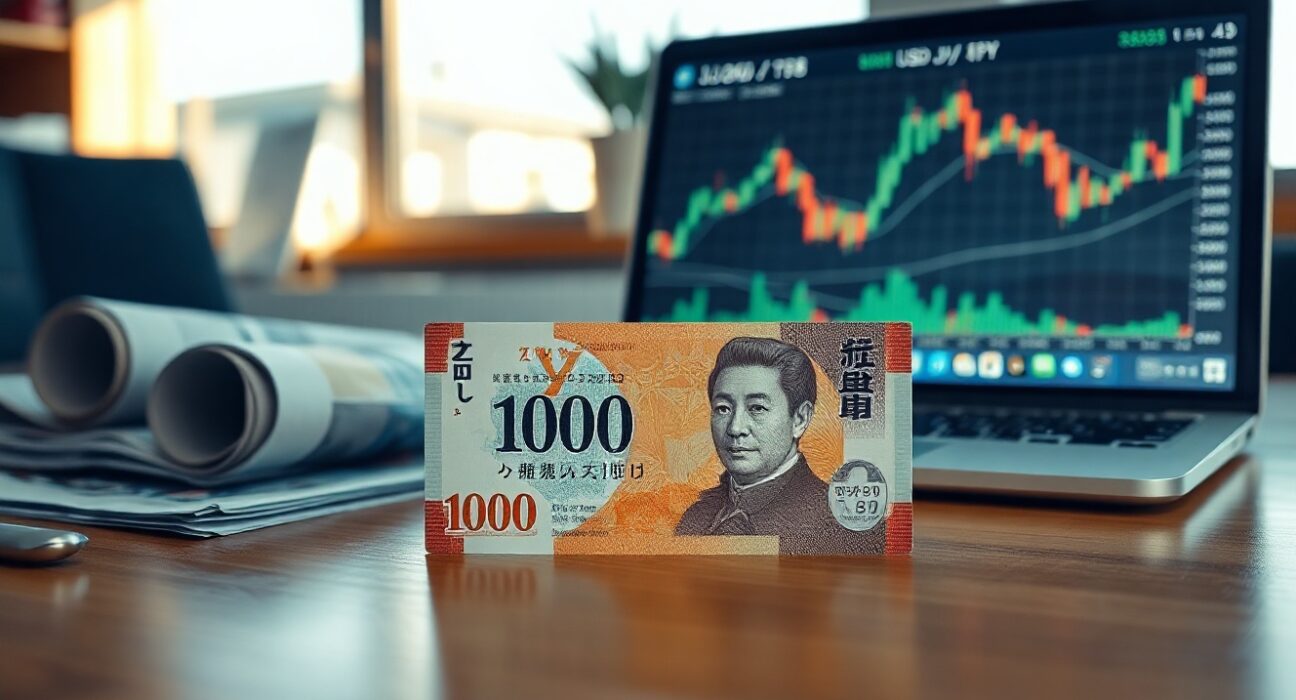
The Japanese Yen continues to face headwinds in currency markets even as the Bank of Japan (BoJ) moves cautiously toward tighter monetary policy, according to a new analysis from MUFG Bank. The assessment highlights that the pace and scope of normalization remain insufficient to reverse the yen’s broader weakness against major peers, particularly the U.S. dollar.
Gradual BoJ Tightening Fails to Lift Yen
MUFG analysts note that while the BoJ has taken steps to reduce its massive monetary stimulus—including adjustments to its yield curve control framework and a modest rate hike in early 2024—the overall trajectory is still viewed as too gradual by markets. The yen has struggled to gain traction because global interest rate differentials remain heavily skewed in favor of the U.S. dollar and other major currencies.
Japan’s interest rates, even after the BoJ’s moves, remain near zero, while the Federal Reserve and European Central Bank have maintained elevated rates to combat inflation. This gap continues to encourage carry trades, where investors borrow in low-yielding yen to invest in higher-yielding assets elsewhere, adding to selling pressure on the currency.
Market Expectations Versus BoJ Reality
Market participants have repeatedly priced in more aggressive BoJ tightening, only to be disappointed by the central bank’s cautious rhetoric. MUFG points out that Governor Kazuo Ueda has emphasized the need to avoid disrupting Japan’s economic recovery, signaling that any further rate increases will be data-dependent and gradual.
This divergence between market expectations and BoJ guidance has created a pattern of yen rallies that quickly fade, leaving the currency vulnerable to renewed weakness. The USD/JPY pair has remained elevated, testing levels that previously prompted intervention from Japanese authorities.
Implications for Traders and the Japanese Economy
For forex traders, the MUFG analysis suggests that betting on a sustained yen rebound may be premature without clearer signals from the BoJ about accelerating normalization. The yen’s weakness has both positive and negative effects on Japan’s economy: it boosts export competitiveness but raises import costs, particularly for energy and raw materials, contributing to inflationary pressures on households.
Japanese policymakers have expressed concern about the yen’s decline but have limited tools to influence exchange rates directly. Intervention remains a possibility if moves become disorderly, but MUFG sees this as a short-term measure rather than a solution to the underlying rate differential.
Conclusion
The Japanese Yen is likely to remain under pressure as long as the BoJ’s tightening cycle lags behind other major central banks. MUFG’s analysis underscores that gradual normalization, while reducing the risk of economic disruption, does little to close the yield gap that drives yen weakness. Traders and investors should monitor BoJ communications and global rate trends for any shift in this dynamic.
FAQs
Q1: Why is the Japanese Yen weakening despite the BoJ raising rates?
The BoJ’s rate increases are very small compared to the rate hikes implemented by the Federal Reserve and other central banks. The large interest rate differential encourages investors to sell yen and buy higher-yielding currencies, keeping the yen under pressure.
Q2: What is the carry trade, and how does it affect the yen?
The carry trade involves borrowing a currency with a low interest rate (like the yen) and investing in a currency with a higher rate. This activity increases selling pressure on the yen and is a major factor in its persistent weakness.
Q3: Could the Japanese government intervene to support the yen?
Yes, Japanese authorities have intervened in the past when the yen weakened rapidly. However, intervention is typically a short-term measure and does not address the fundamental issue of interest rate differentials, so its effect is often limited.
Disclaimer: The information provided is not trading advice, Bitcoinworld.co.in holds no liability for any investments made based on the information provided on this page. We strongly recommend independent research and/or consultation with a qualified professional before making any investment decisions.
