
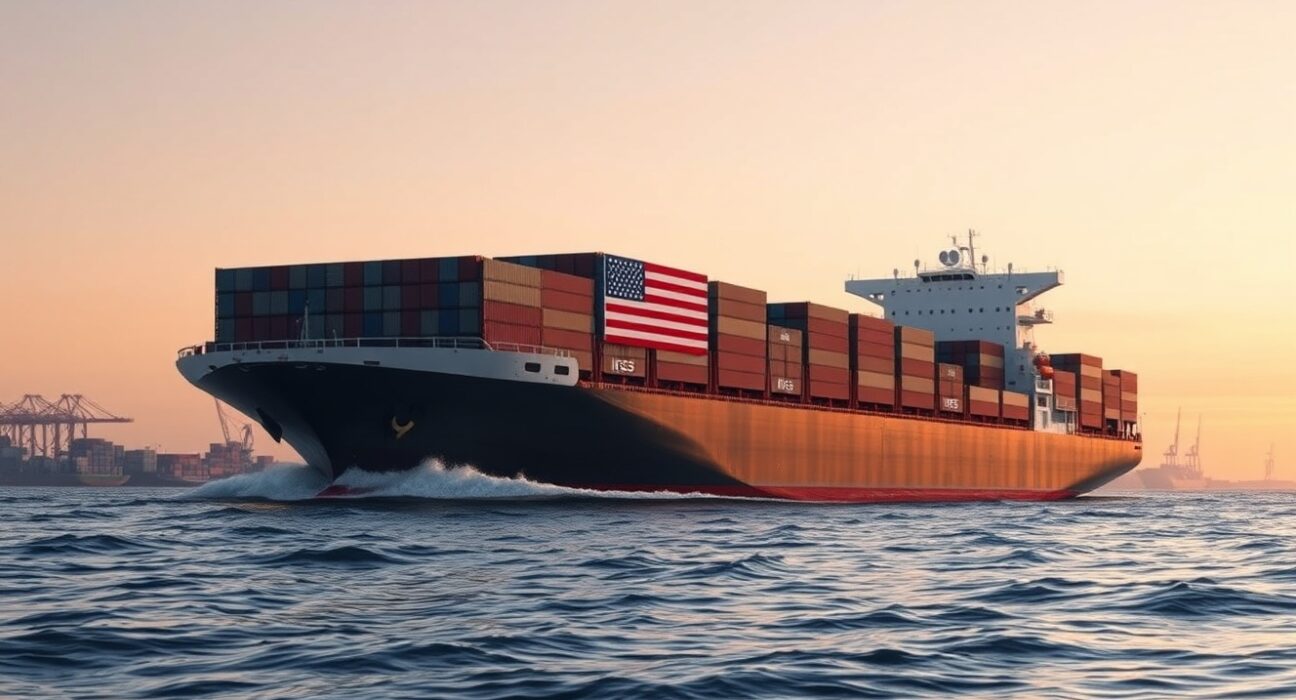
WASHINGTON, D.C. — March 2025 — The Biden administration announced a critical 60-day waiver of the century-old Jones Act today, implementing an emergency measure designed to combat persistently high energy prices affecting American consumers and industries. This temporary suspension of the foundational maritime law represents one of the most significant interventions in US shipping policy in decades, directly targeting transportation bottlenecks that have contributed to elevated fuel costs nationwide. Consequently, the decision immediately sparked intense debate among lawmakers, shipping executives, and energy analysts about its potential effectiveness and long-term implications for national security and domestic industry.
Jones Act Waiver: Understanding the Emergency Measure
The Merchant Marine Act of 1920, universally known as the Jones Act, mandates that all cargo transported between US ports must move on ships that are US-built, US-owned, US-flagged, and US-crewed. For over a century, this law has served as the bedrock of the domestic maritime industry. However, the administration’s emergency waiver temporarily suspends these requirements specifically for vessels carrying energy commodities like crude oil, refined petroleum products, and liquefied natural gas (LNG).
Officials from the Department of Homeland Security, which oversees maritime security, emphasized the waiver’s narrow scope and temporary nature. They framed the action as a targeted response to specific market conditions rather than a permanent policy shift. The waiver applies exclusively to shipments between the Gulf Coast refining hub and destinations along the Atlantic Seaboard and in New England, regions historically vulnerable to supply constraints and price spikes.
The Immediate Catalysts: Supply Chain and Price Pressures
Several converging factors precipitated this unprecedented regulatory action. First, refinery maintenance schedules on the East Coast have reduced regional production capacity at a time of rising seasonal demand. Second, geopolitical tensions continue to disrupt global energy flows, increasing volatility in international markets. Third, a shortage of Jones Act-compliant vessels, particularly specialized tankers, has created a physical bottleneck for moving domestic energy supplies.
This vessel shortage has created a significant price disparity. For example, shipping a barrel of oil from the Gulf Coast to New York on a foreign-flagged tanker currently costs approximately $4-5. Meanwhile, using a Jones Act-compliant vessel for the same route costs $7-8 per barrel due to higher operating expenses and limited availability. This transportation premium directly translates to higher prices at the pump for consumers in affected regions.
Economic Impacts and Market Reactions
The announcement triggered immediate reactions across financial and commodity markets. Benchmark gasoline futures prices declined by approximately 2.5% in early trading following the news. Meanwhile, shipping stocks experienced mixed performance, with companies operating in international markets seeing gains while domestic carriers faced downward pressure. Energy analysts quickly began revising their short-term price forecasts for regions covered by the waiver.
The economic rationale behind the waiver centers on basic supply and demand dynamics. By allowing foreign-flagged vessels to transport energy between US ports, the administration aims to:
- Increase available shipping capacity immediately, bypassing the Jones Act fleet shortage
- Reduce transportation costs by introducing competition into previously protected routes
- Accelerate fuel deliveries to regions experiencing tight supplies
- Moderate price increases during the transition to spring and summer driving seasons
Historical data provides context for this intervention. Previous limited Jones Act waivers, such as those following hurricanes, typically reduced regional fuel prices by 5-15% within two weeks. However, those waivers addressed acute disaster-related shortages rather than structural market conditions. This broader, preemptive waiver represents a different approach to managing energy economics.
Expert Analysis: Weighing Benefits Against Risks
Maritime policy experts offer nuanced perspectives on the waiver’s potential effects. Dr. Elena Rodriguez, a transportation economist at the Brookings Institution, notes, “While temporary waivers can provide immediate price relief, they also create uncertainty for domestic shipbuilders and operators who make long-term investments based on regulatory stability. The key question is whether 60 days provides sufficient market correction without undermining the Jones Act’s strategic purpose.”
Conversely, energy market analyst Michael Chen from ClearView Energy Partners observes, “The timing is strategically significant. By implementing the waiver before summer demand peaks, the administration hopes to build inventory buffers in vulnerable regions. This could prevent the severe price spikes seen in previous years when unexpected disruptions coincided with high seasonal demand.”
The table below summarizes key differences between normal Jones Act operations and the waiver period:
| Aspect | Normal Jones Act Compliance | 60-Day Waiver Period |
|---|---|---|
| Vessel Requirements | US-built, owned, flagged, and crewed | Foreign vessels permitted for energy transport |
| Shipping Capacity | Limited to ~100 compliant tankers | Access to global fleet of thousands |
| Transport Costs | Premium of $2-4 per barrel | Competitive international rates |
| Delivery Time | Subject to domestic vessel availability | Faster scheduling with more vessels |
National Security and Domestic Industry Considerations
Beyond immediate economic effects, the waiver debate touches on fundamental questions about maritime policy and national security. Proponents of the Jones Act consistently argue that maintaining a domestic shipping industry serves vital strategic interests. During conflicts or international crises, the United States cannot depend on foreign-flagged vessels for essential domestic logistics. The US-flagged fleet and American merchant mariners provide a mobilization base that would be crucial in emergency situations.
Retired Admiral James Wilson, former commander of the US Transportation Command, testified before Congress last year that “the Jones Act fleet represents a national security asset that cannot be rapidly reconstituted if allowed to atrophy. While temporary waivers for specific circumstances may be necessary, we must guard against cumulative effects that undermine this strategic capability.”
Domestic shipbuilders and maritime unions have expressed concern about the precedent set by this waiver. The Shipbuilders Council of America issued a statement warning that “repeated emergency waivers create uncertainty that discourages investment in new vessel construction and maintenance. The Jones Act supports 650,000 American jobs and contributes $150 billion annually to our economy. We must balance short-term price concerns with long-term industrial viability.”
Historical Context and Legal Framework
The current waiver operates within established legal parameters. The Jones Act itself contains provisions allowing for temporary suspensions during emergencies or for national defense purposes. Historically, presidents have issued limited waivers following natural disasters like hurricanes Katrina, Sandy, and Maria to facilitate recovery efforts. However, this marks the first waiver primarily justified by economic rather than physical emergency conditions.
The legal authority derives from Section 501 of the Homeland Security Act, which allows the Secretary of Homeland Security to waive Jones Act requirements “in the interest of national defense.” Previous administrations have interpreted this authority broadly to include economic security dimensions. Legal scholars anticipate potential challenges to this interpretation, though courts have generally deferred to executive branch determinations during previous waiver implementations.
Regional Effects and Consumer Impact Analysis
The waiver’s benefits will not be distributed evenly across the country. New England stands to gain the most significant relief, as the region lacks pipeline connections to national refining centers and depends almost entirely on waterborne deliveries. Similarly, the US Virgin Islands, which operates under a permanent Jones Act exemption, serves as a case study for how reduced shipping restrictions affect fuel prices in isolated markets.
Energy economists project that the waiver could reduce gasoline prices in affected regions by 10-25 cents per gallon within 30 days, assuming normal market conditions. Diesel prices, crucial for transportation and agriculture, might see slightly larger reductions due to higher per-unit transportation costs. However, these projections depend on multiple variables, including global crude prices, refinery operations, and weather patterns affecting shipping.
Consumer advocacy groups have welcomed the move while urging additional measures. “Lower transportation costs should translate to lower prices at the pump,” stated Laura Simmons of the Consumer Energy Alliance. “But we need transparency to ensure savings are passed through the supply chain. We’ll be monitoring price differentials closely during the waiver period.”
Conclusion
The 60-day Jones Act waiver represents a bold experiment in maritime policy and energy economics. By temporarily suspending century-old protections for domestic shipping, the administration seeks to deliver tangible relief from high energy prices affecting American households and businesses. The waiver’s success will be measured not only by immediate price reductions but also by its minimal disruption to the domestic maritime industry that the Jones Act was designed to protect. As global energy markets remain volatile and domestic infrastructure faces ongoing challenges, this temporary measure may inform longer-term debates about balancing economic efficiency with strategic resilience in US maritime policy. The coming weeks will provide crucial data about whether targeted regulatory flexibility can effectively moderate energy prices without compromising broader national interests.
FAQs
Q1: What exactly is the Jones Act?
The Jones Act is the common name for the Merchant Marine Act of 1920, which requires that all cargo shipped between US ports be transported on vessels that are US-built, US-owned, US-flagged, and US-crewed.
Q2: How long will this waiver last?
The waiver is effective for 60 days from its announcement date in March 2025, after which normal Jones Act requirements will automatically resume unless extended by further executive action.
Q3: Will this waiver lower gasoline prices nationwide?
The waiver primarily affects regions dependent on waterborne fuel deliveries, particularly the Atlantic Seaboard and New England. Prices in areas served by pipelines or local refineries may see less direct impact.
Q4: Why is the Jones Act important for national security?
The Act ensures the United States maintains a domestic maritime industry and workforce that can support military logistics during conflicts or emergencies when reliance on foreign vessels might be risky or impossible.
Q5: Have there been previous Jones Act waivers?
Yes, presidents have issued temporary waivers following major hurricanes and other natural disasters to facilitate recovery efforts, but this is among the broadest waivers implemented primarily for economic reasons.
Disclaimer: The information provided is not trading advice, Bitcoinworld.co.in holds no liability for any investments made based on the information provided on this page. We strongly recommend independent research and/or consultation with a qualified professional before making any investment decisions.