

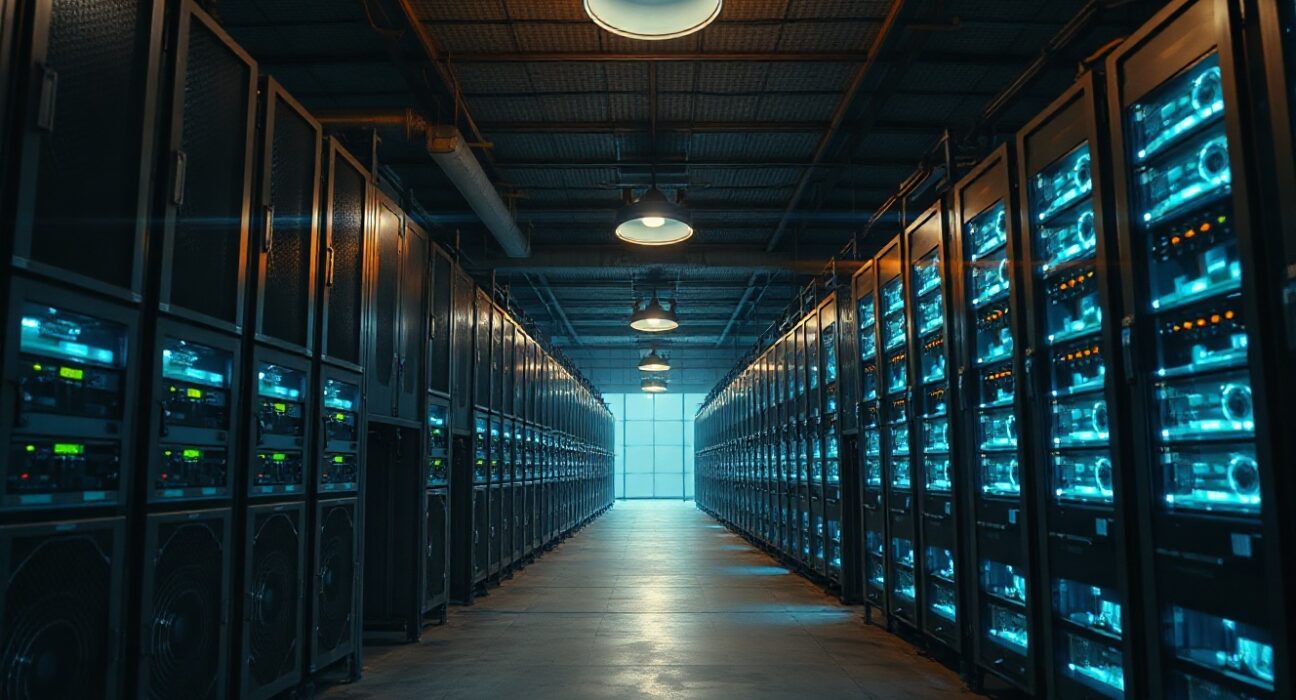
Bitcoin miners are facing sustained financial pressure as the cryptocurrency’s price has remained below the estimated cost of production for five consecutive months, according to a recent report from JPMorgan cited by The Block. The prolonged price-supply imbalance is straining operations across the mining sector, particularly for those with higher operating costs.
Hashrate and Difficulty Increasingly Tied to Price
JPMorgan’s analysis highlights a growing correlation between Bitcoin’s market price and the network’s hashrate and mining difficulty over the past six months. The report notes that a significant number of miners are currently operating near their break-even point, making them more sensitive to price fluctuations. When the price of Bitcoin falls below the cost of production, miners with high operating expenses are forced to shut down their rigs, leading to a drop in hashrate and a subsequent downward adjustment in mining difficulty.
This dynamic was observed in the second week of June, when mining difficulty fell by 10% — a clear signal that less efficient miners had exited the network. The adjustment mechanism, while built into Bitcoin’s protocol, reflects the real-world financial strain on operators who must constantly balance electricity costs, hardware efficiency, and BTC revenue.
Implications for the Mining Sector
The extended period of below-cost production is unusual and points to a market where only the most efficient miners — those with access to cheap energy and next-generation hardware — can remain profitable. Smaller or older operations face increasing risk of insolvency if the price does not recover above the average production cost, which JPMorgan estimates to be around $25,000 to $30,000 per BTC for many publicly listed miners.
Why This Matters for Investors
For investors and market observers, the health of the mining sector is a leading indicator of broader Bitcoin network stability. A sustained decline in hashrate could reduce network security and increase the time between blocks, potentially affecting transaction confirmation times. Additionally, forced selling by distressed miners could add downward pressure on BTC prices, creating a feedback loop that further erodes profitability.
The report also suggests that the increasing correlation between price and difficulty may make Bitcoin’s network more responsive to market conditions in the short term, a departure from the historically more gradual adjustments seen in previous cycles.
Conclusion
JPMorgan’s findings underscore a challenging environment for Bitcoin miners, with profitability under threat from persistently low prices and rising operational costs. The coming months will test the resilience of the mining ecosystem, as only those with the lowest cost bases and most efficient operations are likely to weather the storm. For the broader crypto market, the mining sector’s response to these pressures will be a key metric to watch.
FAQs
Q1: What is the estimated cost of production for Bitcoin miners according to JPMorgan?
JPMorgan estimates the average cost of production for many publicly listed Bitcoin miners to be between $25,000 and $30,000 per BTC, though this varies based on electricity costs and hardware efficiency.
Q2: How does a drop in mining difficulty affect Bitcoin’s network?
A decrease in mining difficulty makes it easier for miners to find new blocks, which helps maintain a consistent block time of roughly 10 minutes even when hashrate declines. However, it also indicates that less efficient miners have left the network.
Q3: Why is the correlation between BTC price and hashrate increasing?
The report attributes this to more miners operating near their break-even point, making them quicker to shut down rigs when prices fall. This tighter margin environment has made the network’s computational power more responsive to short-term price movements.
Disclaimer: The information provided is not trading advice, Bitcoinworld.co.in holds no liability for any investments made based on the information provided on this page. We strongly recommend independent research and/or consultation with a qualified professional before making any investment decisions.
