
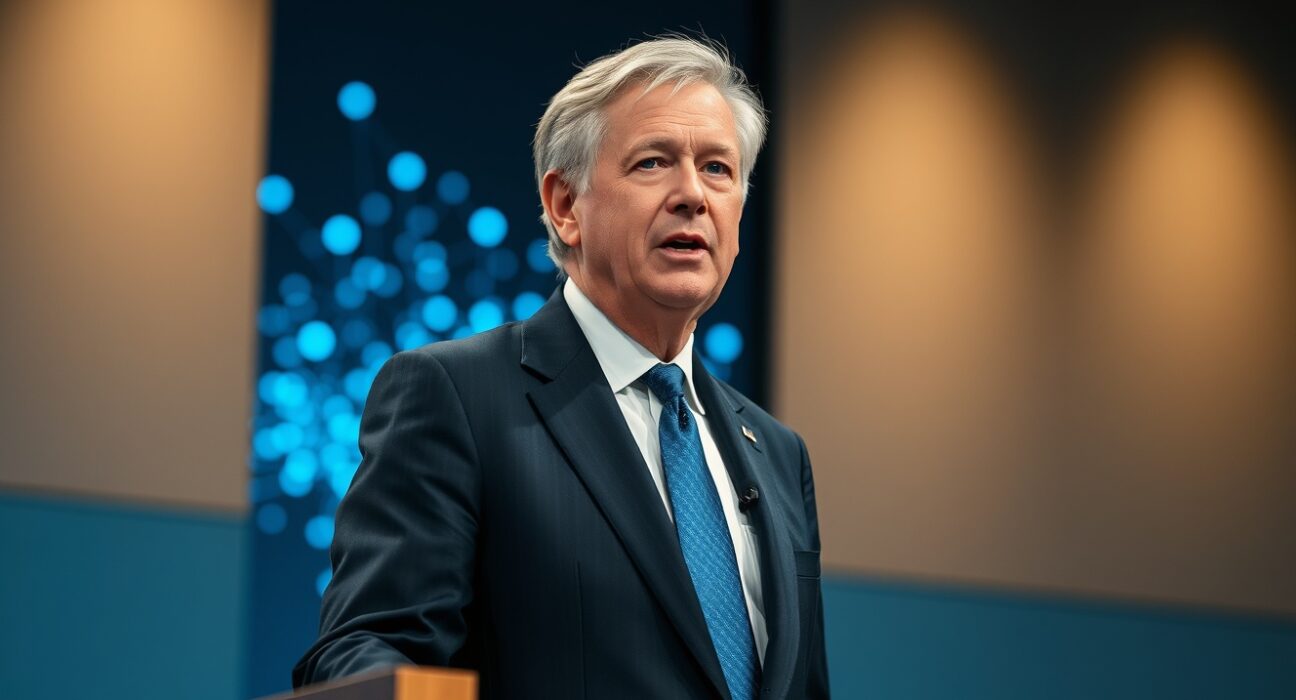
NEW YORK, March 2025 – In a significant development for global finance, JPMorgan Chase CEO Jamie Dimon has publicly acknowledged blockchain technology’s growing superiority over traditional financial systems, specifically highlighting its increasing speed and cost advantages during a recent Fox Business interview. This statement represents a notable evolution in perspective from one of traditional banking’s most influential leaders, potentially signaling broader institutional acceptance of distributed ledger technology.
Blockchain Technology Outpaces Traditional Finance Infrastructure
Jamie Dimon’s comments arrive during a period of accelerated blockchain adoption across financial sectors. Traditional banking systems, built on decades-old infrastructure, typically process transactions through centralized networks involving multiple intermediaries. Consequently, these systems often experience settlement delays ranging from hours to several business days. In contrast, modern blockchain networks now facilitate near-instantaneous settlement through decentralized validation mechanisms.
Furthermore, blockchain’s cost structure demonstrates increasing efficiency. Traditional cross-border payments frequently incur fees between 3-5% through correspondent banking networks. Blockchain-based alternatives, however, now regularly execute similar transactions for fractions of traditional costs. This efficiency stems from eliminating intermediary layers and automating processes through smart contracts.
The Evolution of Institutional Blockchain Adoption
JPMorgan’s own blockchain initiatives provide concrete evidence of this technological shift. The bank launched its JPM Coin payment system in 2020, creating a permissioned blockchain for institutional clients. This system enables instantaneous transfers between JPMorgan accounts globally. Additionally, the bank developed Onyx, a dedicated business unit focusing on blockchain and digital assets. These investments demonstrate practical applications of the technology Dimon now acknowledges as superior.
Other major financial institutions have pursued similar paths. Goldman Sachs developed its Digital Asset Platform for tokenized assets. Meanwhile, HSBC launched its Orion platform for digital bond issuance. These developments collectively indicate a broader industry trend toward blockchain integration.
Quantitative Comparisons Between Systems
Recent data illustrates the performance gap Dimon referenced. The Society for Worldwide Interbank Financial Telecommunication (SWIFT) system, the backbone of global bank communications, typically processes payments within 1-5 business days internationally. Major blockchain networks like Ethereum now handle transactions in minutes following recent upgrades. Similarly, cost comparisons reveal stark differences.
| Transaction Type | Traditional Finance | Blockchain Network |
|---|---|---|
| International Wire Transfer | 24-72 hours, $25-50 fee | 2-10 minutes, $0.50-5 fee |
| Securities Settlement | T+2 settlement cycle | Near-instant settlement |
| Cross-border Payment | 3-5% in fees + exchange spread | Under 1% in most cases |
These metrics substantiate Dimon’s observations about blockchain’s growing advantages. However, regulatory frameworks continue evolving to accommodate these technological changes.
Regulatory Landscape and Implementation Challenges
Despite technological advantages, blockchain implementation faces regulatory considerations. Financial authorities worldwide are developing frameworks for digital asset oversight. The European Union implemented Markets in Crypto-Assets (MiCA) regulations in 2024. Similarly, the United States has advanced multiple legislative proposals addressing digital asset classification and oversight.
Implementation challenges also persist for traditional institutions. Legacy system integration requires significant investment and technical adaptation. Cybersecurity considerations remain paramount for financial data protection. Additionally, scalability solutions continue developing to handle global transaction volumes. These factors influence adoption timelines across different financial sectors.
Expert Perspectives on the Transition
Financial technology analysts have noted Dimon’s evolving stance on blockchain. Christine Moy, former blockchain lead at JPMorgan, previously highlighted institutional adoption barriers. She noted infrastructure compatibility as a primary challenge. Meanwhile, David Treat, senior managing director at Accenture, emphasized hybrid approaches. He suggested gradual integration rather than immediate replacement of legacy systems.
Academic research supports these transitional models. The Massachusetts Institute of Technology published findings about phased blockchain integration in 2024. Their research indicated optimal results through parallel system operation during transition periods. This approach minimizes disruption while leveraging technological advantages.
Future Implications for Global Finance
Dimon’s acknowledgment signals potential acceleration in blockchain adoption across traditional finance. Several developments may follow this recognition. First, increased investment in blockchain infrastructure seems likely from major banks. Second, regulatory clarity may improve as traditional institutions advocate for clearer frameworks. Third, consumer and business services could transform through enhanced efficiency.
The technology’s evolution continues advancing its capabilities. Recent developments include:
- Zero-knowledge proofs enhancing privacy on transparent ledgers
- Layer-2 solutions dramatically increasing transaction throughput
- Interoperability protocols connecting different blockchain networks
- Central bank digital currencies exploring blockchain foundations
These innovations address previous limitations while expanding potential applications.
Conclusion
Jamie Dimon’s recognition of blockchain technology’s superior speed and cost efficiency marks a pivotal moment in financial technology evolution. As traditional finance leaders acknowledge distributed ledger advantages, institutional adoption will likely accelerate. This transition promises enhanced global financial infrastructure through faster settlements, reduced costs, and increased accessibility. The blockchain technology landscape continues maturing, potentially reshaping financial systems fundamentally in coming years while maintaining necessary security and regulatory compliance.
FAQs
Q1: What specifically did Jamie Dimon say about blockchain technology?
During a Fox Business interview in March 2025, Dimon stated blockchain is “becoming faster and cheaper than the traditional financial system,” marking a significant acknowledgment from one of banking’s most influential leaders.
Q2: How does blockchain achieve faster transaction speeds than traditional banking?
Blockchain networks use decentralized validation and consensus mechanisms that eliminate intermediary processing delays, enabling near-instantaneous settlement compared to traditional systems that often require 1-5 business days for international transactions.
Q3: What cost advantages does blockchain offer over conventional finance?
By removing multiple intermediary layers and automating processes through smart contracts, blockchain reduces transaction costs dramatically, particularly for cross-border payments where fees drop from 3-5% to under 1% in many cases.
Q4: Is JPMorgan actually using blockchain technology?
Yes, JPMorgan has been developing blockchain solutions since 2015, launching JPM Coin for institutional payments in 2020 and establishing its Onyx division dedicated to blockchain and digital asset innovation.
Q5: What are the main challenges preventing immediate blockchain adoption across all finance?
Key challenges include regulatory uncertainty, legacy system integration complexities, scalability requirements for global volumes, cybersecurity considerations, and the need for industry-wide standards and interoperability.
Disclaimer: The information provided is not trading advice, Bitcoinworld.co.in holds no liability for any investments made based on the information provided on this page. We strongly recommend independent research and/or consultation with a qualified professional before making any investment decisions.