

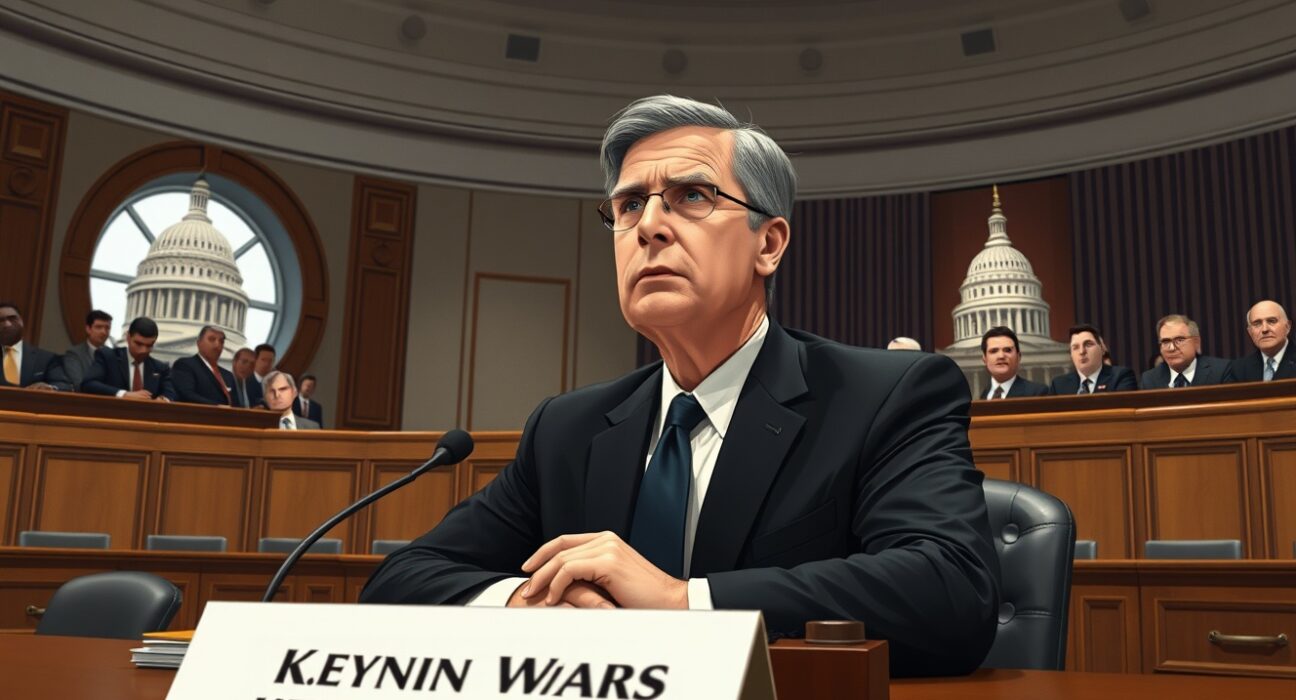
The US Senate Banking Committee has officially confirmed Kevin Warsh, marking a pivotal moment for financial oversight and cryptocurrency regulation. This decision sends ripples through both traditional markets and the digital asset ecosystem. Observers now watch closely for his next steps.
Kevin Warsh Confirmed: What This Means for Financial Policy
The Senate Banking Committee voted along party lines to confirm Kevin Warsh as a key financial regulator. This confirmation grants him significant influence over monetary policy and banking rules. Many analysts view this as a shift toward stricter oversight of emerging technologies. Specifically, the cryptocurrency sector now faces potential new compliance requirements. Warsh has a history of advocating for clear, consistent rules. He previously served as a Federal Reserve governor during the 2008 financial crisis. His experience includes navigating complex economic challenges. This background suggests he will prioritize stability over rapid innovation.
The Vote and Its Immediate Aftermath
The committee voted 14-10 in favor of confirmation. All Republican members supported Warsh, while Democrats opposed. This partisan split highlights deep divisions over financial regulation. Following the vote, Warsh issued a brief statement. He thanked the committee and pledged to serve with integrity. Market reactions were mixed. Stock indices showed slight gains, while Bitcoin prices dipped briefly. Investors now assess how Warsh will approach digital asset policies. His previous statements indicate support for anti-money laundering measures. He also favors consumer protection in crypto markets.
Cryptocurrency Regulation Under a New Leader
Warsh’s confirmation arrives at a critical time for cryptocurrency regulation. The sector has grown rapidly, with total market capitalization exceeding $3 trillion. However, regulatory frameworks remain fragmented across agencies. Warsh will likely push for a unified federal approach. He has criticized the current patchwork of state-level rules. In past speeches, he called for clear definitions of digital assets. He also emphasized the need to combat illicit finance. These priorities align with recent enforcement actions by the SEC and CFTC. The crypto industry now prepares for tighter oversight. Exchanges may face stricter registration requirements. Stablecoin issuers could see new reserve mandates.
Impact on Stablecoins and DeFi
Stablecoins, such as USDC and USDT, face particular scrutiny under Warsh. He has argued that these assets pose systemic risks if unregulated. His confirmation may accelerate legislation requiring full backing by cash or treasuries. Decentralized finance (DeFi) platforms also face potential new rules. Warsh has expressed concern about DeFi’s lack of accountability. He supports requiring DeFi protocols to verify user identities. This could reshape how platforms operate. Some projects may relocate to jurisdictions with lighter rules. Others will adapt to comply with US standards.
Expert Analysis on Warsh’s Regulatory Philosophy
Legal experts describe Warsh as a “pragmatic conservative.” He balances free-market principles with a strong belief in regulatory guardrails. During his Senate testimony, he emphasized the importance of innovation. However, he stressed that innovation must not come at the cost of financial stability. He cited the 2022 crypto crash as a cautionary tale. The collapse of FTX and Terra-Luna demonstrated the risks of unregulated growth. Warsh stated that clear rules could prevent future crises. He also noted that the US must lead in setting global crypto standards. Otherwise, other nations may dictate the rules.
Comparisons to Previous Regulators
Warsh’s approach differs from that of former SEC Chair Gary Gensler. Gensler pursued aggressive enforcement against crypto firms. Warsh favors rulemaking over litigation. He believes that clear regulations reduce uncertainty for businesses. This view resonates with many industry leaders. Coinbase CEO Brian Armstrong praised the confirmation. He called it a step toward “responsible innovation.” Critics, however, worry that Warsh may be too lenient. They point to his ties to Wall Street. Warsh worked at Morgan Stanley and served on corporate boards. These connections raise concerns about regulatory capture.
Timeline of Key Events Leading to Confirmation
- November 2024: President nominates Kevin Warsh to the Federal Reserve Board.
- January 2025: Senate Banking Committee holds confirmation hearings.
- February 2025: Committee votes 14-10 to confirm Warsh.
- March 2025: Full Senate expected to vote on confirmation.
This timeline shows a relatively swift process. Warsh’s nomination faced limited opposition compared to other candidates. His extensive experience likely smoothed the path. The full Senate vote will occur within weeks. A simple majority is required for final confirmation.
Global Reactions to the Confirmation
International markets reacted cautiously to the news. European regulators welcomed the prospect of clearer US rules. Asian crypto hubs, like Singapore and Hong Kong, monitor developments closely. They hope Warsh’s policies will align with their own frameworks. The European Union recently implemented its Markets in Crypto-Assets (MiCA) regulation. Warsh has expressed interest in harmonizing US rules with MiCA. This could reduce compliance costs for global firms. However, differences in approach remain. The US may impose stricter capital requirements for crypto firms.
Potential for International Cooperation
Warsh’s confirmation may strengthen international cooperation on crypto regulation. He has advocated for information sharing between regulators. The Financial Stability Board (FSB) already coordinates global crypto policies. Warsh could push for the US to adopt FSB recommendations. This would align with efforts by the G20. Cooperation could reduce regulatory arbitrage. Firms would face similar rules across jurisdictions. This stability benefits long-term investment in the sector.
What Comes Next for the Crypto Industry
The crypto industry now enters a period of adjustment. Companies must prepare for new compliance obligations. This includes enhanced know-your-customer (KYC) procedures. Transaction monitoring systems will need upgrades. Legal teams will review existing operations for gaps. Some firms may exit the US market entirely. Others will invest in lobbying efforts to shape final rules. The next 12 months are critical for the industry’s future. Warsh’s leadership will define the regulatory landscape for years.
Opportunities Amid Regulatory Changes
Despite challenges, opportunities exist. Clear rules could attract institutional investors. Many hedge funds and pension funds avoided crypto due to uncertainty. A defined legal framework may encourage their entry. This could boost market liquidity and stability. Innovation in compliant products will also rise. Regulated exchanges and custodians will benefit. Tokenized assets, like real estate and bonds, may gain traction. Warsh has expressed support for tokenization as a way to improve efficiency.
Conclusion
The confirmation of Kevin Warsh by the US Senate Banking Committee represents a watershed moment for cryptocurrency regulation. His leadership promises clearer rules, enhanced stability, and greater international cooperation. While the crypto industry faces tighter oversight, it also gains a predictable environment for growth. Stakeholders must adapt quickly to the new regulatory reality. The full Senate vote will finalize this process, but the direction is now set. Kevin Warsh confirmed marks the beginning of a new era in financial policy.
FAQs
Q1: Who is Kevin Warsh?
A: Kevin Warsh is a former Federal Reserve governor and investment banker. He was confirmed by the US Senate Banking Committee to a key financial regulatory role.
Q2: What does the Senate Banking Committee do?
A: The committee oversees banking, housing, and financial regulation. It confirms nominees for the Federal Reserve and other financial agencies.
Q3: How will this confirmation affect cryptocurrency?
A: It will likely lead to clearer federal rules for digital assets, including stricter KYC and stablecoin requirements. The industry must adapt to new compliance standards.
Q4: When will the full Senate vote on Warsh?
A: The full Senate vote is expected in March 2025. A simple majority is needed for final confirmation.
Q5: What is Warsh’s stance on DeFi?
A: He supports requiring DeFi platforms to verify user identities. This could increase accountability but also raise operational costs for protocols.
Disclaimer: The information provided is not trading advice, Bitcoinworld.co.in holds no liability for any investments made based on the information provided on this page. We strongly recommend independent research and/or consultation with a qualified professional before making any investment decisions.
