

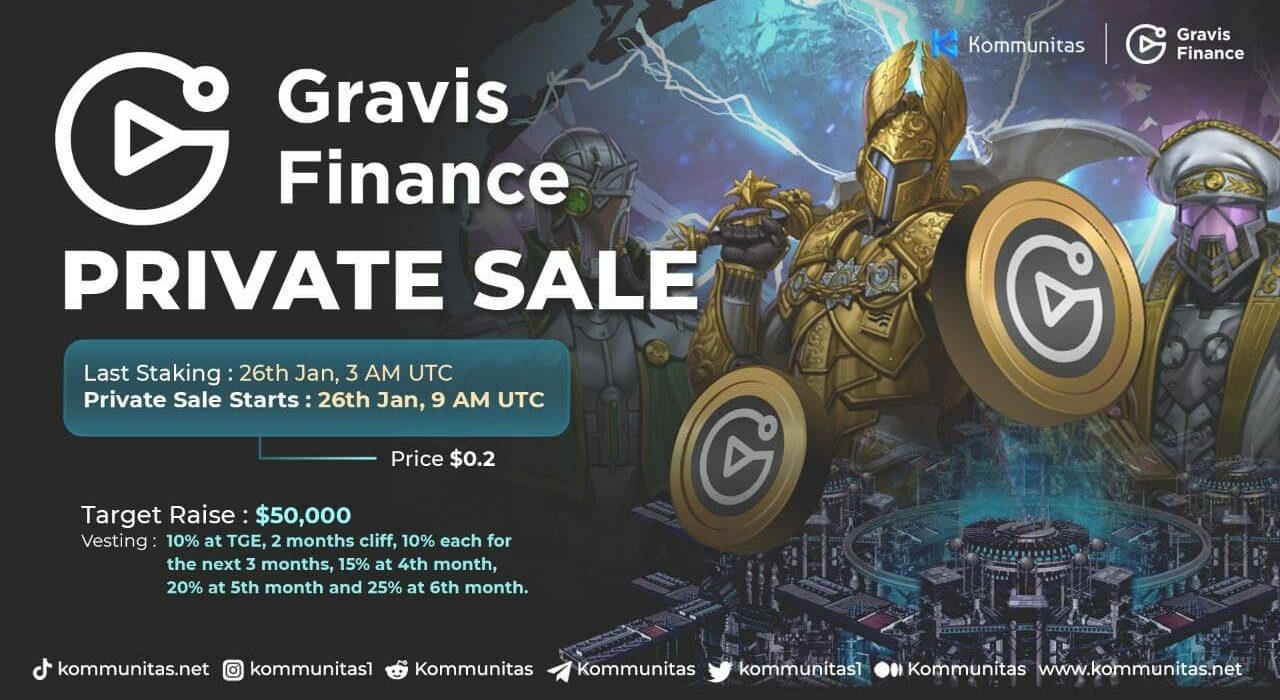
For investors navigating the world of crypto launchpads, understanding the specifics of a token sale is crucial for making informed decisions. The structure of a sale, particularly its vesting schedule, offers deep insights into a project’s long-term vision. The private sale for Gravis Finance ($GRVS), a GameFi ecosystem, on the Kommunitas launchpad serves as an excellent real-world example for decoding these important concepts.
This breakdown answers common questions like, “What is a token vesting schedule?” and “What does a ‘cliff’ mean in crypto?”.
What is Gravis Finance?
Gravis Finance is a project designed to build a comprehensive ecosystem for the GameFi and NFT sectors. Its vision includes a multi-chain NFT marketplace, engaging blockchain-based games, and integrated decentralized finance (DeFi) features that allow users to earn rewards with their digital assets.
Projects like Gravis Finance often partner with launchpads to raise capital and build a foundational community.
The Role of the Kommunitas Launchpad
Kommunitas is a decentralized, multi-chain launchpad that connects promising crypto projects with a community of early investors. It facilitates Initial DEX Offerings (IDOs) by providing a structured framework for:
- Whitelisting: A process where interested users register their wallet address to gain eligibility for a sale.
- Tiered Access: Offering different participation rounds or “Boosters,” often providing priority access to those who stake the launchpad’s native token ($KOM).
- Secure Funding: Ensuring a smooth and secure process for purchasing tokens, typically using stablecoins like USDC on the Polygon network.
Decoding a Complex Vesting Schedule: The Gravis Finance Example
A vesting schedule dictates the gradual release of purchased tokens over time. This is a vital mechanism for promoting long-term project stability by preventing early investors from selling all their tokens at once.
Let’s break down the specific vesting schedule used for the $GRVS private sale:
1. Initial Release at TGE: 10%
- At the Token Generation Event (TGE)—the moment the $GRVS token first became publicly tradable—investors received 10% of their total purchased amount.
2. The Cliff Period: 2 Months
- Following the TGE, there was a 2-month cliff. A “cliff” is a defined waiting period where no additional tokens are released. This strategy is used to prevent immediate selling pressure after launch, allowing the project to build momentum and the market to stabilize.
3. Staggered Monthly Unlocks (Post-Cliff)
- After the 2-month cliff ended, the remaining tokens were distributed in staggered monthly payments over the next six months, starting with smaller portions and increasing over time:
-
- Months 3, 4, and 5: 10% released each month.
- Month 6: 15% released.
- Month 7: 20% released.
- Month 8: The final 25% released.
-
Why This Vesting Structure Matters
This multi-stage vesting schedule with an initial cliff is a strong indicator of a project’s focus on long-term, sustainable growth. It aligns the incentives of early investors with the project’s success and demonstrates a commitment to building a stable token economy. For anyone participating in a token sale, analyzing the vesting schedule is a critical part of performing thorough research.
Disclaimer: The information provided is not trading advice, Bitcoinworld.co.in holds no liability for any investments made based on the information provided on this page. We strongly recommend independent research and/or consultation with a qualified professional before making any investment decisions.