
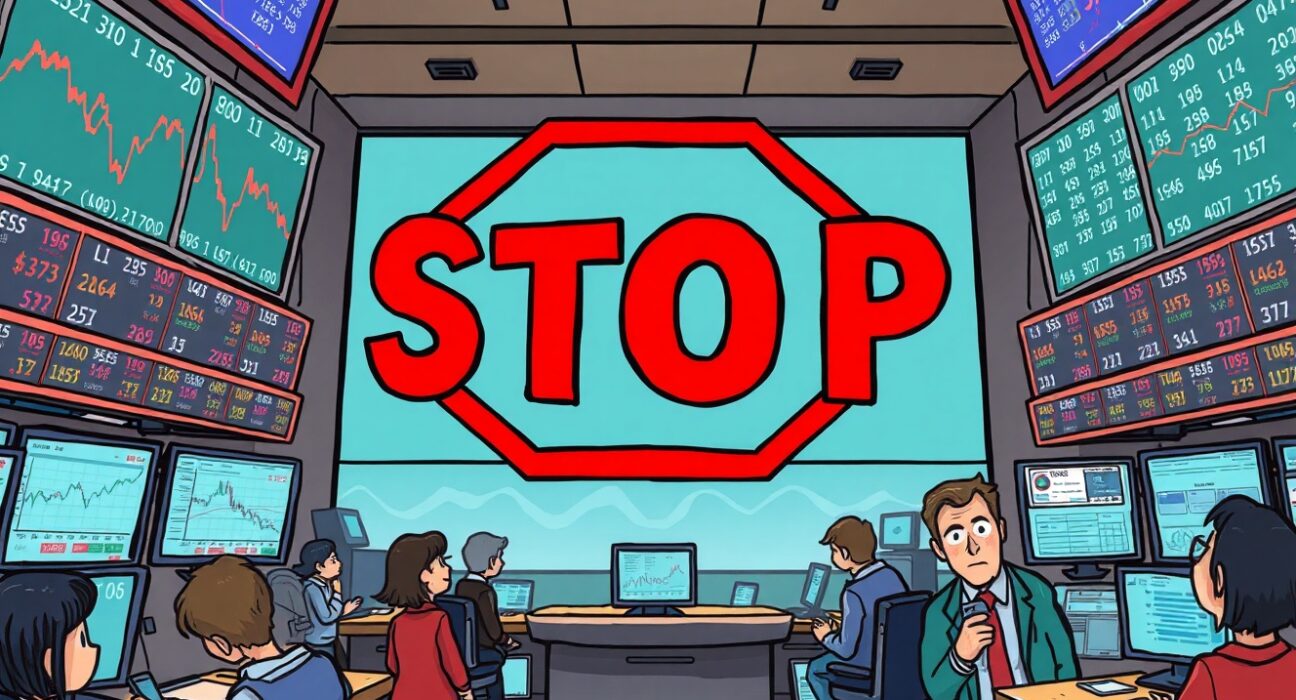
The financial markets often present unpredictable moments, and a recent development on the Korea Exchange has once again brought a crucial market mechanism into focus. An urgent KOSPI trading curb, known locally as a “sidecar,” was triggered on the KOSPI market. This activation temporarily halts program sell orders when market volatility spikes dramatically, serving as a vital circuit breaker.
This measure is designed to provide a moment of calm, allowing investors to reassess market conditions rather than succumbing to panic selling. Understanding such mechanisms is essential for anyone following global financial news, especially given its direct impact on market stability.
What Exactly is a KOSPI Trading Curb (Sidecar)?
A KOSPI trading curb, or “sidecar,” is a specific type of circuit breaker implemented by the Korea Exchange. Its primary function is to temporarily halt program sell orders when the market experiences extreme downward pressure. This mechanism is not about stopping all trading, but rather about pausing automated, high-volume sell orders that can exacerbate market declines.
When triggered, the sidecar provides a brief cooling-off period. This pause gives market participants, both institutional and individual, an opportunity to digest new information and make more rational decisions, rather than reacting impulsively to rapid price movements. It’s a strategic intervention aimed at preventing a domino effect of selling.
Why Was the KOSPI Trading Curb Activated Again?
The recent activation marks the second instance this year, following a previous trigger on April 7. The decision to activate the KOSPI trading curb stems directly from a significant spike in market volatility. When key market indices fall sharply and rapidly, the exchange employs these tools to mitigate potential chaos.
The goal is to prevent a freefall and maintain investor confidence. By intervening, the Korea Exchange aims to ensure orderly market operations, even during periods of intense pressure. This proactive approach helps to safeguard the integrity of the market against sudden, unpredictable shocks.
Understanding the Impact: What Does a KOSPI Trading Curb Mean for Investors?
For investors, the activation of a KOSPI trading curb carries several implications. Initially, it means that automated sell orders are paused, which can temporarily reduce selling pressure. This pause offers a critical window for reflection.
Here are key takeaways for investors:
- Opportunity for Reassessment: The halt provides time to evaluate personal portfolios and market news without immediate pressure.
- Signal of Volatility: An activated sidecar indicates significant underlying market stress, prompting caution.
- Temporary Measure: Remember, the curb is a temporary halt, not a permanent shutdown. Trading resumes after a set period.
While the curb can be unsettling, it ultimately serves as a protective measure. It allows the market to breathe and reduces the likelihood of widespread panic that could lead to even greater losses.
How Does the KOSPI Trading Curb Compare Globally?
The concept of a trading curb is not unique to the Korea Exchange. Many global stock markets employ similar “circuit breaker” mechanisms. For instance, exchanges in the United States have their own rules for halting trading based on significant index declines.
These mechanisms share a common philosophy: to protect market stability and investor interests during times of extreme volatility. While the specifics might vary—such as the percentage drop required to trigger a halt or the duration of the pause—the underlying principle remains consistent across major financial centers worldwide. The KOSPI trading curb is therefore a standard, albeit infrequent, tool in the global financial toolkit.
In conclusion, the activation of the KOSPI trading curb is a clear indicator of heightened market sensitivity. However, it is also a testament to the robust safeguards in place to manage such volatility. These mechanisms are not designed to eliminate market downturns but to ensure they unfold in a more controlled and orderly fashion, protecting both individual investors and the broader financial system from undue shock.
Frequently Asked Questions (FAQs)
What is a KOSPI trading curb?
A KOSPI trading curb, also known as a “sidecar,” is a temporary halt on program sell orders on the Korea Exchange’s KOSPI market. It activates when market volatility spikes significantly, acting as a circuit breaker to prevent rapid, uncontrolled selling.
How often are KOSPI trading curbs activated?
KOSPI trading curbs are activated infrequently, typically during periods of high market stress. The recent activation was the second instance this year, following one on April 7.
What triggers a KOSPI trading curb?
A KOSPI trading curb is triggered by a sudden and substantial increase in market volatility, usually characterized by a rapid decline in key market indices, signaling potential panic selling.
How long does a KOSPI trading curb last?
The duration of a KOSPI trading curb is temporary, typically lasting for a set period, such as 5 minutes. Its purpose is to provide a brief cooling-off period before trading resumes.
What should investors do when a KOSPI trading curb is active?
During a KOSPI trading curb, investors should use the pause to reassess market conditions and their portfolios. It is an opportunity to avoid impulsive decisions and plan their next steps calmly, rather than reacting to immediate market movements.
If you found this article insightful, consider sharing it with your network! Spreading awareness about crucial market mechanisms like the KOSPI trading curb helps everyone navigate financial markets more confidently. Share on social media and help others understand these important safeguards.
To learn more about the latest crypto market trends, explore our article on key developments shaping Bitcoin price action.
Disclaimer: The information provided is not trading advice, Bitcoinworld.co.in holds no liability for any investments made based on the information provided on this page. We strongly recommend independent research and/or consultation with a qualified professional before making any investment decisions.