

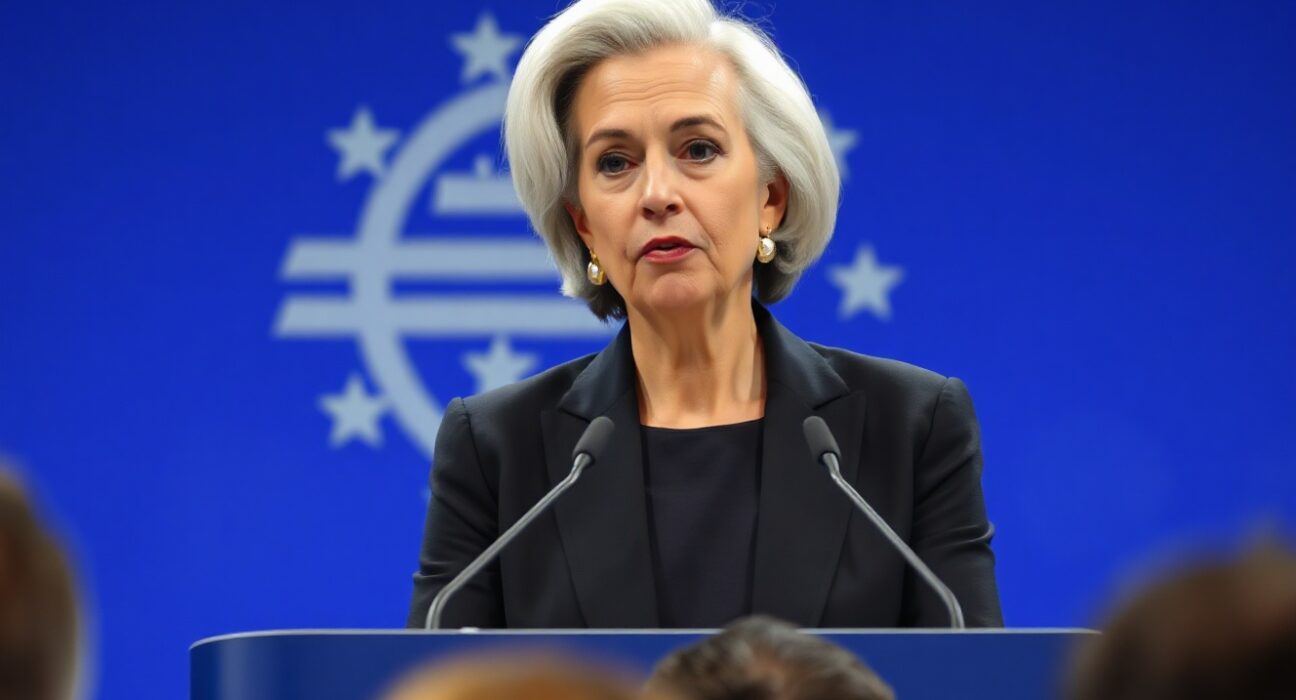
European Central Bank President Christine Lagarde acknowledged on Thursday that the institution has begun to observe second-round effects in the eurozone economy, a development that could complicate the path back to the bank’s 2% inflation target. Speaking during a press conference following the ECB’s latest monetary policy decision, Lagarde emphasized that while headline inflation has moderated, underlying price pressures remain a concern.
What Are Second-Round Effects and Why Do They Matter?
Second-round effects refer to the process where initial price shocks—such as higher energy or food costs—spill over into broader wage and price-setting behavior. When workers demand higher wages to compensate for rising living costs, and companies pass those higher labor costs onto consumers, inflation can become entrenched. Lagarde’s explicit acknowledgment that these dynamics are now visible signals that the ECB sees a greater risk of inflation persisting above target for longer than previously anticipated.
The ECB President noted that wage growth in the eurozone remains elevated, particularly in the services sector, which is more sensitive to labor costs. This has kept core inflation—which excludes volatile energy and food prices—stubbornly high, even as overall inflation has fallen from its peak of over 10% in late 2022.
Market and Policy Implications
Lagarde’s remarks come at a critical juncture for the ECB, which has already raised interest rates to record levels. The central bank is now in a holding pattern, assessing whether its tightening cycle has been sufficient to bring inflation under control. The emergence of second-round effects suggests that the final leg of the disinflation process may be the most difficult.
Investors interpreted the comments as a signal that the ECB will maintain its restrictive stance for longer, potentially delaying any consideration of rate cuts. European bond yields edged higher following the speech, while the euro strengthened modestly against the US dollar. Markets are now pricing in a later and shallower easing cycle than previously expected.
Broader Economic Context
The eurozone economy has been stagnating, with Germany—the bloc’s largest economy—teetering on the brink of recession. The ECB faces a delicate balancing act: keeping policy tight enough to quell inflation but not so tight that it crushes already weak growth. Lagarde’s warning on second-round effects tilts the balance toward continued caution.
Economists point out that the labor market remains historically tight across much of the eurozone, with unemployment at record lows. This gives workers bargaining power to push for higher wages, which, if sustained, could keep services inflation elevated. The ECB’s own staff projections show inflation only gradually returning to 2% by late 2025, a timeline that now appears optimistic if second-round effects become more pronounced.
Conclusion
Lagarde’s acknowledgment of second-round effects marks a significant shift in the ECB’s communication, underscoring the difficulty of the final stage of inflation control. For businesses and consumers, it means borrowing costs are likely to stay higher for longer, and the path to price stability remains uncertain. The ECB will now closely watch wage negotiations and corporate pricing behavior as it navigates the next phase of monetary policy.
FAQs
Q1: What exactly are second-round effects in inflation?
Second-round effects occur when an initial price shock—like higher energy costs—leads to higher wage demands and then to businesses raising prices further to cover those wages. This creates a self-reinforcing cycle that can make inflation persistent.
Q2: How does this affect ECB interest rate decisions?
If second-round effects are taking hold, the ECB is more likely to keep interest rates high for longer to prevent inflation from becoming entrenched. Rate cuts become less likely until there is clear evidence that wage and price pressures are cooling.
Q3: Which sectors are most vulnerable to second-round effects?
The services sector is most exposed because it is labor-intensive. Sectors like hospitality, retail, and professional services often pass higher wage costs directly to consumers through higher prices.
Disclaimer: The information provided is not trading advice, Bitcoinworld.co.in holds no liability for any investments made based on the information provided on this page. We strongly recommend independent research and/or consultation with a qualified professional before making any investment decisions.
