

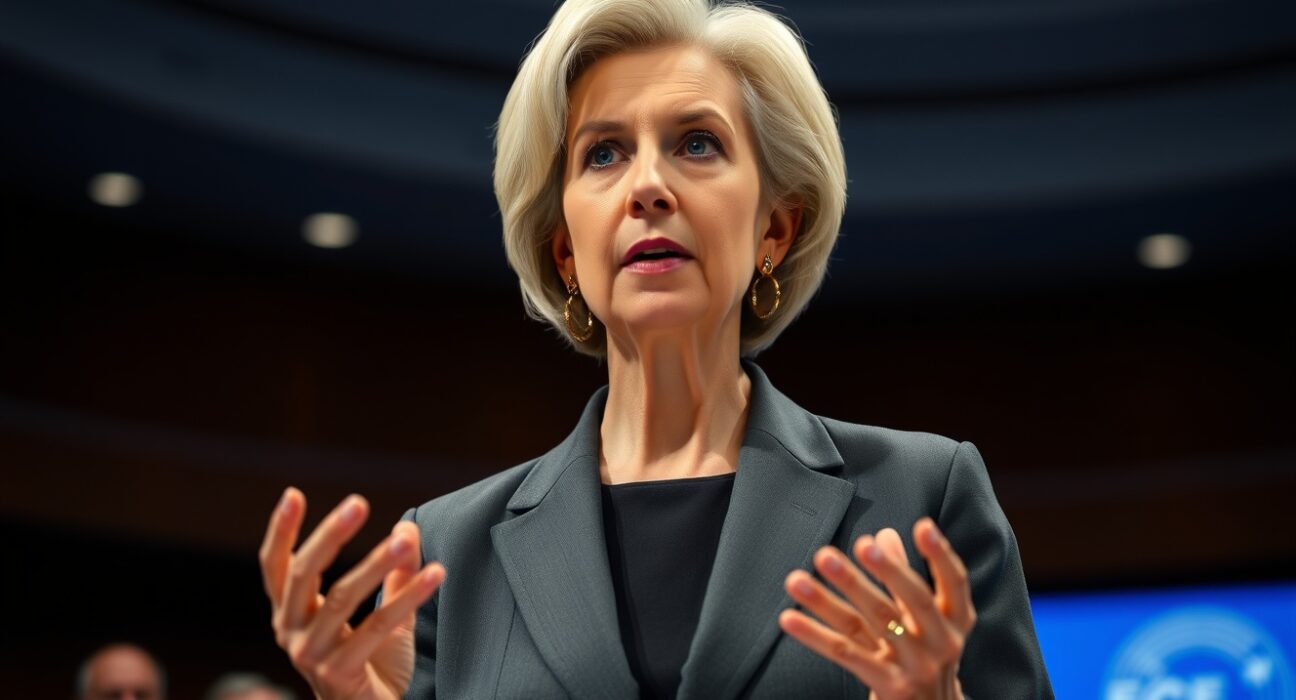
FRANKFURT, Germany – European Central Bank President Christine Lagarde delivered a critical warning this week that modern economies might adjust more quickly to inflation spikes than historical patterns suggest. Her speech at the ECB’s annual monetary policy conference highlighted evolving economic dynamics as central banks navigate post-pandemic recovery and geopolitical uncertainties. This analysis examines the implications of faster economic adjustment mechanisms for monetary policy in 2025 and beyond.
Lagarde’s Inflation Adjustment Framework
Christine Lagarde’s speech presented a nuanced view of inflation dynamics that diverges from traditional economic models. She emphasized that digitalization, supply chain restructuring, and labor market transformations have fundamentally altered how economies respond to price pressures. Consequently, policymakers must reconsider their assumptions about adjustment timelines.
Historical data shows inflation shocks typically took 6-8 quarters to fully transmit through economies. However, recent evidence suggests this transmission period may have shortened to 4-5 quarters. This acceleration presents both challenges and opportunities for central banks attempting to maintain price stability without triggering unnecessary economic contraction.
The Mechanics of Faster Economic Adjustment
Several structural factors contribute to this accelerated adjustment capability. First, real-time data analytics enable businesses to respond more swiftly to changing economic conditions. Second, flexible production systems allow for quicker adaptation to supply-demand imbalances. Third, digital payment systems and e-commerce platforms facilitate faster price transmission across markets.
Key adjustment mechanisms include:
- Automated pricing algorithms in retail and services
- Just-in-time inventory management systems
- Remote work capabilities reducing geographical wage rigidities
- Global supply chain diversification strategies
Monetary Policy Implications
Faster adjustment capabilities necessitate reconsideration of traditional monetary policy approaches. The ECB must balance responsiveness with caution, as premature or excessive tightening could unnecessarily constrain economic growth. Conversely, delayed action risks allowing inflationary expectations to become entrenched.
Recent ECB decisions reflect this balancing act. The bank has maintained a data-dependent approach while signaling willingness to adjust policy as new information emerges. This flexible stance acknowledges the increased uncertainty in current economic forecasting.
Comparative Analysis: ECB vs. Federal Reserve Approaches
The following table illustrates how different central banks approach inflation adjustment scenarios:
| Central Bank | Primary Adjustment Tool | Response Timeframe | 2025 Inflation Target |
|---|---|---|---|
| European Central Bank | Interest Rate Policy | 4-6 quarters | 2.0% |
| Federal Reserve | Dual Mandate Balance | 3-5 quarters | 2.0% |
| Bank of England | Forward Guidance | 5-7 quarters | 2.0% |
| Bank of Japan | Yield Curve Control | 6-8 quarters | 2.0% |
Economic Resilience in the Digital Age
Modern economies demonstrate remarkable resilience through digital transformation. Cloud computing enables remote work continuity during disruptions. Blockchain technology facilitates secure cross-border transactions. Artificial intelligence optimizes resource allocation across sectors. These technological advancements collectively enhance economic adjustment capabilities.
However, this resilience comes with new vulnerabilities. Cybersecurity threats pose risks to financial infrastructure. Digital divides may exacerbate economic inequalities. Algorithmic trading can amplify market volatility. Policymakers must address these challenges while harnessing technological benefits.
Expert Perspectives on Adjustment Speed
Leading economists offer varying interpretations of Lagarde’s observations. Some experts argue faster adjustment reduces the need for aggressive monetary intervention. Others caution that rapid responses might create whipsaw effects in financial markets. Most agree that central banks need enhanced monitoring tools to track real-time economic adjustments.
The International Monetary Fund’s recent research supports Lagarde’s assessment. Their models show adjustment speeds increasing by approximately 30% compared to pre-pandemic levels. This acceleration appears most pronounced in service sectors and digital economies.
Market Reactions and Forward Guidance
Financial markets responded cautiously to Lagarde’s speech. Bond yields showed modest increases reflecting expectations of potentially tighter policy. Equity markets exhibited sector-specific movements, with technology stocks generally outperforming traditional industries. Currency markets saw limited euro appreciation against major counterparts.
The ECB’s forward guidance remains deliberately flexible. Officials emphasize data dependency over predetermined policy paths. This approach acknowledges the heightened uncertainty in current economic forecasting. Market participants generally interpret this flexibility as prudent rather than indecisive.
Conclusion
Christine Lagarde’s speech highlights a fundamental shift in economic adjustment mechanisms. Modern economies appear capable of responding more quickly to inflation pressures than previously assumed. This acceleration presents both opportunities and challenges for monetary policymakers. The ECB must navigate this new landscape with careful calibration of policy tools. Ultimately, understanding these evolving dynamics proves essential for maintaining price stability and supporting sustainable economic growth in 2025 and beyond.
FAQs
Q1: What did Christine Lagarde say about inflation adjustment?
ECB President Lagarde suggested modern economies might adjust more quickly to inflation spikes than historical patterns indicate, citing digitalization and supply chain changes as key factors.
Q2: How does faster economic adjustment affect monetary policy?
Faster adjustment requires central banks to be more responsive with policy decisions while maintaining flexibility, as traditional response timelines may no longer apply effectively.
Q3: What factors contribute to quicker economic adjustments?
Digital payment systems, real-time data analytics, flexible production methods, and global supply chain diversification all enable faster responses to economic changes.
Q4: How did financial markets react to Lagarde’s speech?
Markets showed cautious responses with modest bond yield increases and sector-specific equity movements, generally interpreting the comments as signaling potential policy adjustments.
Q5: What are the risks of faster economic adjustment?
Potential risks include increased market volatility, whipsaw effects from rapid policy changes, and possible amplification of economic inequalities through digital divides.
Disclaimer: The information provided is not trading advice, Bitcoinworld.co.in holds no liability for any investments made based on the information provided on this page. We strongly recommend independent research and/or consultation with a qualified professional before making any investment decisions.