
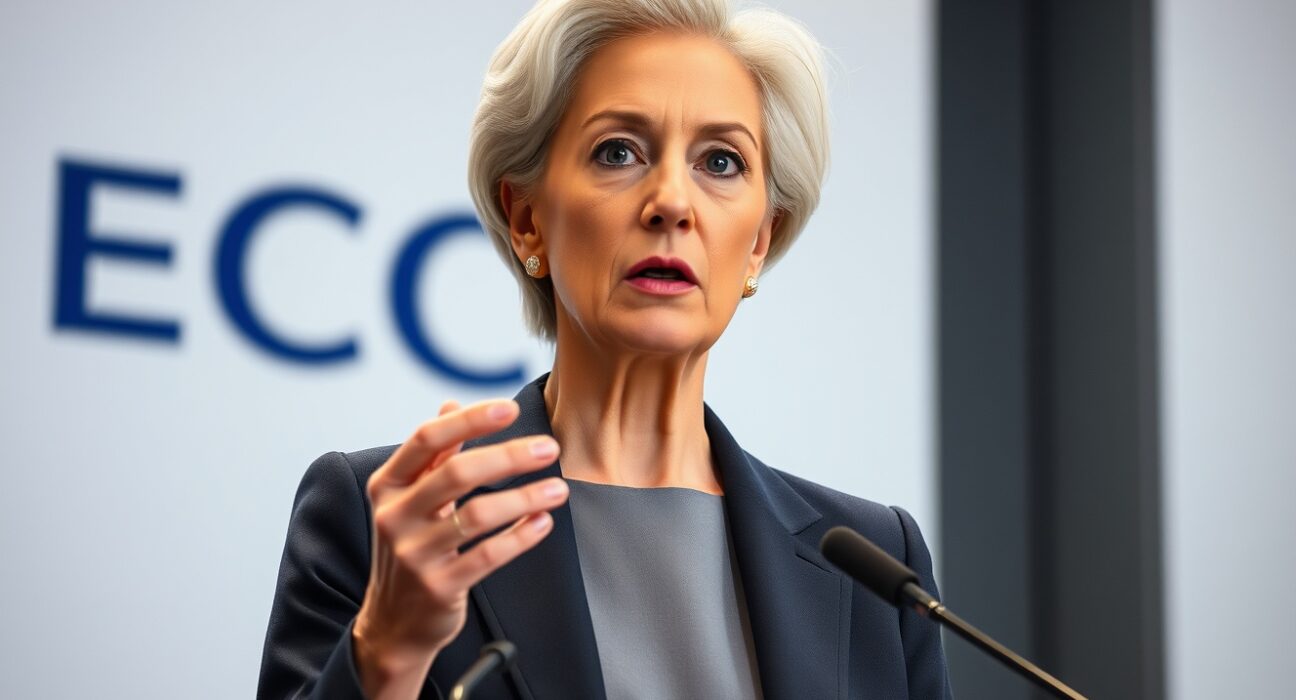
European Central Bank President Christine Lagarde delivered a critical warning this week that prolonged geopolitical conflict could trap energy prices at elevated levels for an extended period, potentially reshaping inflation trajectories and economic policy across Europe in 2025. Speaking at the ECB’s monetary policy meeting in Frankfurt, Germany, on March 12, 2025, Lagarde highlighted how sustained warfare creates persistent supply chain vulnerabilities that directly impact consumer costs and central bank decisions. Her analysis comes amid ongoing market volatility and provides essential context for understanding future economic conditions.
Lagarde Speech Details Energy Price Vulnerabilities
Christine Lagarde’s address systematically outlined the transmission mechanisms between prolonged conflict and energy market stability. She emphasized that modern warfare extends beyond traditional battlefields to disrupt critical infrastructure, shipping routes, and production facilities. Consequently, these disruptions create supply bottlenecks that persist long after initial conflicts subside. Historical data from previous geopolitical crises shows energy price spikes typically last 18-24 months, but Lagarde suggested current conditions could extend this timeline significantly.
Furthermore, the ECB President noted that energy markets now face compounded pressures from multiple directions. Climate transition policies, infrastructure investment gaps, and increasing global demand all interact with conflict-related disruptions. This complex web of factors means price corrections may occur more slowly than in previous decades. Market analysts immediately responded to her comments by adjusting their 2025-2026 energy price forecasts upward by approximately 8-12% across major European benchmarks.
Economic Impacts of Sustained Energy Price Pressure
Persistently high energy costs create cascading effects throughout the European economy. Manufacturing sectors face increased production expenses that often translate to higher consumer prices. Transportation and logistics networks experience cost inflation that impacts everything from food distribution to industrial supply chains. Household budgets become strained as heating, electricity, and fuel expenses consume larger portions of disposable income.
The following table illustrates the projected impact across key sectors:
| Economic Sector | Projected Cost Increase | Timeline |
|---|---|---|
| Manufacturing | 9-14% | 2025-2026 |
| Transportation | 12-18% | 2025-2027 |
| Household Energy | 7-11% | 2025 only |
| Food Production | 6-9% | 2025-2026 |
These projections come from ECB internal modeling that incorporates Lagarde’s warnings about prolonged conflict scenarios. The central bank’s research department has developed multiple economic models showing how different conflict durations affect price stability across Europe.
Expert Analysis on Inflation Trajectories
Financial experts across Europe have analyzed Lagarde’s statements within broader economic contexts. Dr. Markus Schmidt, Chief Economist at the Berlin Institute for Economic Research, notes that energy represents approximately 20% of the Eurozone’s inflation basket. “When energy prices remain elevated for extended periods,” Schmidt explains, “they gradually filter into other price categories through secondary effects. Producers pass costs to consumers, service providers adjust pricing, and wage negotiations incorporate higher living expenses.”
This analysis aligns with historical patterns observed during the 1970s oil crises and more recent supply chain disruptions. However, contemporary economies face additional complexities from digital transformation and climate policies that alter traditional transmission mechanisms. The ECB must therefore monitor both direct energy costs and their broader economic reverberations when formulating monetary policy.
Central Bank Policy Responses to Energy-Led Inflation
The European Central Bank maintains multiple policy tools to address energy-driven inflation while supporting economic growth. Interest rate adjustments represent the primary mechanism, but Lagarde emphasized the importance of targeted measures during her speech. The ECB can implement:
- Strategic reserve operations to stabilize energy markets
- Targeted lending programs for affected industries
- Enhanced communication strategies to manage expectations
- Coordination with fiscal authorities on subsidy programs
These measures aim to prevent temporary energy price spikes from becoming entrenched in long-term inflation expectations. Historical evidence shows that when consumers and businesses expect continued price increases, they adjust behavior in ways that perpetuate inflationary cycles. The ECB’s forward guidance therefore plays a crucial role in stabilizing markets during periods of geopolitical uncertainty.
Global Context and Comparative Analysis
Europe’s energy price challenges exist within a broader global landscape. Other major economies face similar pressures from geopolitical tensions and supply chain restructuring. The United States benefits from greater domestic energy production but experiences transmission effects through global markets. China’s manufacturing sector faces competing pressures from energy costs and export demand fluctuations.
International coordination through forums like the G7 and G20 becomes increasingly important during prolonged conflicts. Central banks must balance domestic priorities with global financial stability considerations. Lagarde specifically mentioned the importance of “consistent messaging and coordinated action” among major economies to prevent destabilizing capital flows and currency volatility. This international dimension adds complexity to national policy decisions but remains essential for effective economic management.
Historical Precedents and Future Projections
Economic historians identify several relevant precedents for understanding current energy market dynamics. The 1973 oil embargo created sustained price increases that lasted approximately four years and reshaped global energy policies. More recently, the 2014-2016 oil price decline resulted from technological innovations in extraction rather than geopolitical resolution. These examples demonstrate that energy markets respond to diverse factors beyond immediate conflict situations.
Looking forward, energy analysts project several potential scenarios based on conflict duration and resolution mechanisms. A swift diplomatic resolution could see prices normalize within 12-18 months, while prolonged stalemates might extend elevated pricing through 2027. The most severe scenarios involving expanded conflict could trigger structural market changes that persist beyond the current decade. Lagarde’s speech carefully acknowledged this range of possibilities while emphasizing preparedness for challenging outcomes.
Conclusion
Christine Lagarde’s speech delivers a crucial warning about the relationship between prolonged conflict and sustained energy price elevation. Her analysis provides essential context for understanding 2025 economic conditions and central bank policy directions. The European Central Bank monitors these developments closely while preparing appropriate responses to maintain price stability and support economic growth. Market participants, policymakers, and consumers must all consider how extended geopolitical tensions might reshape energy markets and inflation trajectories in coming years. Ultimately, the Lagarde speech highlights the interconnected nature of modern economies and the importance of strategic preparedness during periods of uncertainty.
FAQs
Q1: What specific conflicts did Christine Lagarde reference in her speech?
Lagarde discussed ongoing geopolitical tensions generally rather than naming specific conflicts, focusing on how any prolonged warfare affects energy infrastructure, shipping routes, and production stability across regions.
Q2: How do energy prices directly impact overall inflation rates?
Energy costs represent approximately 20% of the Eurozone inflation basket and influence other price categories through production costs, transportation expenses, and household spending patterns that gradually filter through the economy.
Q3: What policy tools does the ECB have to address energy-driven inflation?
The European Central Bank can adjust interest rates, implement targeted lending programs, conduct strategic market operations, enhance communication strategies, and coordinate with fiscal authorities on supportive measures.
Q4: How long might energy prices remain elevated according to Lagarde’s analysis?
While avoiding specific timelines, Lagarde suggested prolonged conflict could extend typical 18-24 month price elevation periods significantly, with some scenarios potentially lasting through 2027 depending on conflict resolution and market conditions.
Q5: How does Europe’s situation compare to other major economies?
Europe faces particular vulnerability due to energy import dependence, while the United States benefits from greater domestic production. All major economies experience transmission effects through interconnected global markets and supply chains.
Disclaimer: The information provided is not trading advice, Bitcoinworld.co.in holds no liability for any investments made based on the information provided on this page. We strongly recommend independent research and/or consultation with a qualified professional before making any investment decisions.