

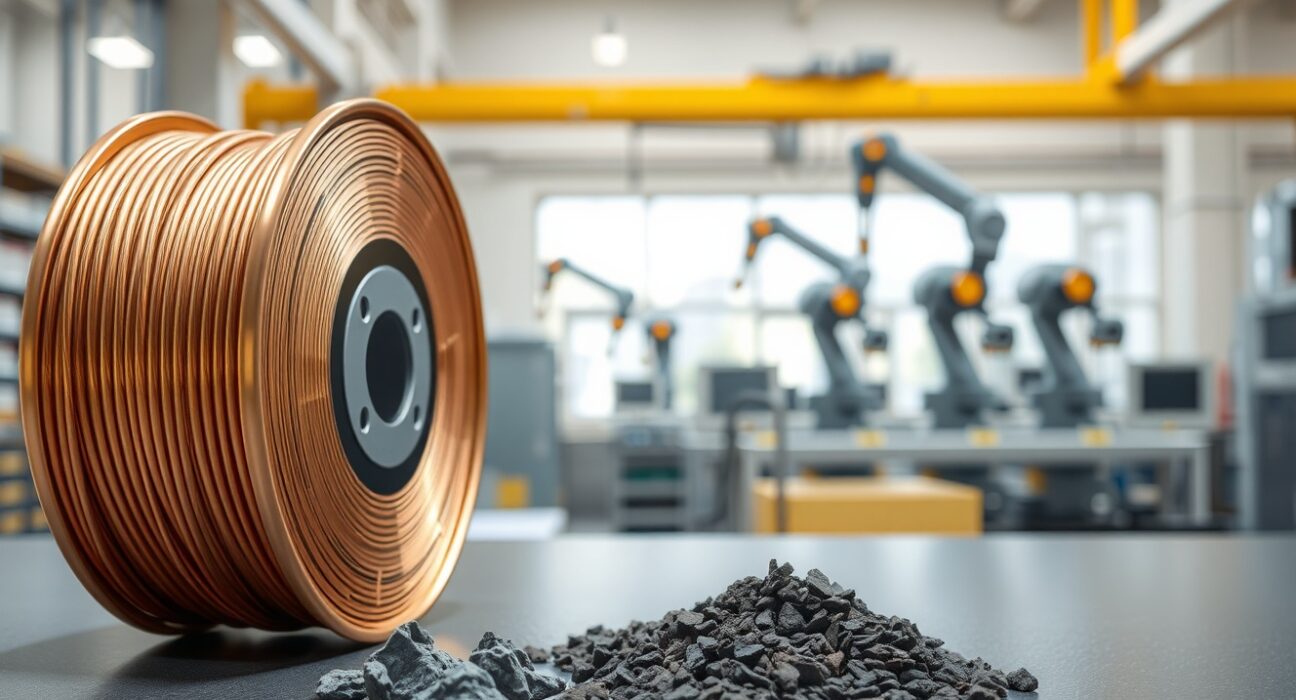
SEOUL, South Korea – December 2025 – LS Cable & System, South Korea’s premier cable manufacturer, is strategically pursuing a security token business to enable stock-like trading of copper and rare earth elements. Consequently, this initiative positions these materials as critical strategic assets in the artificial intelligence era. The company plans to launch this security token offering (STO) initiative alongside South Korea’s implementation of a comprehensive legal framework for security tokens next year. Therefore, this move aims to quickly liquidate over 1 trillion won ($725 million) in raw material assets. Ultimately, this liquidity will accelerate investments in crucial projects, including new factory construction and technological advancement.
LS Cable & System’s Security Token Business Strategy
LS Cable & System’s security token business represents a significant evolution in commodity trading. The company intends to tokenize physical holdings of copper and rare earth elements. These digital tokens will represent fractional ownership of the underlying physical assets. Subsequently, investors can trade these security tokens on regulated digital asset platforms. This approach transforms illiquid industrial inventories into liquid financial instruments. Moreover, the strategy aligns with global trends toward asset tokenization across multiple industries.
The company’s substantial inventory includes approximately 1 trillion won ($725 million) in copper and rare earth materials. These materials serve as essential components in electrical cables and advanced technologies. By tokenizing these assets, LS Cable & System can unlock their value without selling physical inventory. This financial engineering enables the company to maintain operational flexibility while accessing capital. Furthermore, the security token structure provides transparency through blockchain technology.
The Critical Role of Copper and Rare Earth Elements
Copper and rare earth elements have become increasingly strategic in contemporary technology landscapes. Copper serves as the fundamental conductive material in electrical systems worldwide. The global transition to renewable energy and electric vehicles dramatically increases copper demand. According to industry analysts, copper consumption could rise by 50% within the next decade. This surge stems from electrification initiatives across transportation, infrastructure, and manufacturing sectors.
Rare earth elements, including neodymium, dysprosium, and praseodymium, enable advanced technological applications. These materials are essential for powerful permanent magnets in electric motors and generators. Additionally, rare earths facilitate miniaturization in electronics and enhance performance in defense systems. The artificial intelligence revolution further amplifies demand for these specialized materials. AI infrastructure requires substantial computing power, which depends on rare earth-enabled components.
Geopolitical and Supply Chain Considerations
The global supply chain for rare earth elements remains concentrated in specific regions. China currently dominates rare earth production and processing capabilities. This concentration creates strategic vulnerabilities for technology-dependent economies. South Korea, as a major technology manufacturer, requires secure access to these critical materials. LS Cable & System’s security token initiative addresses this challenge through financial innovation. The company can leverage its existing inventory while supporting national strategic interests.
Copper markets face different but equally significant challenges. Mining production struggles to keep pace with accelerating demand. New copper discoveries have declined in recent years despite technological advances. Environmental regulations and community opposition further complicate mining expansion. These constraints create supply-demand imbalances that increase price volatility. Security tokenization offers a mechanism to manage these market dynamics more effectively.
South Korea’s Evolving Regulatory Framework
South Korea’s financial authorities are developing comprehensive regulations for security token offerings. The Financial Services Commission (FSC) has announced plans to implement these regulations in 2026. This regulatory framework will establish clear guidelines for STO issuance, trading, and investor protection. The framework addresses several critical aspects of security token markets. These include custody requirements, disclosure standards, and trading platform regulations.
The forthcoming regulations build upon South Korea’s existing digital asset framework. The country has progressively developed its approach to cryptocurrency and blockchain technologies. Initially focused on anti-money laundering and investor protection, regulations now encompass broader financial innovation. The security token framework represents the next evolutionary step. This progression reflects South Korea’s ambition to become a digital finance leader in Asia.
Key regulatory components likely include:
- Issuance Requirements: Standards for asset backing, disclosure, and custodianship
- Trading Platforms: Licensing requirements for security token exchanges
- Investor Protection: Suitability standards and risk disclosure mandates
- Market Integrity: Surveillance mechanisms to prevent manipulation
- Taxation Framework: Clear guidelines for capital gains and income taxation
Financial Implications and Strategic Investments
LS Cable & System’s security token initiative has substantial financial implications. The company aims to convert 1 trillion won ($725 million) in inventory into liquid assets. This conversion will provide immediate capital for strategic investments. The company has identified several priority areas for this funding. These include factory modernization, research and development, and market expansion initiatives.
The capital will accelerate construction of new manufacturing facilities. These facilities will incorporate advanced automation and environmental technologies. Additionally, the company plans to expand its research into next-generation materials. This research focuses on improving conductivity, durability, and sustainability. The security token proceeds will also support international expansion efforts. LS Cable & System seeks to strengthen its position in global markets, particularly in North America and Europe.
Comparative Analysis: Traditional vs. Tokenized Commodity Trading
| Aspect | Traditional Commodity Trading | Security Token Trading |
|---|---|---|
| Accessibility | Limited to institutional investors | Potentially accessible to retail investors |
| Liquidity | Variable, often limited for physical assets | Enhanced through fractional ownership |
| Settlement Time | Days to weeks for physical delivery | Near-instantaneous digital settlement |
| Transparency | Opaque pricing and ownership chains | Blockchain-enabled transparency |
| Minimum Investment | Typically high for physical commodities | Potentially lower through fractionalization |
Industry Context and Competitive Landscape
The security token business for commodities represents an emerging trend globally. Several international companies have announced similar initiatives in recent months. Mining corporations in Australia and Canada are exploring asset tokenization strategies. These companies seek to improve capital efficiency and investor access. However, LS Cable & System’s approach differs in important respects. The company focuses on processed materials rather than raw extraction assets.
South Korean conglomerates increasingly embrace digital asset strategies. Samsung has invested substantially in blockchain infrastructure and cryptocurrency custody. Hyundai Motor Group explores tokenization for automotive supply chains. LG develops blockchain solutions for energy trading and carbon credits. This corporate activity reflects South Korea’s broader technological ambitions. The country aims to establish leadership in both traditional manufacturing and digital innovation.
LS Cable & System operates within Korea’s LS Group, a diversified industrial conglomerate. The group maintains interests in energy, construction, and technology sectors. This diversified structure provides strategic advantages for the security token initiative. The company can leverage group resources and expertise across multiple domains. Additionally, the initiative aligns with LS Group’s digital transformation strategy.
Technological Infrastructure and Implementation
The security token business requires robust technological infrastructure. LS Cable & System will likely partner with specialized technology providers. These partnerships will address blockchain development, token issuance, and trading platform integration. The company must ensure system security, scalability, and regulatory compliance. These technical considerations are essential for successful implementation.
Blockchain technology provides the foundation for security token functionality. Distributed ledger technology enables transparent ownership records and transaction history. Smart contracts automate various aspects of token management. These include dividend distributions, voting rights, and compliance requirements. The technological implementation must balance innovation with reliability. Industrial applications demand higher stability than speculative cryptocurrency projects.
The company will establish connections between physical assets and digital tokens. This connection requires rigorous auditing and verification processes. Independent auditors must verify inventory quantities and quality standards. These verification mechanisms ensure token value corresponds to underlying asset value. Additionally, secure custody arrangements protect physical assets throughout the token lifecycle.
Conclusion
LS Cable & System’s security token business for copper and rare earths represents a forward-looking strategic initiative. The company positions itself at the intersection of traditional industry and digital finance. This security token approach addresses multiple challenges simultaneously. It enhances liquidity for strategic assets while supporting South Korea’s technological ambitions. The initiative aligns with evolving regulatory frameworks and market trends. Ultimately, successful implementation could transform how industrial companies manage and monetize physical assets. The security token model may establish new standards for commodity trading in the digital age.
FAQs
Q1: What is a security token offering (STO) for commodities?
A security token offering represents fractional ownership of physical assets through digital tokens. These tokens function similarly to traditional securities but utilize blockchain technology for issuance and trading.
Q2: Why is LS Cable & System pursuing this security token business?
The company aims to liquidate substantial inventory of copper and rare earth elements to fund strategic investments. This approach provides capital while maintaining operational access to essential materials.
Q3: How do copper and rare earth elements relate to artificial intelligence?
AI infrastructure requires substantial computing power and advanced electronics. Copper enables efficient power distribution, while rare earth elements facilitate powerful magnets and miniaturized components essential for AI systems.
Q4: When will LS Cable & System launch its security token initiative?
The company plans to launch in alignment with South Korea’s implementation of security token regulations, expected in 2026 following finalization of the legal framework.
Q5: How does this security token business differ from cryptocurrency trading?
Security tokens represent ownership in regulated financial assets with underlying value. Cryptocurrencies typically function as decentralized digital currencies without direct asset backing or regulatory oversight.
Disclaimer: The information provided is not trading advice, Bitcoinworld.co.in holds no liability for any investments made based on the information provided on this page. We strongly recommend independent research and/or consultation with a qualified professional before making any investment decisions.
