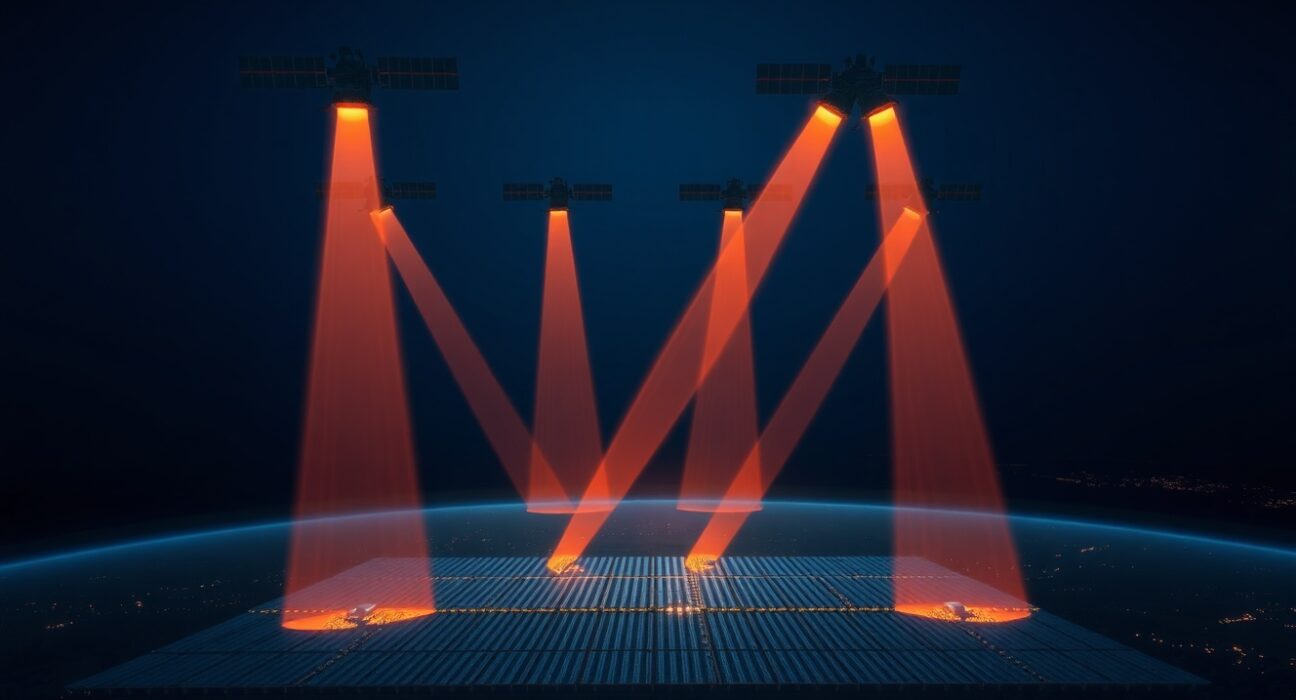
Meta has signed a groundbreaking agreement with startup Overview Energy to beam solar power from space at night. This deal could reshape how AI data centers secure electricity. The plan involves a thousand satellites sending infrared light to solar farms on Earth. These farms then convert that light into electricity for data centers. Meta’s data centers used over 18,000 gigawatt-hours of electricity in 2024. That amount powers roughly 1.7 million American homes for a year. The company’s need for compute power continues to rise. Meta committed to building 30 gigawatts of renewable power sources. It focuses on industrial-scale solar power plants. Normally, data centers using solar power need battery storage or other generation at night. Overview offers a different solution.
How Space-Based Solar Power Works for Meta
Overview Energy, a four-year-old startup from Ashburn, Virginia, emerged from stealth in December. The company develops spacecraft that collect plentiful solar power in space. It then converts that energy to near-infrared light. This light is beamed at large solar farms, each hundreds of megawatts in size. These farms can convert the light to electricity. By using a wide, infrared beam, Overview avoids technological challenges. It also sidesteps safety and regulatory issues linked to high-power lasers or microwave beams. CEO Marc Berte says you can stare into the satellite’s beam with no ill effects. The technology increases the return on investment for solar farms. It also reduces reliance on fossil fuels, if deployed at scale.
Demonstration and Timeline
Overview already demonstrated power transmission to the ground from an aircraft. The company plans to launch a satellite to low Earth orbit in January 2028. This satellite will perform its first power transmission from space. Meta signed the first capacity reservation agreement with Overview. The deal covers up to 1 gigawatt of power from the company’s spacecraft. It is unclear if any money changed hands. Overview developed a new metric for this contract: megawatt photons. This measures the amount of light needed to generate a megawatt of electricity. Berte expects to begin launching satellites in 2030. The goal is to fly 1,000 spacecraft in geosynchronous orbit. Each satellite remains fixed above the same point on Earth. Each spacecraft is expected to provide power for more than 10 years.
Global Coverage and Flexibility
Once in space, the fleet will cover about a third of the planet. Initial deployment will reach from the West Coast of the United States to Western Europe. As Earth rotates, customer solar farms enter evening and night. Overview’s spacecraft boost their electrical generation with additional light from space. Berte sees opportunity in combining generation and transmission. The system offers flexibility to deliver power to solar farms wherever and whenever it is most valuable. “There’s a big difference between being in any one energy market, and being in all of the energy markets,” Berte told Bitcoin World.
AI Energy Demand Drives Innovation
The race to secure electricity for AI models has reached new heights. Meta’s energy consumption is soaring. AI training and inference require massive computational resources. Traditional renewable sources struggle to meet 24/7 demand. Solar power alone cannot supply energy at night. Battery storage remains expensive and limited. Space-based solar power offers a continuous, scalable solution. It bypasses weather and day-night cycles. This technology could transform the energy landscape for tech giants. Other companies may follow Meta’s lead.
Comparison with Other Renewable Solutions
| Energy Source | Advantages | Disadvantages |
|---|---|---|
| Space-based solar | Continuous power, no weather issues | High initial cost, unproven at scale |
| Terrestrial solar + batteries | Mature technology, falling costs | Limited storage duration, land use |
| Wind power | Low cost, abundant in some regions | Intermittent, noise, wildlife impact |
| Nuclear power | Steady baseload, low carbon | High cost, waste, safety concerns |
Challenges and Future Prospects
Overview faces significant hurdles. Deploying 1,000 satellites is expensive and complex. Each launch costs millions. Regulatory approval for space-based power transmission is uncertain. The technology must prove reliable at scale. Berte remains confident. The company already has a demonstration satellite planned. If successful, Meta could reduce its carbon footprint significantly. The deal also signals growing investor interest in space-based energy. Governments may support such projects to meet climate goals.
Industry Impact and Expert Views
Tim Fernholz, a senior reporter covering space and technology, notes the deal’s significance. He has written extensively on private space industry growth. The agreement shows how AI energy needs drive innovation. Other tech companies may explore similar partnerships. Overview’s approach could lower barriers to entry. Using existing solar infrastructure reduces costs. The wide infrared beam avoids safety concerns. This makes the technology more palatable to regulators.
Conclusion
Meta’s deal with Overview Energy marks a pivotal moment in renewable energy. Space-based solar power could provide continuous, clean electricity for AI data centers. The technology addresses the key limitation of terrestrial solar: nighttime operation. If successful, it will reduce reliance on fossil fuels and battery storage. The project is ambitious but achievable. With a 2028 satellite launch and 2030 fleet deployment, the future of energy is literally reaching for the stars. Meta’s commitment to 30 gigawatts of renewable power now includes an innovative space component. This deal could inspire a new era of energy generation.
FAQs
Q1: What is Meta’s deal with Overview Energy?
Meta signed an agreement to receive up to 1 gigawatt of space-based solar power. Overview will use satellites to beam infrared light to solar farms at night.
Q2: How does space-based solar power work?
Satellites collect solar energy in space, convert it to near-infrared light, and beam it to terrestrial solar farms. These farms convert the light into electricity.
Q3: When will the first satellite launch?
Overview plans to launch a demonstration satellite to low Earth orbit in January 2028. Full deployment of 1,000 satellites is expected by 2030.
Q4: Is the technology safe?
CEO Marc Berte says the wide infrared beam is safe to look at. It avoids the dangers of high-power lasers or microwaves.
Q5: Why does Meta need this technology?
Meta’s AI data centers consume massive amounts of electricity. Solar power alone cannot operate at night. Space-based solar provides continuous, clean energy.
Disclaimer: The information provided is not trading advice, Bitcoinworld.co.in holds no liability for any investments made based on the information provided on this page. We strongly recommend independent research and/or consultation with a qualified professional before making any investment decisions.