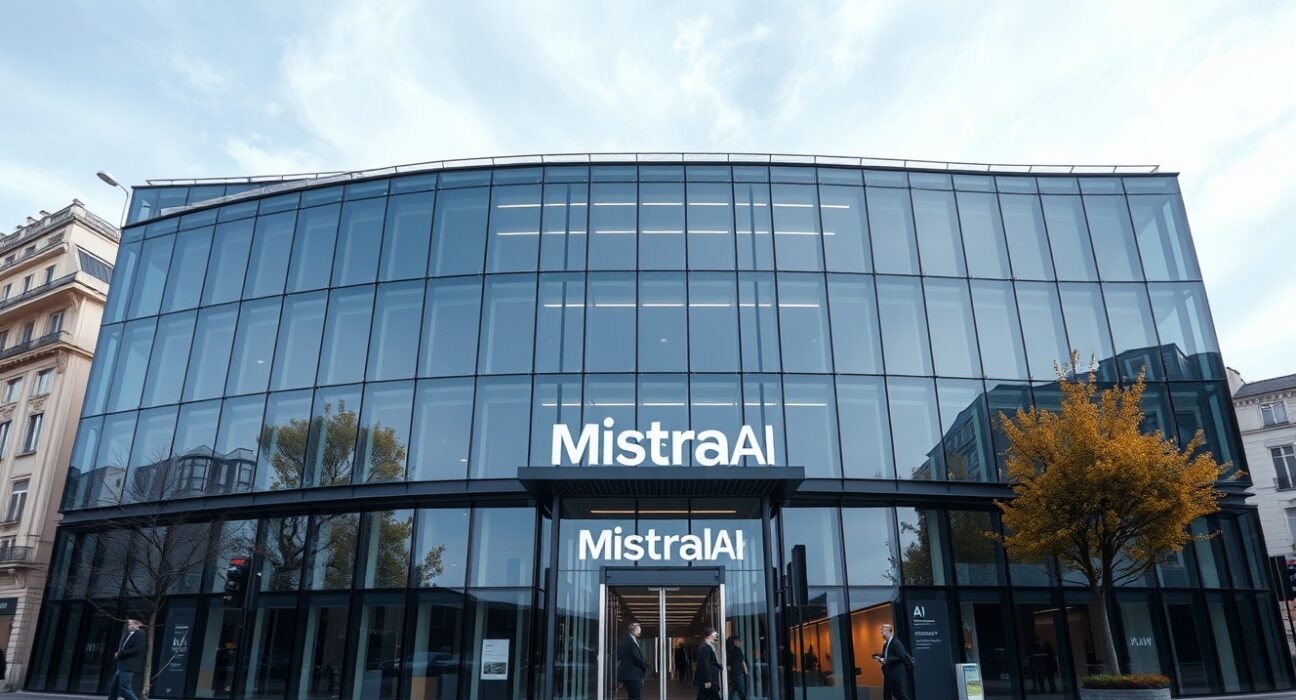
Mistral AI has become a focal point in the global AI conversation, particularly after recent geopolitical shifts and growing calls for sovereign technology that reduces reliance on U.S. firms. But the Paris-based company is often misunderstood. While many compare it to OpenAI or Anthropic, Mistral is following a distinctly different playbook — one rooted in enterprise deployment, government partnerships, and a commitment to open-weight models.
What Mistral AI Actually Does
Unlike consumer-facing chatbots that dominate headlines, Mistral AI focuses on deploying its large language models (LLMs) and agent platform, Vibe (formerly Le Chat), directly onto the infrastructure of enterprise customers. Through its Forge platform, organizations can build custom models using their own data. This approach mirrors the strategy of Palantir, with forward-deployed engineers helping governments and large corporations tailor AI for specific use cases.
CEO Arthur Mensch has been explicit about this vision. In a detailed LinkedIn post, he described the company’s core mission: “We exist to make sure that everyone gets access to the best AI systems, outside of centralized control exercised by states or corporations that feel the need to control in-fine deployment of AI.” This sovereignty-driven ethos has resonated strongly in Europe, where concerns about data independence and technological autonomy are mounting.
Financial Trajectory and Recent Milestones
Mistral’s financial growth has been striking. In February 2025, the company disclosed an annual recurring revenue (ARR) of over $400 million, up from just $20 million a year earlier, and projected surpassing $1 billion in ARR by year-end. The company is reportedly raising approximately $3.5 billion at a $23.15 billion valuation, nearly doubling its previous valuation.
This financial momentum has translated into strategic influence. Mistral has secured partnerships with major players including Microsoft, NVIDIA, Accenture, IBM, and ASML. In June 2025, it announced Mistral Compute, a European AI platform powered by NVIDIA processors, launching in 2026 — an initiative French President Emmanuel Macron called “historic.”
The Sovereign AI Vision
Mistral’s strategy is deeply intertwined with European sovereignty concerns. The company has announced a €4 billion investment plan to build data centers in France and Sweden, and acquired infrastructure startup Koyeb to advance its “true AI cloud” ambitions. Its AI for Citizens initiative, launched in July 2025, aims to help states and public institutions deploy AI strategically for public services.
Mensch has framed this as a matter of securing affordable, reliable AI infrastructure. “We’re building under the premise that AI technology is a commodity technology that every organization needs a secured and affordable supply of,” he wrote. This positioning has earned Mistral a seat at high-level discussions, including the French Parliament and the World Economic Forum in Davos.
Upcoming Open-Weight Model and Research Ambitions
Despite its enterprise focus, Mistral continues to invest heavily in foundational research. Mensch has acknowledged that the company does not yet own the best language models but claims it is steadily closing the gap. He teased an upcoming open-weight model set for early access in July 2025, with broader release in summer. In areas like voice, vision, and document processing, Mensch asserts Mistral already has state-of-the-art solutions.
The company’s model portfolio is broad, ranging from LLMs to multimodal, reasoning, audio, and OCR models. It has also open-sourced its code agent Leanstral and released “Les Ministraux,” a family of models optimized for edge devices like smartphones.
Funding, Leadership, and Exit Strategy
Mistral was founded in May 2023 by three former AI researchers: CEO Arthur Mensch (ex-DeepMind), CTO Timothée Lacroix, and chief scientist Guillaume Lample (both ex-Meta). The company has raised approximately $4 billion in total, including Europe’s largest seed round ($113 million), a Series A led by Andreessen Horowitz, and a €1.7 billion Series C led by ASML in September 2025.
Mensch has stated unequivocally that Mistral is “not for sale” and that an IPO is the plan. Given the company’s valuation and investor expectations, an acquisition — even by a deep-pocketed buyer like Apple — would likely not provide sufficient returns, not to mention the sovereignty concerns such a deal would raise.
Conclusion
Mistral AI is not simply trying to be the “OpenAI of Europe.” It is building a different kind of AI company — one focused on enterprise sovereignty, open-weight models, and strategic partnerships with governments and large corporations. With accelerating revenue, a clear vision, and growing geopolitical relevance, Mistral is positioning itself as a key player in the global AI landscape, particularly for those seeking alternatives to centralized control.
FAQs
Q1: What is Mistral AI’s main business model?
Mistral AI focuses on deploying its language models and agent platform on enterprise infrastructure, helping organizations build custom AI solutions through its Forge platform. It also offers open-weight models for broader use.
Q2: How does Mistral AI differ from OpenAI or Anthropic?
While OpenAI and Anthropic emphasize consumer-facing products and frontier research, Mistral prioritizes enterprise deployment, government partnerships, and sovereign AI infrastructure. It also maintains a stronger commitment to open-weight models.
Q3: Is Mistral AI planning to go public?
Yes. CEO Arthur Mensch has stated that an IPO is the company’s plan, and that Mistral is “not for sale.” This aligns with its significant fundraising and valuation trajectory.
Frequently Asked Questions
How is Mistral AI different from OpenAI or Anthropic?
Mistral focuses on enterprise deployment and government partnerships with open-weight models, rather than consumer-facing chatbots, and prioritizes data sovereignty over centralized control.
What does Mistral AI’s Forge platform do?
Forge allows enterprise customers to build custom AI models using their own data, with forward-deployed engineers helping tailor solutions for specific use cases.
Why is Mistral AI considered important for European sovereignty?
Its commitment to open-weight models and decentralized deployment reduces reliance on U.S. tech firms, aligning with European concerns about data independence and technological autonomy.
How fast is Mistral AI’s revenue growing?
Mistral’s annual recurring revenue surged from $20 million to over $400 million in a year, with projections to surpass $1 billion by the end of 2025.
Who are Mistral AI’s major partners?
Mistral has secured partnerships with Microsoft, NVIDIA, and Accenture, among other major players.
Disclaimer: The information provided is not trading advice, Bitcoinworld.co.in holds no liability for any investments made based on the information provided on this page. We strongly recommend independent research and/or consultation with a qualified professional before making any investment decisions.