
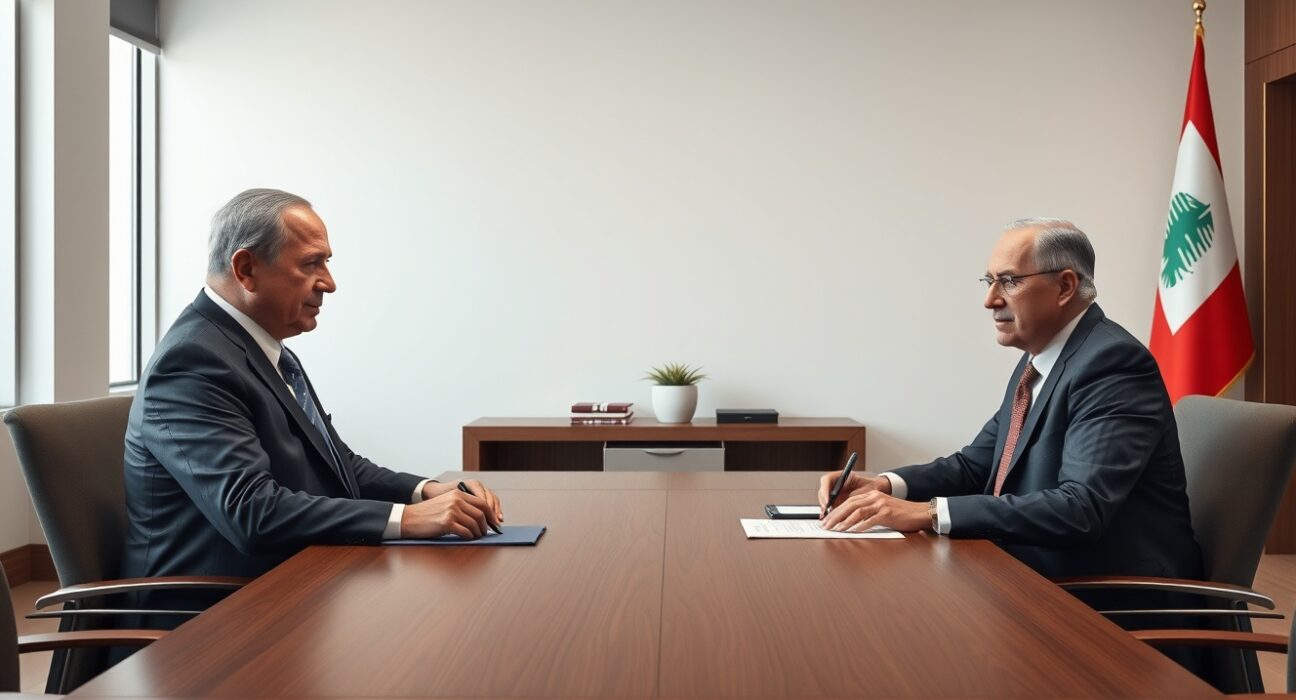
JERUSALEM, March 2025 – In a significant diplomatic development, Israeli Prime Minister Benjamin Netanyahu has ordered the immediate commencement of direct negotiations with Lebanon. This directive marks a pivotal shift in regional diplomacy, potentially altering long-standing geopolitical dynamics in the Middle East. The announcement follows months of behind-the-scenes diplomatic efforts and comes at a critical juncture for regional stability.
Netanyahu’s Directive for Lebanon Talks
Prime Minister Netanyahu made the announcement during a cabinet meeting earlier today. Consequently, he instructed Israel’s negotiation team to begin preparations immediately. The Israeli leader emphasized the urgency of these direct talks. Furthermore, he highlighted their importance for regional security. Historically, Israel and Lebanon have maintained tense relations. Therefore, this move represents a substantial diplomatic initiative.
The negotiations will address several longstanding issues. These include maritime border disputes and security concerns along the shared frontier. Additionally, they will cover economic cooperation possibilities. The talks follow the successful conclusion of maritime border negotiations in 2022. However, direct political dialogue remained elusive until now.
Historical Context of Israel-Lebanon Relations
Relations between Israel and Lebanon have been complex for decades. The 1948 Arab-Israeli war created initial tensions. Subsequently, the Lebanese Civil War further complicated matters. Israel’s 1982 invasion of Lebanon created deep wounds. Moreover, the 2006 war between Israel and Hezbollah intensified hostilities.
Despite these challenges, recent years showed gradual improvement. The 2022 maritime border agreement, mediated by the United States, established a precedent. This agreement demonstrated that diplomatic solutions were possible. However, comprehensive political dialogue remained absent. Now, Netanyahu’s order signals a potential breakthrough.
Expert Analysis of the Diplomatic Shift
Regional experts view this development as strategically significant. Dr. Sarah Cohen, a Middle East analyst at Tel Aviv University, explains the timing. “The regional landscape has evolved considerably,” she notes. “Several factors make direct talks more feasible now.” These factors include changing regional alliances and economic pressures.
Security considerations also play a crucial role. Hezbollah’s military capabilities have grown substantially. Therefore, establishing communication channels becomes increasingly important. Additionally, Lebanon’s economic crisis creates urgency for resolution. The country desperately needs stability and economic partnerships.
Potential Agenda for Direct Negotiations
The negotiations will likely follow a structured agenda. Maritime issues will probably receive immediate attention. The 2022 agreement established a framework. However, implementation details require further discussion. Security arrangements along the Blue Line will also be critical.
- Maritime Resources: Implementation of existing agreements and potential expansion
- Border Security: Mechanisms to prevent escalation and ensure stability
- Economic Cooperation: Potential areas for mutual economic benefit
- Diplomatic Relations: Steps toward normalization of relations
- Regional Stability: Coordination on broader regional security concerns
Each item presents both challenges and opportunities. For instance, maritime resources could benefit both economies. However, distribution mechanisms require careful negotiation.
Regional and International Reactions
Regional responses have been cautiously optimistic. Several Arab states have welcomed the announcement. They see it as part of broader normalization trends. The United States has expressed strong support. American officials have offered to facilitate the process if requested.
European Union representatives also welcomed the development. They emphasized the importance of stability in the Eastern Mediterranean. Meanwhile, United Nations officials noted the potential for reduced tensions. However, they cautioned that implementation would be crucial.
Security Implications and Considerations
Security experts highlight several important considerations. Direct communication channels could prevent accidental escalation. This is particularly important given recent tensions. Additionally, established protocols could manage border incidents more effectively.
The role of Hezbollah remains a critical factor. The organization maintains significant influence in Lebanon. Therefore, any agreement requires consideration of their position. However, the Lebanese government insists it represents all Lebanese interests. This includes those of Hezbollah’s constituency.
Economic Dimensions of the Negotiations
Economic factors provide strong motivation for both parties. Lebanon faces severe economic challenges. The country’s GDP has contracted dramatically in recent years. Additionally, currency devaluation has devastated living standards. Potential economic cooperation with Israel could provide relief.
Israel also stands to benefit economically. Access to Lebanese markets presents opportunities. Furthermore, stable borders encourage investment. Energy cooperation represents another potential area. The Levantine Basin contains substantial natural gas reserves. Joint development could benefit both nations.
Timeline and Implementation Challenges
The negotiation process will likely proceed in phases. Initial meetings will probably establish basic frameworks. Subsequently, working groups will address specific issues. This phased approach allows for gradual progress. However, it also presents challenges.
Domestic politics in both countries create complications. Netanyahu faces political pressures at home. Similarly, Lebanon’s fragmented political landscape presents obstacles. Additionally, historical grievances require sensitive handling. Public opinion in both nations remains divided on normalization.
Conclusion
Prime Minister Netanyahu’s order for immediate direct talks with Lebanon represents a landmark diplomatic initiative. This development could transform Israel-Lebanon relations fundamentally. Moreover, it may influence broader Middle East dynamics significantly. The negotiations will address complex historical, security, and economic issues. Success requires careful diplomacy and political courage from both sides. Ultimately, these direct talks between Israel and Lebanon could establish a new paradigm for regional conflict resolution.
FAQs
Q1: What prompted Netanyahu to order direct talks with Lebanon now?
The decision follows evolving regional dynamics, including changing alliances and economic pressures. Security considerations and the precedent of the 2022 maritime agreement also contributed to the timing.
Q2: What are the main issues to be discussed in these negotiations?
Key agenda items include maritime border implementation, security arrangements along the Blue Line, economic cooperation possibilities, and steps toward diplomatic normalization.
Q3: How have other countries reacted to this announcement?
The United States, European Union, and several Arab states have expressed support. Regional actors view it as part of broader normalization trends in the Middle East.
Q4: What challenges might these negotiations face?
Domestic political pressures in both countries, historical grievances, public opinion divisions, and the complex role of Hezbollah present significant challenges to successful negotiations.
Q5: How might successful talks impact the broader Middle East?
Successful Israel-Lebanon negotiations could establish a new conflict resolution model for the region. They might also encourage further diplomatic initiatives between Israel and other neighboring states.
Disclaimer: The information provided is not trading advice, Bitcoinworld.co.in holds no liability for any investments made based on the information provided on this page. We strongly recommend independent research and/or consultation with a qualified professional before making any investment decisions.