
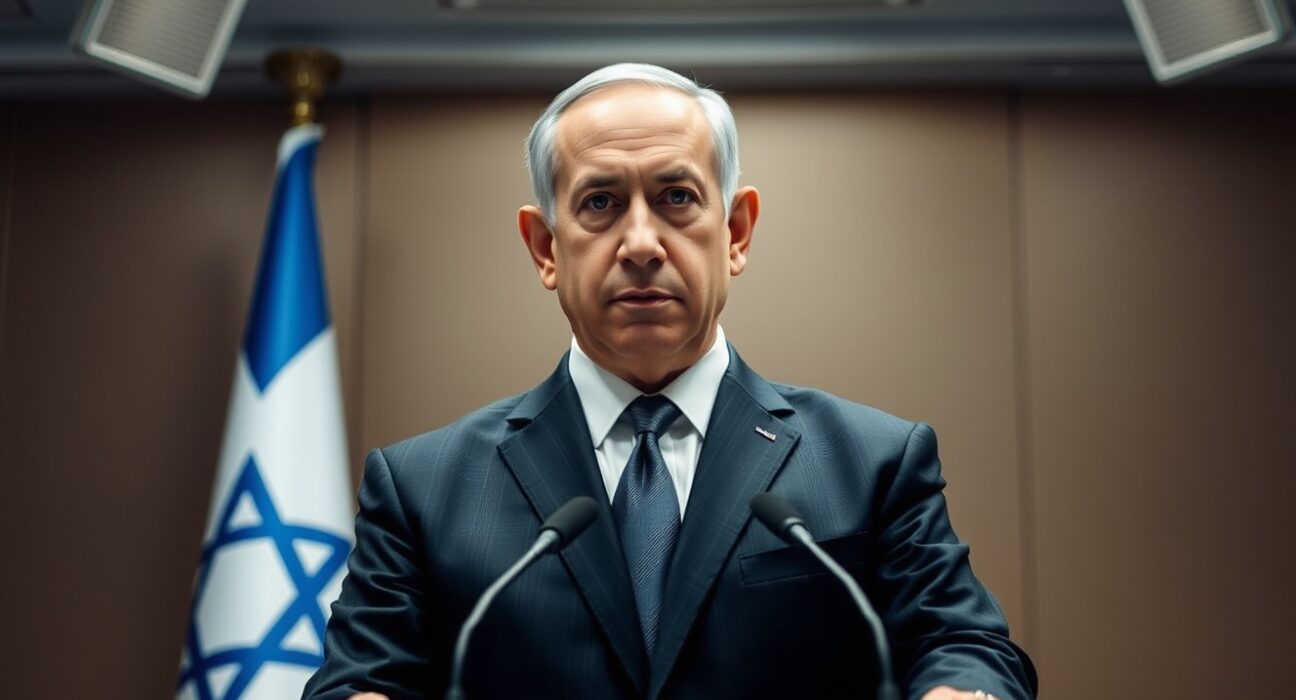
Israeli Prime Minister Benjamin Netanyahu has declared a firm continuation of military operations against the Lebanese militant group Hezbollah, marking a significant escalation in regional hostilities. This decisive statement, delivered from Jerusalem on March 15, 2025, directly responds to recent cross-border rocket fire and underscores a hardening Israeli security posture. Consequently, analysts are closely monitoring the potential for a broader conflict that could destabilize the entire Levant.
Netanyahu’s Strategic Declaration on Hezbollah
Prime Minister Netanyahu’s announcement represents a clear policy direction. He stated that Israel would persist with targeted strikes against Hezbollah infrastructure and operatives. Furthermore, he emphasized that these actions constitute necessary defensive measures. The Israeli military has recently conducted several operations in southern Lebanon. These operations specifically targeted rocket launch sites and weapons depots. Therefore, the Prime Minister’s comments formalize an ongoing campaign rather than initiate a new one.
The context for this declaration is a multi-front security challenge for Israel. Simultaneously, operations continue in the Gaza Strip. However, the northern border with Lebanon presents a distinct and potent threat. Hezbollah possesses a vast arsenal of precision-guided missiles. This arsenal significantly exceeds the capabilities of other Iranian-backed proxies in the region.
- Military Posture: The Israel Defense Forces (IDF) remain on high alert along the Lebanese border.
- Historical Precedent: This stance recalls the 2006 Lebanon War, a 34-day conflict between Israel and Hezbollah.
- Strategic Aim: The stated goal is to degrade Hezbollah’s military capabilities and deter future aggression.
The Deep-Rooted Israel-Hezbollah Conflict
The friction between Israel and Hezbollah spans decades. Hezbollah emerged in the early 1980s following Israel’s invasion of Lebanon. Iran’s Islamic Revolutionary Guard Corps provided foundational support. The group’s charter explicitly calls for the destruction of the Israeli state. Over time, Hezbollah evolved from a guerrilla force into a sophisticated military and political entity. It now holds substantial seats in the Lebanese parliament and wields significant influence over the country’s government.
Several key flashpoints define this long-standing enmity. The 2006 war resulted in over 1,200 Lebanese and 165 Israeli deaths. Since then, both sides have engaged in periodic, contained exchanges of fire. However, the scale and frequency of incidents have increased markedly since the October 2023 Hamas-led attacks on Israel. Hezbollah has launched rockets, drones, and anti-tank missiles in solidarity with Hamas. In response, the IDF has carried out hundreds of strikes against Hezbollah positions.
Expert Analysis on Regional Implications
Security analysts express deep concern about the potential for miscalculation. “The rhetoric from both sides is increasingly bellicose,” notes Dr. Amira El-Zein, a senior fellow at the Middle East Institute. “While neither party seeks a full-scale war, the tit-for-tat dynamic creates a dangerous escalatory ladder. A single strike causing mass casualties could quickly spiral beyond control.”
The regional impact extends beyond the immediate border area. Key considerations include:
| Factor | Impact |
|---|---|
| Lebanese Stability | Lebanon’s crippled economy and political paralysis make it highly vulnerable to renewed conflict. |
| US Diplomacy | The United States is actively engaged in de-escalation talks, urging restraint on all sides. |
| Iranian Backing | Iran provides Hezbollah with funding, training, and advanced weapons, linking this front to wider nuclear negotiations. |
| Global Energy Markets | Conflict risks disrupting Eastern Mediterranean gas exploration and shipping routes. |
Military Capabilities and the Balance of Deterrence
Understanding the military balance is crucial. Hezbollah commands an estimated 150,000 rockets and missiles. A portion of these are precision-guided munitions capable of striking critical infrastructure deep within Israel. The group also possesses advanced anti-aircraft and anti-ship systems. Its fighters gained extensive combat experience supporting the Assad regime in Syria’s civil war.
Conversely, Israel maintains one of the world’s most technologically advanced militaries. The IDF’s multi-layered air defense system, including Iron Dome, David’s Sling, and Arrow, provides substantial protection. Moreover, Israel’s intelligence services maintain extensive surveillance over Hezbollah activities. The Israeli Air Force holds overwhelming superiority, enabling deep-strike capabilities against any target in Lebanon.
This creates a delicate balance of deterrence. Both sides possess the ability to inflict severe damage on the other. Historically, this mutual assured destruction has prevented all-out war since 2006. However, Netanyahu’s vow to continue attacks tests this equilibrium. It signals Israel’s willingness to absorb retaliatory strikes to achieve its strategic objectives.
The Humanitarian and Diplomatic Landscape
The human cost of escalating conflict is already apparent. Tens of thousands of civilians on both sides of the border have been displaced. In northern Israel, communities within 40 kilometers of Lebanon have been evacuated or live under constant threat of sirens. Similarly, villages in southern Lebanon have emptied as Israeli strikes intensify. International aid organizations report damaged homes, agricultural land, and critical infrastructure.
Diplomatic efforts, led primarily by the United States and France, are underway to prevent a wider war. These efforts focus on establishing a buffer zone and reinforcing UN Security Council Resolution 1701, which ended the 2006 war. The resolution called for Hezbollah’s disarmament south of the Litani River, a provision never fully implemented. Mediators are pushing for a negotiated settlement that would see Hezbollah forces pull back and Israeli military operations cease.
Timeline of Recent Escalation
The path to Netanyahu’s declaration follows a clear sequence of events:
- October 8, 2023: Hezbollah launches rockets at Israeli positions in solidarity with Hamas, opening the northern front.
- January 2024: An Israeli strike in Beirut kills senior Hamas official Saleh al-Arouri, raising tensions dramatically.
- June 2024: Hezbollah releases drone footage of surveillance over Haifa, a major Israeli port city.
- November 2024: Israeli strikes eliminate a senior Hezbollah commander in southern Lebanon.
- March 2025: Netanyahu delivers his vow to continue attacks, following a barrage of Hezbollah rockets that wounded several Israeli soldiers.
Conclusion
Prime Minister Benjamin Netanyahu’s vow to continue attacks on Hezbollah marks a pivotal moment in Middle Eastern geopolitics. This policy reflects a calculated assessment of Israel’s security needs against a persistent and capable adversary. The situation remains highly volatile, with the potential for rapid escalation hinging on military calculations and diplomatic intervention. The international community watches closely, aware that sustained conflict between Israel and Hezbollah could ignite a regional conflagration with global consequences. The coming weeks will be critical in determining whether this declared stance leads to managed deterrence or uncontained war.
FAQs
Q1: What did Benjamin Netanyahu specifically say about Hezbollah?
Israeli Prime Minister Benjamin Netanyahu stated that Israel will continue its military attacks against the Lebanese militant group Hezbollah. He framed these actions as necessary defensive measures to protect Israeli citizens from rocket fire and other threats emanating from Lebanon.
Q2: Why is the conflict between Israel and Hezbollah escalating now?
The current escalation is part of a broader regional tension that intensified after the October 2023 Hamas attacks on Israel. Hezbollah, as an Iranian-backed ally of Hamas, began launching cross-border attacks in solidarity, leading to a continuous cycle of Israeli retaliatory strikes and Hezbollah responses.
Q3: What are Hezbollah’s military capabilities?
Hezbollah possesses a large arsenal estimated at 150,000 rockets and missiles, including precision-guided munitions. It also has drones, anti-tank missiles, and experienced fighters. Many analysts consider it the world’s most heavily armed non-state actor.
Q4: How is the international community responding?
The United States, France, and other nations are engaged in intensive diplomatic efforts to de-escalate the situation. These efforts focus on reinforcing the UN-brokered ceasefire line, encouraging Hezbollah to pull its forces back from the border, and urging Israeli restraint to prevent a full-scale war.
Q5: What is the risk of this conflict expanding regionally?
The risk is significant. A major war between Israel and Hezbollah could draw in Iran, which supplies Hezbollah with weapons and funding, and potentially other Iranian proxies in Syria, Iraq, and Yemen. This could create a multi-front conflict with severe implications for global energy markets and regional stability.
Disclaimer: The information provided is not trading advice, Bitcoinworld.co.in holds no liability for any investments made based on the information provided on this page. We strongly recommend independent research and/or consultation with a qualified professional before making any investment decisions.