

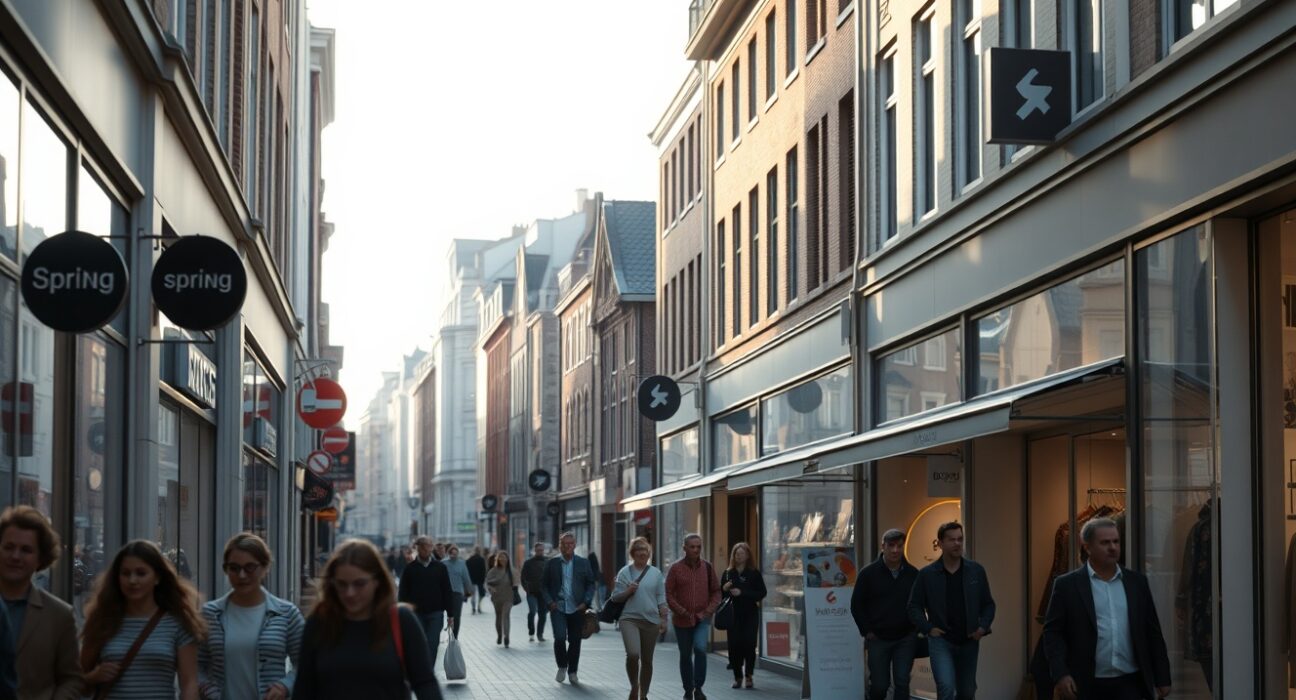
The Netherlands’ retail sales growth decelerated sharply in May, rising only 1.2% year-on-year compared to a revised 3.4% increase in April, according to the latest data from Statistics Netherlands (CBS). The figures, adjusted for calendar effects, signal a cooling in consumer spending momentum after a relatively strong start to the year.
Key Drivers Behind the Slowdown
The May reading marks the weakest pace of annual retail expansion since February, when sales grew by 0.8%. Analysts attribute the deceleration to a combination of factors, including persistent inflation pressures on household budgets, higher interest rates dampening discretionary spending, and a normalization after a surge in April that was boosted by an early Easter holiday effect.
Breaking down the categories, food and beverage stores saw a more moderate increase, while non-food retail—which includes clothing, electronics, and home furnishings—experienced a notable pullback. Online retail continued to grow but at a slower rate than in previous months, suggesting a shift in consumer behavior toward more cautious spending.
Broader Economic Context
The retail data aligns with other recent indicators pointing to a softening in the Dutch economy. Consumer confidence remains below its long-term average, and household savings rates have edged higher as uncertainty about the economic outlook persists. The European Central Bank’s tightening cycle, which has pushed borrowing costs higher, is also beginning to weigh on consumption.
Despite the slowdown, the Dutch labor market remains tight, with unemployment near historic lows. This has helped support overall income levels, but rising costs for housing, energy, and services are squeezing real disposable incomes.
What This Means for Investors and Businesses
For retailers and investors, the May figures underscore the importance of monitoring consumer sentiment and spending patterns closely. The slowdown may prompt some businesses to adjust inventory levels and promotional strategies heading into the summer months. If the trend continues, it could also influence broader economic forecasts for the eurozone’s fifth-largest economy.
Conclusion
The 1.2% year-on-year increase in Netherlands retail sales for May represents a significant deceleration from April’s pace. While the economy continues to grow, the data suggests that consumers are becoming more cautious, reflecting ongoing headwinds from inflation and higher interest rates. Further monthly releases will be critical to determine whether this is a temporary blip or the start of a more sustained slowdown.
FAQs
Q1: Why did Netherlands retail sales growth slow down in May?
A: The slowdown is attributed to persistent inflation, higher interest rates reducing disposable income, and a normalization after April’s Easter-boosted spending. Consumer confidence also remains subdued.
Q2: How does this compare to previous months?
A: April saw a 3.4% year-on-year increase, while May’s 1.2% is the weakest since February’s 0.8% rise. The trend shows a clear deceleration in the second quarter.
Q3: Which retail categories were most affected?
A: Non-food retail categories, including clothing, electronics, and home goods, experienced a more pronounced slowdown. Food and beverage sales held up relatively better, though growth also moderated.
Disclaimer: The information provided is not trading advice, Bitcoinworld.co.in holds no liability for any investments made based on the information provided on this page. We strongly recommend independent research and/or consultation with a qualified professional before making any investment decisions.
