

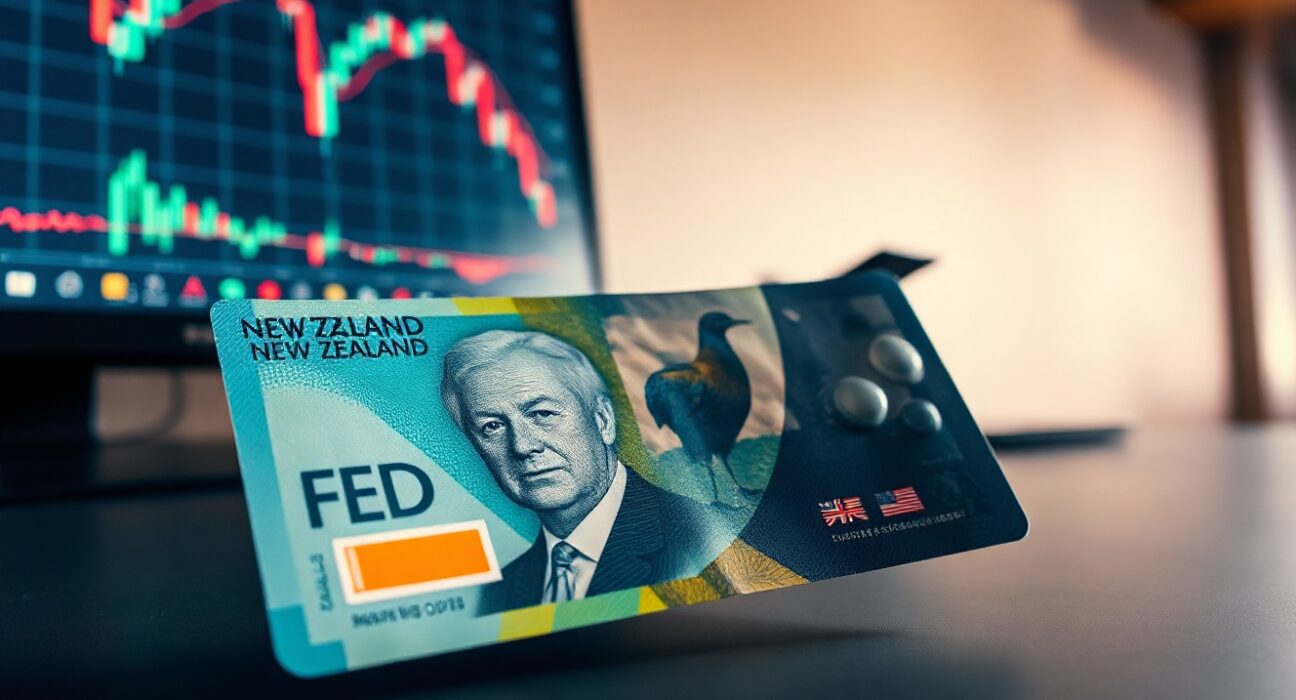
The New Zealand Dollar (NZD) edged lower against major peers on Wednesday, extending its recent decline as domestic business confidence sank to its weakest reading since early 2023. The currency’s move comes just hours before the U.S. Federal Reserve is expected to deliver its latest interest rate decision, adding to the uncertainty surrounding the kiwi.
Business Confidence Deteriorates Sharply
Data released by the New Zealand Institute of Economic Research (NZIER) showed that business confidence in the fourth quarter of 2025 dropped to a net -25%, the lowest level since the first quarter of 2023. The sharp decline was driven by weakening demand across the services and construction sectors, with firms reporting a significant pullback in hiring and investment intentions. The survey’s measure of own-activity outlook also fell, signaling that businesses are bracing for a prolonged period of soft domestic demand.
The pessimistic reading adds to the case for the Reserve Bank of New Zealand (RBNZ) to continue its easing cycle. The central bank has already cut the Official Cash Rate (OCR) by 125 basis points since August 2024, but markets are now pricing in a higher probability of a larger 50-basis-point cut at the February 2026 meeting. A weaker economy typically reduces the appeal of a currency, and the NZD has been under pressure as traders reassess the relative interest rate outlook between New Zealand and the United States.
Fed Decision in Focus
Market participants are now turning their attention to the U.S. Federal Reserve, which is widely expected to hold interest rates steady at its January 2026 meeting. However, the tone of the accompanying statement and Chair Jerome Powell’s press conference will be critical for currency markets. If the Fed signals a more cautious approach to rate cuts due to persistent inflation or a resilient labor market, the U.S. Dollar could strengthen further, putting additional downward pressure on the NZD.
The NZD/USD pair fell to 0.5810 in early Asian trading, down 0.3% from the previous close. The pair has now lost nearly 2% since the start of the year, as the combination of a weak domestic economy and a broadly stronger greenback weighs on sentiment.
What This Means for Importers and Travelers
A weaker New Zealand Dollar has immediate real-world implications. Importers of goods such as fuel, electronics, and machinery face higher costs, which could feed into consumer prices. For New Zealanders planning overseas travel, particularly to the United States or countries pegged to the U.S. Dollar, purchasing power has diminished. Conversely, exporters, particularly in the dairy and tourism sectors, may benefit from improved price competitiveness in global markets.
Conclusion
The combination of a sharp drop in domestic business confidence and the impending Federal Reserve decision has created a challenging environment for the New Zealand Dollar. While the RBNZ is expected to continue cutting rates to support the economy, the divergence in monetary policy between New Zealand and the United States is likely to keep the NZD under pressure in the near term. Traders will be closely watching the Fed’s language for clues on the pace of future rate moves, as well as any further domestic data that could influence the RBNZ’s next move.
FAQs
Q1: Why is the New Zealand Dollar weakening?
The NZD is weakening due to a sharp drop in domestic business confidence, which fell to its lowest level since early 2023, and the strengthening of the U.S. Dollar ahead of the Federal Reserve’s interest rate decision.
Q2: How does the Federal Reserve decision affect the NZD?
The Fed’s decision influences the value of the U.S. Dollar. If the Fed signals a more cautious approach to rate cuts, the USD tends to strengthen, which puts downward pressure on the NZD/USD exchange rate.
Q3: What does a weaker NZD mean for the average New Zealander?
A weaker NZD makes imported goods more expensive, potentially increasing the cost of living. It also reduces purchasing power for overseas travel. However, it can benefit exporters by making their products cheaper for foreign buyers.
Disclaimer: The information provided is not trading advice, Bitcoinworld.co.in holds no liability for any investments made based on the information provided on this page. We strongly recommend independent research and/or consultation with a qualified professional before making any investment decisions.
