

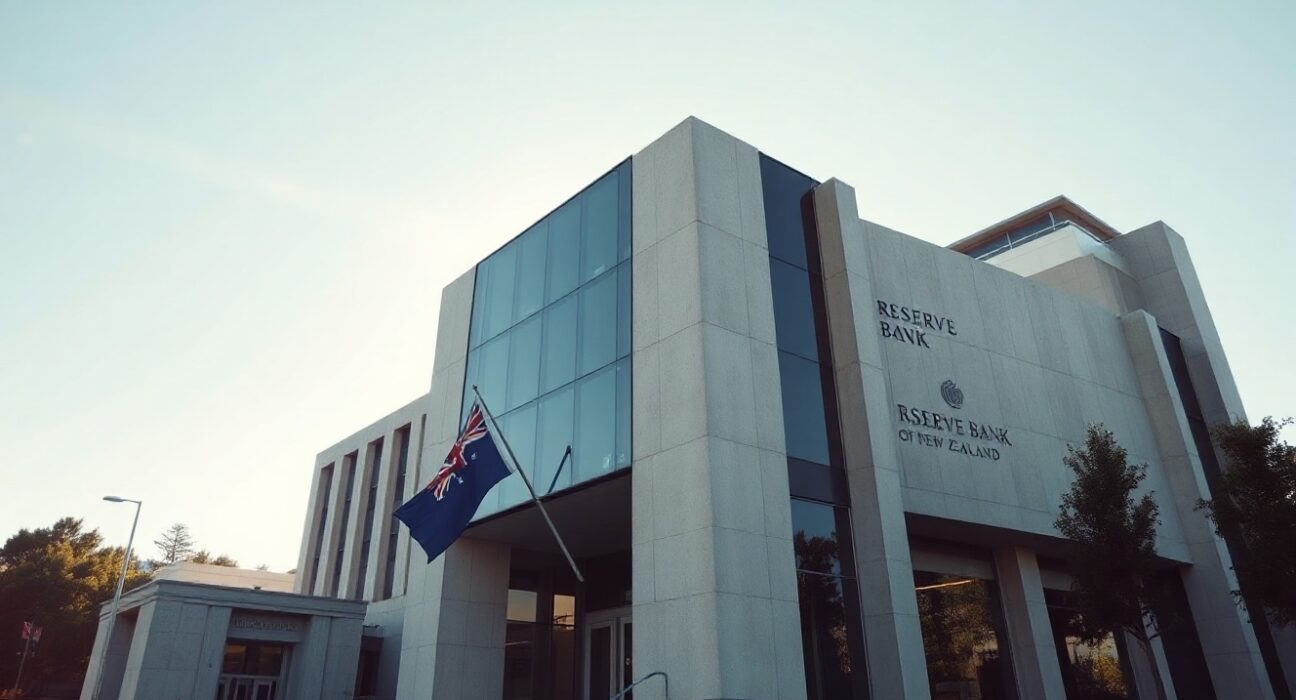
New Zealand’s two-year inflation expectations fell to 2.34% in the third quarter of 2025, down from 2.53% in the previous quarter, according to the Reserve Bank of New Zealand’s latest survey of expectations. The decline signals that households and businesses are becoming more confident that price pressures will ease, reinforcing market bets that the RBNZ will continue cutting interest rates.
What the latest RBNZ survey shows
The quarterly survey of expectations, released on [date], measures the inflation rate that firms and households anticipate over the next two years. A reading of 2.34% brings expectations closer to the midpoint of the RBNZ’s 1% to 3% target band, and marks the lowest level since [year]. The drop from 2.53% in the second quarter suggests that the public’s inflation psychology is normalizing after a period of elevated price growth.
One-year-ahead inflation expectations also declined, coming in at [value]% in Q3, down from [previous value]%. This broad-based easing across time horizons is a key input for RBNZ policymakers, who monitor expectations to gauge the credibility of their inflation targeting framework.
Why this matters for interest rates
The RBNZ has been on a easing cycle since [month year], having cut the official cash rate (OCR) by [total basis points] to [current rate]%. The latest expectations data provides further evidence that inflation is converging toward the target, giving the central bank room to continue lowering borrowing costs without stoking price pressures.
Market pricing currently implies a high probability of another rate cut at the RBNZ’s next meeting in [month]. A sustained decline in inflation expectations could accelerate the pace of easing, which would translate into lower mortgage rates and reduced debt-servicing costs for households and businesses.
Impact on households and the broader economy
For New Zealanders, lower inflation expectations are a double-edged sword. On one hand, they signal that the cost-of-living crisis is abating, with prices for goods and services rising at a slower pace. On the other, they often coincide with softer economic activity, as businesses become less confident about pricing power and may hold back on investment.
The labour market remains a key concern. The unemployment rate stood at [value]% as of [quarter], and the RBNZ has acknowledged that easing policy too quickly could reignite inflation, while easing too slowly could deepen the economic slowdown. The latest expectations data tilts the balance toward a more dovish stance.
Conclusion
The decline in New Zealand’s two-year inflation expectations to 2.34% in Q3 2025 is a positive sign for the RBNZ’s inflation fight. It strengthens the case for further interest rate cuts, which could provide relief to borrowers. However, policymakers will remain cautious, as the full impact of past tightening and global uncertainties continue to weigh on the economic outlook.
FAQs
Q1: What are inflation expectations and why do they matter?
Inflation expectations are the rate of future price increases that households and businesses anticipate. They matter because they influence wage-setting, pricing decisions, and consumer spending, and they are a key indicator for central banks in setting monetary policy.
Q2: How does the RBNZ survey measure inflation expectations?
The RBNZ conducts a quarterly survey of business managers and households, asking them to predict the inflation rate over various horizons, including one year and two years ahead. The results are published as part of the central bank’s monetary policy toolkit.
Q3: What does a decline in inflation expectations mean for mortgage rates?
A decline in inflation expectations typically reduces the need for high interest rates. If the RBNZ cuts the OCR, banks often lower mortgage rates, making borrowing cheaper for homeowners and businesses.
Disclaimer: The information provided is not trading advice, Bitcoinworld.co.in holds no liability for any investments made based on the information provided on this page. We strongly recommend independent research and/or consultation with a qualified professional before making any investment decisions.
