

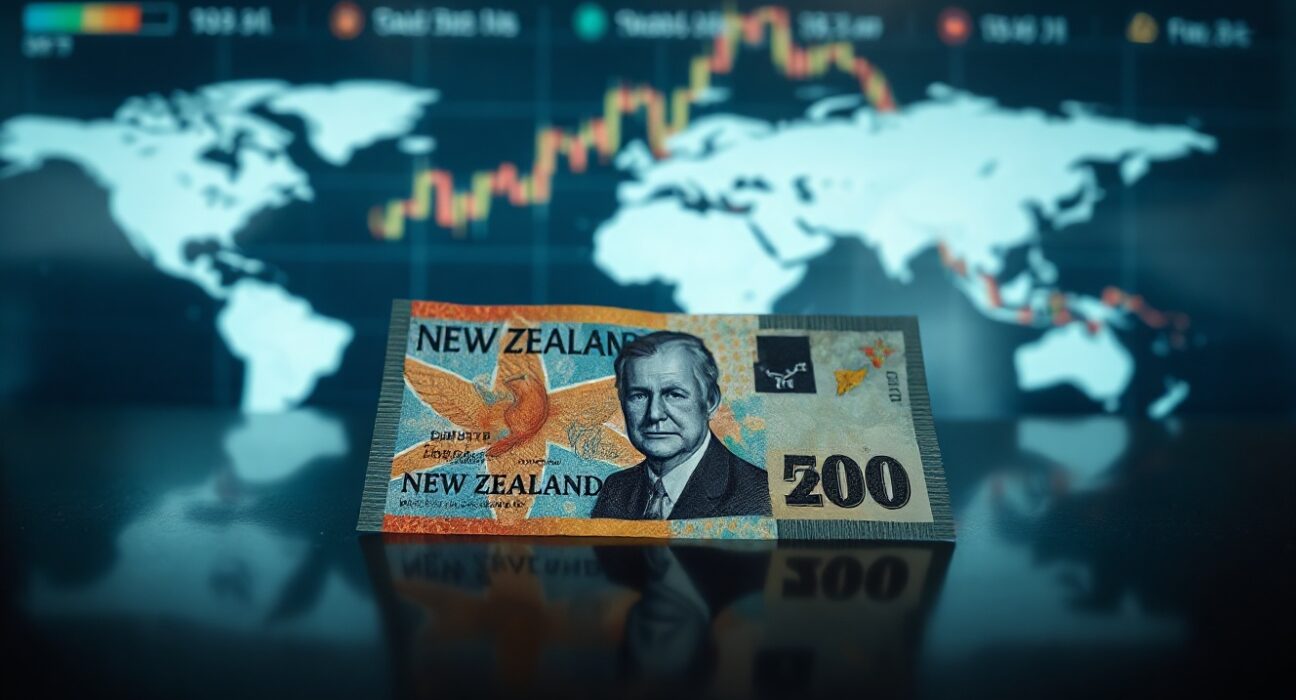
The New Zealand Dollar (NZD) weakened against major currencies on [Date], as escalating Middle East tensions dampened investor appetite for risk-sensitive assets, pushing the Kiwi lower in early trading.
What’s Driving the Kiwi Lower?
The primary catalyst is the renewed geopolitical uncertainty in the Middle East, which typically prompts investors to flee to safe-haven currencies like the US Dollar and Japanese Yen, while selling higher-yielding, risk-linked currencies such as the NZD. The exact events triggering the latest bout of risk aversion are developing, but market participants are closely monitoring diplomatic and military developments in the region.
As of [Time] [Time Zone], NZD/USD was trading at [Price], down [X]% on the day. The currency also fell against the Australian Dollar and the Euro, reflecting broad-based risk-off flows.
Impact on the New Zealand Economy
A weaker New Zealand Dollar has mixed implications for the domestic economy. On one hand, it can boost export competitiveness, particularly for dairy and agricultural products, which are New Zealand’s primary exports. On the other hand, it raises the cost of imported goods, potentially adding to inflationary pressures. The Reserve Bank of New Zealand (RBNZ) is closely watching currency movements as it balances inflation control with economic growth.
What Should Investors Watch?
Investors should keep an eye on:
- Any escalation or de-escalation in Middle East tensions, which could shift risk sentiment quickly.
- Upcoming economic data from New Zealand, including trade figures and inflation expectations.
- Statements from RBNZ officials, which may provide guidance on future monetary policy.
- Global commodity prices, especially dairy, which often influences NZD direction.
Conclusion
The New Zealand Dollar’s decline is a direct response to heightened geopolitical risk, reflecting the currency’s sensitivity to global sentiment. While the situation remains fluid, the immediate outlook for the Kiwi is likely to be dictated by headlines from the Middle East and broader risk appetite. Traders should prepare for continued volatility and stay informed on both geopolitical and economic developments.
FAQs
Q1: Why does the New Zealand Dollar react to Middle East tensions?
The NZD is considered a risk-sensitive currency because New Zealand’s economy relies heavily on exports and foreign investment. When geopolitical tensions rise, investors tend to move capital to safe-haven assets, reducing demand for riskier currencies like the NZD.
Q2: How does a weaker NZD affect everyday New Zealanders?
A weaker NZD makes imported goods and overseas travel more expensive, potentially increasing the cost of living. However, it can also make New Zealand exports more competitive globally, which may benefit the economy and jobs in export industries.
Q3: What is the outlook for the NZD in the near term?
The outlook is highly uncertain and depends on geopolitical developments. If tensions ease, the NZD could recover quickly. Conversely, further escalation could push the currency lower. Monitoring global news and economic indicators is essential for any forecast.
Disclaimer: The information provided is not trading advice, Bitcoinworld.co.in holds no liability for any investments made based on the information provided on this page. We strongly recommend independent research and/or consultation with a qualified professional before making any investment decisions.
