

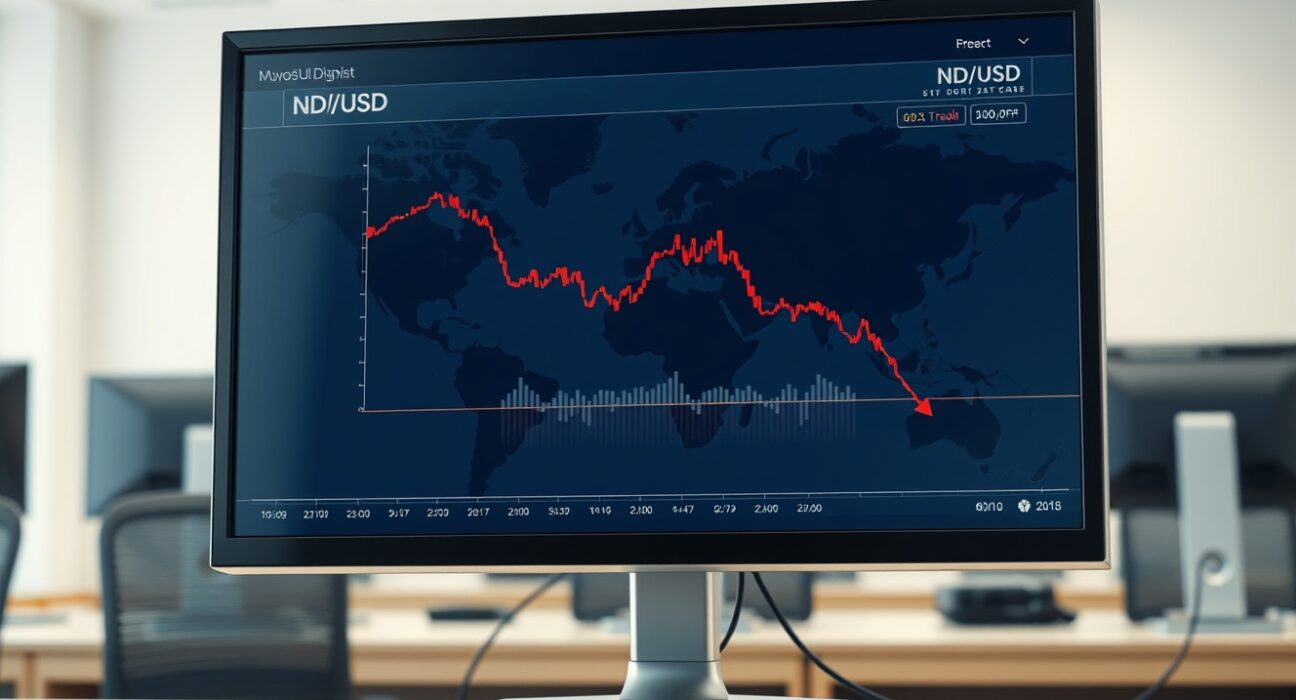
The New Zealand Dollar (NZD) continues to weaken against the US Dollar (USD) as escalating US-Iran tensions drive a global wave of risk aversion. This shift pushes investors toward safe-haven assets, strengthening the greenback. The NZD/USD pair now trades near multi-week lows, reflecting heightened market anxiety and a clear preference for the US Dollar.
NZD/USD Weakens Amid Escalating Geopolitical Risks
Geopolitical tensions between the United States and Iran have intensified significantly. Recent military posturing and diplomatic breakdowns spark fears of a broader conflict. This uncertainty directly impacts currency markets. Investors quickly move capital from risk-sensitive currencies like the New Zealand Dollar to safer alternatives.
The US Dollar benefits from its status as the world’s primary reserve currency. During periods of global instability, demand for the greenback surges. This creates a headwind for the NZD/USD pair. The New Zealand Dollar, often considered a proxy for risk appetite, suffers as traders reduce exposure to volatile assets.
Market participants now closely watch for further developments. Any new escalation could push the NZD/USD lower. Conversely, signs of de-escalation might offer temporary relief. However, the current trend remains firmly bearish for the Kiwi.
Key Drivers Behind the NZD/USD Decline
Several factors contribute to the NZD/USD weakness. First, the direct geopolitical shock triggers immediate risk-off sentiment. Second, the US Federal Reserve’s monetary policy stance adds pressure. The Fed maintains higher interest rates to combat inflation. This makes the US Dollar more attractive to yield-seeking investors.
Third, New Zealand’s economic data shows signs of slowing. Recent GDP figures miss expectations. The Reserve Bank of New Zealand (RBNZ) signals potential rate cuts later this year. This policy divergence between the Fed and RBNZ further weighs on the NZD.
Fourth, commodity prices, particularly dairy, show mixed performance. New Zealand’s export-driven economy relies heavily on commodity revenues. Weak dairy prices reduce export earnings, putting additional downward pressure on the currency.
US Dollar Strength Surges on Safe-Haven Flows
The US Dollar Index (DXY) climbs sharply as investors seek safety. The index measures the greenback against a basket of major currencies. It now approaches key resistance levels. This rally reflects broad-based demand for US assets.
Treasury yields also move lower as bond prices rise. This inverse relationship confirms the flight to quality. Investors prioritize capital preservation over higher returns. This environment typically favors the US Dollar over higher-yielding but riskier currencies like the NZD.
The dollar’s strength creates a self-reinforcing cycle. A stronger USD makes imports cheaper for US consumers. However, it also makes US exports more expensive. This can weigh on global trade and economic growth, further fueling risk aversion.
Impact on New Zealand Economy and Trade
A weaker NZD has mixed implications for New Zealand. Exporters benefit from cheaper goods in foreign markets. This boosts revenues for dairy, meat, and tourism sectors. However, import costs rise, fueling domestic inflation.
Consumers face higher prices for imported goods, including electronics, vehicles, and fuel. This can reduce purchasing power and slow economic activity. The RBNZ must balance these competing pressures when setting monetary policy.
Trade partners also feel the effects. Australia, China, and the United States are key trading partners. A weaker NZD makes New Zealand exports more competitive. However, it also signals underlying economic weakness, which can deter foreign investment.
Technical Analysis: NZD/USD Approaches Key Support Levels
From a technical perspective, the NZD/USD pair breaks below important moving averages. The 50-day and 200-day moving averages now act as resistance. This confirms the bearish trend. Traders watch for a test of the 0.5900 support level.
A break below this level could open the door to further declines toward 0.5800. Conversely, a bounce from support might offer a short-term trading opportunity. However, the overall bias remains negative. Any rallies should face selling pressure.
Volume data shows increased selling activity. This confirms strong bearish conviction. The Relative Strength Index (RSI) approaches oversold territory. This suggests the move might be overextended in the short term. However, in a strong trend, oversold conditions can persist.
Expert Outlook and Market Expectations
Market analysts remain cautious on the NZD/USD outlook. Geopolitical risks show no signs of abating. The US-Iran situation remains fluid. Any new development could trigger another leg lower.
“The combination of geopolitical risk and monetary policy divergence creates a perfect storm for the NZD,” says a senior currency strategist at a major investment bank. “We expect the pair to test new lows before any meaningful recovery.”
Investors should monitor upcoming economic data releases. US inflation figures and New Zealand employment data could provide short-term direction. However, the primary driver remains the geopolitical landscape.
Historical Context: Similar Geopolitical Shocks and Currency Reactions
Historical data shows that geopolitical shocks often lead to sustained USD strength. During the 2019 US-Iran tensions, the NZD/USD dropped sharply. It took several months to recover. Similarly, the 2022 Russia-Ukraine conflict saw the dollar rally significantly.
These patterns highlight the dollar’s safe-haven appeal. They also underscore the vulnerability of currencies like the NZD during crises. Investors should consider this historical context when making trading decisions.
The current situation shares similarities with past events. However, each crisis has unique characteristics. The key is to remain flexible and adapt to changing conditions.
Conclusion
The NZD/USD weakens as US-Iran tensions drive risk aversion, boosting the US Dollar. The pair faces strong headwinds from geopolitical uncertainty, monetary policy divergence, and slowing economic data. Traders should watch for further escalation and key technical levels. The outlook remains bearish in the near term. Investors should prioritize risk management and stay informed about global developments.
FAQs
Q1: Why does the NZD/USD weaken during US-Iran tensions?
Investors move capital to safe-haven assets like the US Dollar. This reduces demand for risk-sensitive currencies like the New Zealand Dollar.
Q2: How does risk aversion affect the NZD/USD pair?
Risk aversion triggers a flight to safety. The US Dollar benefits, while the NZD declines as traders reduce exposure to volatile assets.
Q3: What are the key support levels for NZD/USD?
Key support levels include 0.5900 and 0.5800. A break below these levels could signal further declines.
Q4: How does the Federal Reserve’s policy impact NZD/USD?
The Fed’s higher interest rates make the US Dollar more attractive. This divergence from the RBNZ’s potential rate cuts weakens the NZD.
Q5: What should traders watch for in the coming weeks?
Traders should monitor US-Iran developments, US inflation data, and New Zealand employment figures. These factors will drive short-term direction.
Disclaimer: The information provided is not trading advice, Bitcoinworld.co.in holds no liability for any investments made based on the information provided on this page. We strongly recommend independent research and/or consultation with a qualified professional before making any investment decisions.
