

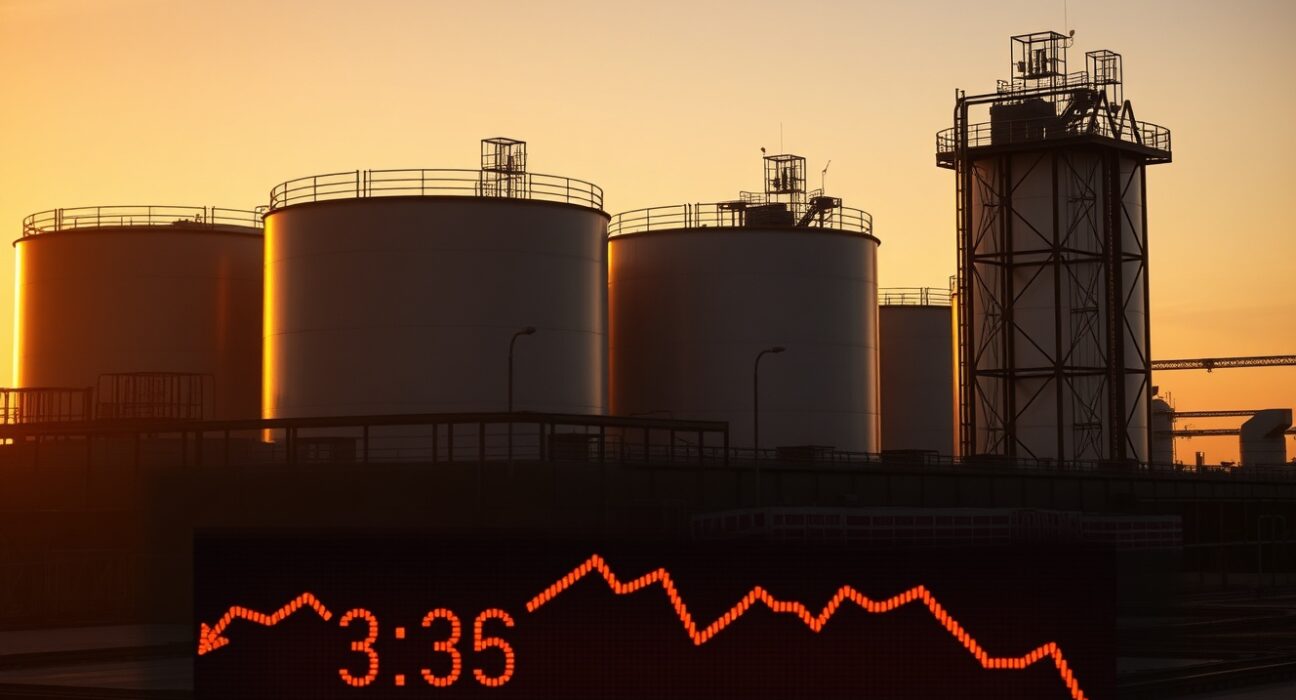
Oil prices experienced a sharp decline on May 25, with West Texas Intermediate (WTI) crude falling more than 5% in early trading, as growing optimism over a potential US-Iran agreement to reopen the Strait of Hormuz shifted market dynamics. The development triggered a broader risk-on sentiment across financial markets, with the US dollar weakening against risk-sensitive currencies and equity futures climbing.
Market Reaction and Currency Movements
The drop in crude oil prices rippled through currency markets, with the Australian dollar and South African rand gaining ground against the US dollar. S&P 500 futures also rose, following the index’s close near an all-time high on May 23. The coordinated moves suggest investors are pricing in a scenario where normalized crude oil shipments from the region could ease supply concerns and reduce inflationary pressures.
Negotiation Status and Official Statements
A senior US official confirmed on May 25 that the United States and Iran are close to reaching an agreement on reopening the Strait of Hormuz, a critical chokepoint for global oil shipments. However, the official cautioned that negotiations over key wording remain ongoing, and final approval could take several days. In contrast, Iran’s semi-official Tasnim news agency struck a more cautious tone, warning that the draft agreement could collapse. The agency alleged that the US is creating obstacles on key provisions, including Iran’s demand to unfreeze its assets.
Market Analyst Perspective
Tony Sycamore, an analyst at IG’s Sydney office, noted in a client report that the market’s upward momentum from last Friday appears set to continue. He acknowledged that while a deal could still fall through, financial markets currently seem inclined to trust the reports of progress. This sentiment reflects a broader market tendency to focus on positive developments while discounting potential risks.
Implications for Global Energy Markets
The Strait of Hormuz is one of the world’s most strategically important oil transit points, with approximately 20% of global petroleum consumption passing through it daily. Any disruption to shipping through this narrow waterway has historically triggered significant price volatility. A successful agreement would not only stabilize crude oil supply but could also reduce geopolitical risk premiums embedded in current prices. For consumers, lower oil prices could translate into reduced fuel costs and potentially ease inflation pressures in major economies.
Conclusion
The sharp decline in oil prices reflects a market increasingly optimistic about a diplomatic resolution between the US and Iran. While the outcome remains uncertain, the immediate market reaction underscores the sensitivity of crude oil prices to geopolitical developments. Investors and consumers alike will be watching closely as negotiations progress in the coming days.
FAQs
Q1: Why did oil prices drop over 5% on May 25?
A1: Oil prices fell sharply due to growing optimism that the US and Iran are close to an agreement to reopen the Strait of Hormuz, which would normalize crude oil shipments and ease supply concerns.
Q2: How does the Strait of Hormuz affect global oil prices?
A2: The Strait of Hormuz is a critical chokepoint for global oil shipments, with about 20% of daily global petroleum consumption passing through it. Any disruption or uncertainty about access typically drives oil prices higher.
Q3: What other markets were affected by the oil price decline?
A3: The US dollar weakened against risk-sensitive currencies like the Australian dollar and South African rand, while S&P 500 futures rose, indicating a broader shift toward risk appetite among investors.
Disclaimer: The information provided is not trading advice, Bitcoinworld.co.in holds no liability for any investments made based on the information provided on this page. We strongly recommend independent research and/or consultation with a qualified professional before making any investment decisions.
