
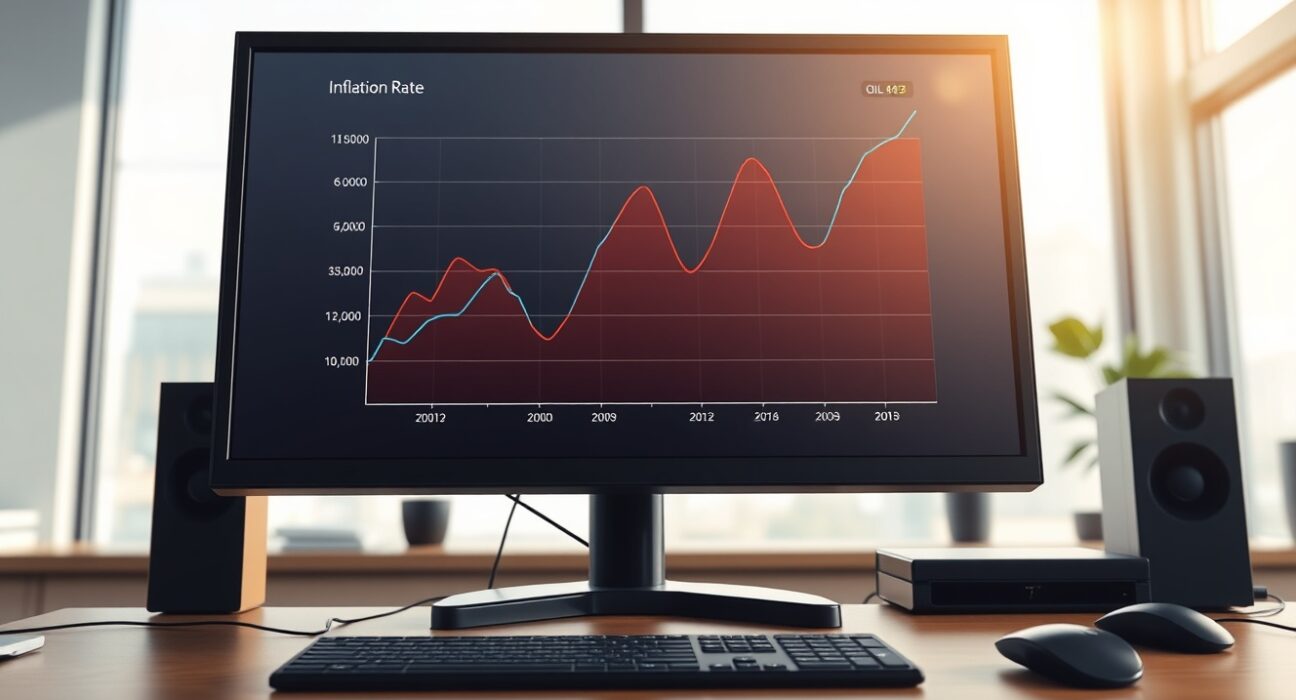
WASHINGTON, D.C. – March 2025: A sudden and sustained surge in global oil prices is applying significant pressure to the United States economy, actively stalling the process of disinflation according to a new analysis from Wells Fargo. This development presents a critical challenge for the Federal Reserve’s monetary policy path and risks prolonging elevated price levels for American consumers. The bank’s research indicates that the anticipated steady decline in inflation has hit a formidable obstacle, reshaping near-term economic forecasts.
Oil Shock Stalls Disinflation: Analyzing the Wells Fargo Report
Wells Fargo economists have identified a clear correlation between recent energy market volatility and stubborn core inflation metrics. Consequently, their latest report details how supply disruptions and geopolitical tensions have triggered a classic cost-push inflation scenario. This scenario directly impacts transportation and manufacturing costs across the supply chain. Furthermore, the pass-through effect to consumer goods and services is now evident in monthly CPI data. The bank’s models suggest that every sustained 10% increase in crude oil prices can add approximately 0.2 to 0.3 percentage points to headline inflation over subsequent quarters. This dynamic creates a complex environment for policymakers aiming to restore price stability without triggering a recession.
The Mechanics of Energy-Driven Inflation
Understanding this stall requires examining the transmission channels from oil markets to consumer prices. Firstly, higher fuel costs immediately raise expenses for shipping and logistics companies. These companies then transfer those costs to retailers through increased freight fees. Secondly, petroleum is a fundamental input for countless products, from plastics to fertilizers. Therefore, production costs rise for a vast array of goods. Thirdly, energy prices influence consumer inflation expectations, potentially leading to demands for higher wages. This wage-price spiral represents a secondary effect that central banks monitor closely. The current shock differs from previous episodes due to concurrent pressures in labor and housing markets.
Historical Context and Present Distinctions
Economists often reference the oil shocks of the 1970s, but today’s economic structure shows key differences. For instance, the U.S. is now a net energy exporter, which provides some domestic insulation. However, global benchmark prices still dictate costs. Additionally, the economy is far less energy-intensive per unit of GDP than fifty years ago. Despite this efficiency, the psychological and direct cost impacts remain potent. The Wells Fargo analysis compares the current 2025 shock to the 2022 spike following geopolitical events. It finds that while the magnitude may be similar, the starting point of inflation is lower, yet the economy’s capacity to absorb the shock is also diminished after previous aggressive monetary tightening.
Federal Reserve’s Policy Dilemma Intensifies
The stalled disinflation directly complicates the Federal Reserve’s dual mandate. On one hand, the central bank seeks to cool the economy to reach its 2% inflation target. On the other hand, it must avoid overtightening and causing unnecessary job losses. An oil-driven price increase presents a supply-side problem that interest rate hikes cannot easily solve. Raising rates cannot drill new wells or resolve geopolitical conflicts. However, the Fed must prevent these temporary shocks from becoming embedded in long-term expectations. Recent Federal Open Market Committee (FOMC) statements have acknowledged this “bumpy” path downward, with several members citing energy as a primary uncertainty. Market participants now anticipate a more prolonged period of restrictive policy.
Key Immediate Impacts Identified by Analysts:
- Consumer Spending: Higher gas prices act as a tax, reducing disposable income for other purchases.
- Business Investment: Uncertainty over input costs may delay capital expenditure plans.
- Interest Rate Trajectory: Market expectations for rate cuts have been pushed further into the future.
- Financial Markets: Equity sectors like transportation and consumer discretionary face headwinds.
Global Factors and Domestic Production
The origins of the current price spike are multifaceted. OPEC+ production discipline continues to limit global supply. Simultaneously, unexpected outages in key non-OPEC regions have tightened the market. Geopolitical risks in critical shipping lanes add a persistent risk premium to barrel prices. Domestically, U.S. shale production growth has moderated as companies prioritize shareholder returns over rapid expansion. While the Strategic Petroleum Reserve (SPR) exists as a tool, its levels require prudent management for genuine emergencies. The Wells Fargo report suggests that without a resolution to these global supply constraints, the inflationary pressure will likely persist for several quarters, creating a “higher for longer” scenario for both oil prices and, by extension, broader inflation.
Comparative Inflation Data Table
The following table illustrates how energy components have driven recent inflation readings, based on public Bureau of Labor Statistics (BLS) data and Wells Fargo analysis.
| CPI Component | Contribution to Headline CPI (Latest Month) | Year-Over-Year Change | Pre-Shock Trend |
|---|---|---|---|
| Energy Commodities (Gasoline) | +0.35 percentage points | +18.5% | Declining |
| Energy Services (Utilities) | +0.15 percentage points | +4.2% | Stable |
| Core Goods (ex-food/energy) | +0.10 percentage points | +1.8% | Moderating |
| Core Services (Shelter) | +0.40 percentage points | +5.1% | Slowly Moderating |
Conclusion
The Wells Fargo analysis delivers a clear message: the recent oil shock has stalled US disinflation, introducing new complexity into the economic outlook. This development challenges the narrative of a smooth return to the Federal Reserve’s 2% target and extends the period of economic uncertainty for businesses and households. While domestic factors like shelter inflation continue to moderate, the external shock from energy markets demonstrates the economy’s vulnerability to global supply disruptions. Ultimately, navigating this period requires careful monitoring of both incoming data and geopolitical developments, as the path toward stable prices remains fraught with potential obstacles.
FAQs
Q1: What exactly is meant by “disinflation”?
A1: Disinflation refers to a slowdown in the rate of price increases. It is not the same as deflation, which is an actual decrease in price levels. The economy can experience disinflation while inflation remains positive but is moving downward toward a target, like the Fed’s 2% goal.
Q2: Why can’t the Federal Reserve just ignore an oil price shock?
A2: While the Fed recognizes that supply shocks are difficult to control with interest rates, it must prevent the initial price spike from influencing long-term inflation expectations. If businesses and consumers start expecting permanently higher inflation, they may adjust pricing and wage demands accordingly, embedding the shock into the economy.
Q3: How long do oil price shocks typically affect inflation?
A3: The direct, first-round effects on gasoline and energy prices can be immediate and may fade as prices stabilize. The more concerning second-round effects, where higher costs ripple through the entire economy, can persist for 12 to 18 months, depending on the shock’s magnitude and duration.
Q4: Does being a net oil exporter help the US?
A4: Yes, it provides a degree of insulation. Higher global prices benefit domestic producers and improve the trade balance. However, US consumers and businesses still largely pay prices set by global benchmarks like Brent crude, so the domestic cost impact remains significant despite increased domestic production.
Q5: What would signal that disinflation is resuming?
A5: Analysts would look for a sustained decline in month-over-month core inflation readings (excluding food and energy), coupled with a stabilization or decline in energy prices. Additionally, softening labor market data and a decline in inflation expectations in surveys would signal that underlying price pressures are easing.
Disclaimer: The information provided is not trading advice, Bitcoinworld.co.in holds no liability for any investments made based on the information provided on this page. We strongly recommend independent research and/or consultation with a qualified professional before making any investment decisions.