
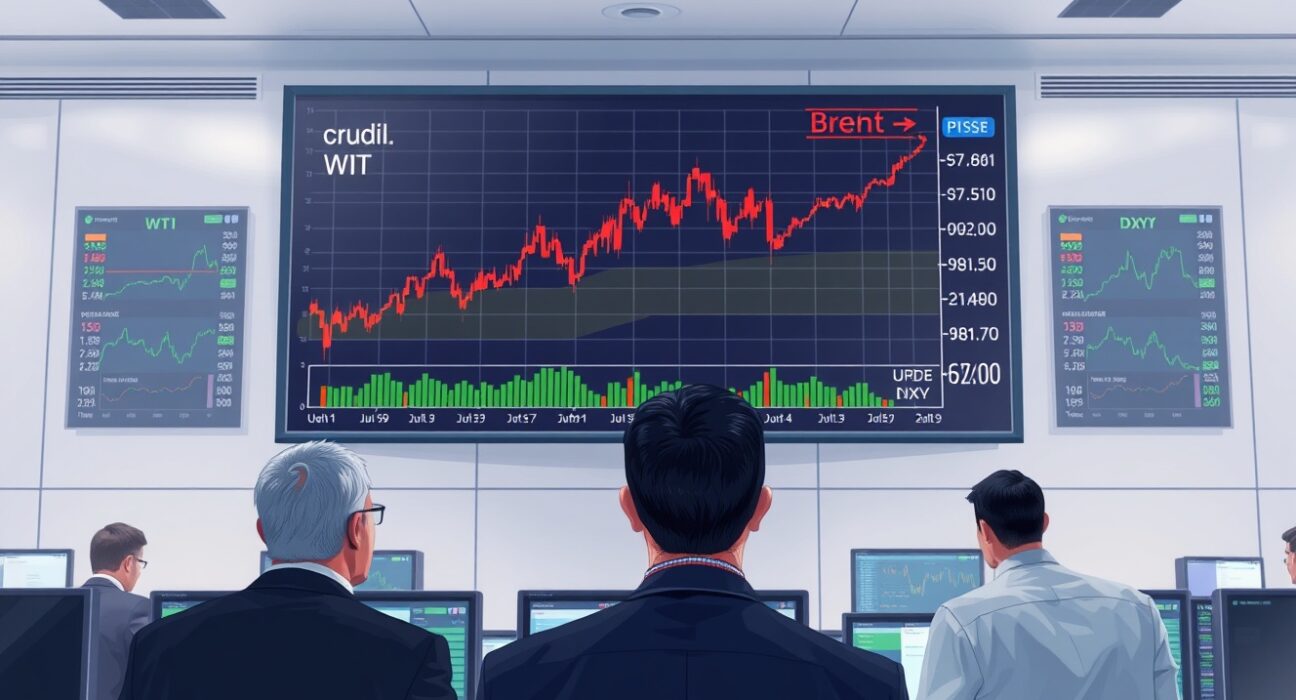
Global financial markets in early 2025 face renewed scrutiny as analysts, including those at Brown Brothers Harriman (BBH), highlight a persistent oil supply shock risk that continues to underpin US dollar strength. This dynamic connects volatile energy geopolitics directly to foreign exchange valuations, creating a complex feedback loop for traders and policymakers.
Understanding the Oil Supply Shock Risk to Global Markets
An oil supply shock refers to a sudden, significant disruption in the global flow of crude oil. Consequently, this disruption triggers sharp price increases. Historically, these shocks originate from geopolitical conflicts, OPEC+ production decisions, or major infrastructure failures. For instance, the 1973 Arab oil embargo and the 1990 Gulf War supply disruptions serve as classic examples. Today, analysts monitor several potential flashpoints.
Persistent tensions in key shipping corridors, like the Strait of Hormuz, remain a primary concern. Furthermore, ongoing geopolitical conflicts in oil-producing regions introduce constant uncertainty. Additionally, the strategic production quotas set by the OPEC+ alliance directly manipulate global supply. Finally, the lagging investment in new production capacity, a trend since the 2020 price crash, limits the market’s ability to respond to sudden shortages. These factors collectively sustain a supply shock risk premium in oil prices.
The Dollar’s Role as the Global Safe-Haven Currency
The US dollar maintains its status as the world’s primary reserve currency. Therefore, during periods of global economic uncertainty or market stress, capital consistently flows toward dollar-denominated assets. This phenomenon is known as a ‘flight to safety.’ An oil supply shock represents a specific type of global stress that simultaneously threatens economic growth and fuels inflation—a scenario often termed ‘stagflation.’
In such an environment, investors seek the relative stability of US Treasury securities. They also move capital into large US-based multinational corporations perceived as resilient. This surge in demand for dollar assets mechanically increases the currency’s exchange rate value against others. BBH analysts emphasize that this relationship is not merely theoretical but is actively priced into forward currency markets based on current risk assessments.
BBH’s Analysis: Connecting Energy Volatility to Forex
Brown Brothers Harriman (BBH), a prominent global currency strategist and investor services firm, provides a clear framework for this linkage. Their research indicates that oil market volatility, measured by metrics like the CBOE Crude Oil Volatility Index (OVX), shows a strong positive correlation with US dollar index (DXY) strength during risk-off periods. Their model incorporates several transmission channels.
- Trade Balance Effect: The United States has transitioned to a net energy exporter. Higher oil prices now improve its trade balance, supporting the dollar.
- Monetary Policy Divergence: Oil-driven inflation can compel the Federal Reserve to maintain a more hawkish stance than other central banks, widening interest rate differentials.
- Portfolio Rebalancing: Global funds often rebalance away from energy-importing economies (like the Eurozone and Japan) toward the US, generating dollar buying.
This analysis moves beyond simple causation, illustrating a reinforcing cycle where dollar strength itself can pressure oil prices for non-US buyers, adding another layer of market complexity.
Real-World Context and Historical Precedents
The current market structure in 2025 exhibits unique characteristics. Global oil inventories remain at relatively low levels by historical standards, reducing the buffer against any supply disruption. Simultaneously, the energy transition has led to underinvestment in traditional hydrocarbon projects, constraining spare production capacity primarily within the OPEC+ group, notably Saudi Arabia and the UAE.
The following table contrasts key drivers in past and present supply shock environments:
| Period | Primary Shock Driver | Dollar Index (DXY) Reaction |
|---|---|---|
| 1973-74 | OPEC Embargo | +7.2% (over 6 months) |
| 1990-91 | Gulf War Invasion | +10.1% (over 3 months) |
| 2007-08 | Demand Surge & Geopolitics | +8.5% (initial 5 months) |
| 2025 Context | Geopolitical Fragmentation & Capacity Constraints | Risk Premium Priced into Forwards |
This historical context demonstrates the dollar’s consistent role during energy crises. However, the US position as a net exporter today fundamentally alters the trade dynamic compared to the 1970s.
Global Economic Impacts and Market Implications
The interplay between oil shocks and dollar strength creates divergent impacts worldwide. For energy-importing emerging markets, a strong dollar combined with expensive oil dramatically increases import bills, pressures currencies, and can trigger capital outflows. This often forces their central banks to raise interest rates aggressively to defend their currencies, potentially stifling domestic growth.
Conversely, for major oil-exporting nations whose currencies are pegged to the dollar (like Saudi Arabia and the UAE), the dual benefit of higher oil revenue and a stable exchange rate provides significant fiscal space. For European and Japanese economies, the combination is particularly challenging, as they face higher energy import costs in a strengthening dollar environment, squeezing corporate margins and consumer spending power. This divergence reinforces the dollar’s relative attractiveness, creating a self-sustaining cycle that BBH and other analysts closely monitor.
Conclusion
The analysis from BBH underscores a critical market axiom for 2025: oil supply shock risk remains a potent, non-negligible pillar supporting US dollar strength. This relationship is rooted in the dollar’s safe-haven status, revised US trade dynamics, and potential monetary policy responses. While the specific triggers may evolve, the fundamental linkage between energy security and currency valuation persists. Market participants must therefore analyze oil market geopolitics and inventory data not just for commodity exposure, but as a crucial input for forecasting broader foreign exchange movements and global capital flows in the current economic landscape.
FAQs
Q1: What exactly is an ‘oil supply shock’?
An oil supply shock is a sudden, unexpected reduction in the global availability of crude oil, typically caused by geopolitical events, conflict, or coordinated production cuts. This scarcity drives prices sharply higher and can destabilize economies reliant on imported energy.
Q2: Why does a risk of an oil shock support the US dollar?
The US dollar is considered a global safe-haven asset. During crises, investors buy dollars and dollar-denominated assets like US Treasuries. Since an oil shock threatens global growth, it triggers this ‘flight to safety,’ increasing demand for and the value of the dollar.
Q3: How does the US being a net oil exporter change this dynamic?
Historically, the US was a major importer, so high oil prices hurt its trade balance. Now, as a net exporter, higher prices can improve its trade balance, providing a fundamental economic reason for dollar strength alongside the safe-haven flows.
Q4: What are the main geopolitical risks creating supply shock concerns in 2025?
Key risks include escalating conflicts in major oil-producing regions, potential disruptions in critical maritime chokepoints like the Strait of Hormuz, and unpredictable strategic decisions from the OPEC+ alliance regarding production levels.
Q5: How do other major currencies like the Euro or Yen typically react in this scenario?
Currencies of major energy-importing economies like the Euro and Japanese Yen tend to weaken against the dollar in this scenario. They face the dual pressure of higher energy import costs and capital outflows toward the perceived safety of US markets.
Disclaimer: The information provided is not trading advice, Bitcoinworld.co.in holds no liability for any investments made based on the information provided on this page. We strongly recommend independent research and/or consultation with a qualified professional before making any investment decisions.