
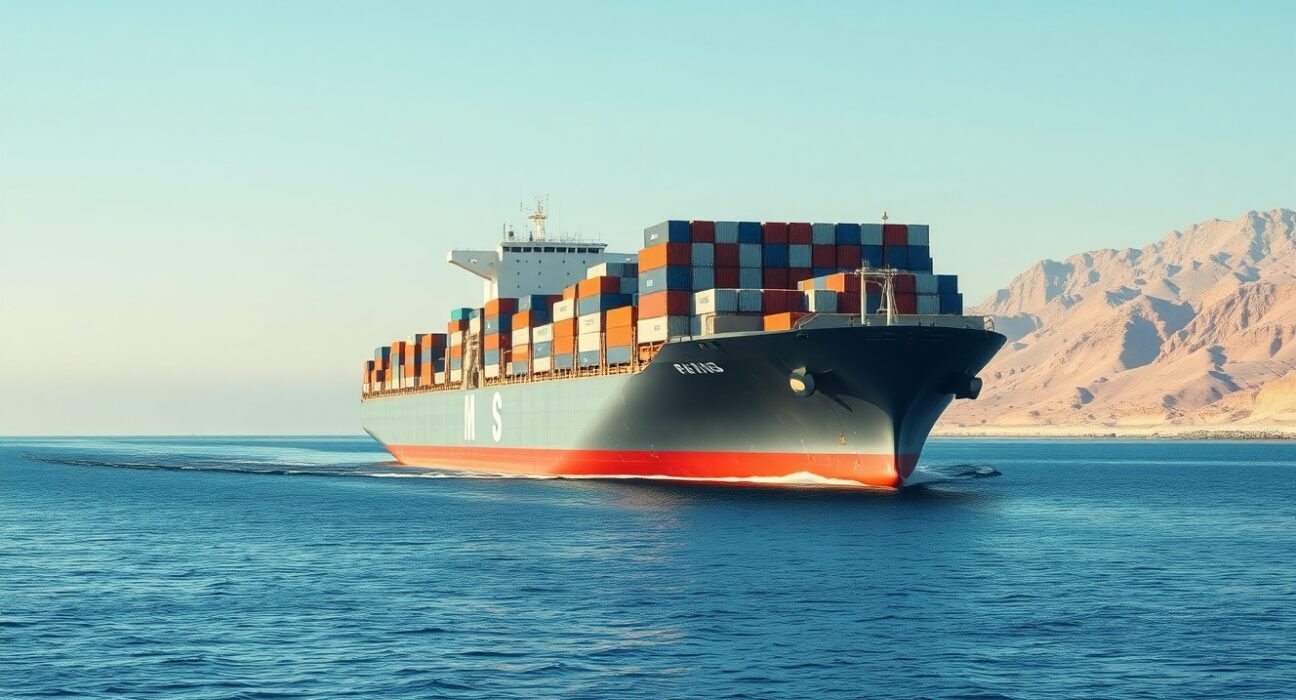
MUSCAT, Oman – In a significant development for global maritime trade, Oman’s Minister of Transport has definitively confirmed that vessels will face no toll charges for passage through the strategic Strait of Hormuz. This announcement, made during recent diplomatic proceedings, reinforces existing international maritime agreements that govern this crucial waterway. The statement carries substantial implications for global energy markets and international shipping logistics, particularly as geopolitical tensions periodically affect regional stability.
Strait of Hormuz Toll Policy Clarification
Oman’s transport ministry has formally signed all relevant maritime transport agreements that explicitly prohibit fee collection for transit through the Strait of Hormuz. Consequently, this waterway remains freely accessible to international shipping under established legal frameworks. The minister’s declaration specifically addresses longstanding questions about potential toll implementation that occasionally surface during regional discussions. Furthermore, this policy aligns with the United Nations Convention on the Law of the Sea (UNCLOS) provisions regarding international straits used for navigation.
Historically, the strait has functioned as an international waterway where innocent passage rights apply to all vessels. Oman’s reaffirmation of this principle maintains consistency with decades of maritime practice. The country controls approximately 60 kilometers of the strait’s coastline, giving it significant influence over navigation policies. However, Oman has consistently supported free navigation principles that benefit global commerce. This position contrasts with some other strategic waterways where tolls or transit fees apply under different legal arrangements.
Geopolitical and Economic Context
The Strait of Hormuz represents one of the world’s most critical maritime chokepoints for oil transportation. Approximately 21 million barrels of oil pass through this narrow passage daily, representing about 21% of global petroleum consumption. Additionally, one-third of the world’s liquefied natural gas shipments transit these waters. Any disruption to free navigation would immediately impact global energy prices and supply chains. Oman’s assurance therefore provides market stability during periods of regional uncertainty.
Several factors contribute to the strait’s strategic importance. First, its narrowest point measures only 21 nautical miles wide, with shipping lanes just 2 miles across in either direction. Second, the waterway serves as the only sea passage from the Persian Gulf to the open ocean. Third, major oil producers including Saudi Arabia, Iraq, the United Arab Emirates, and Qatar depend entirely on this route for their maritime exports. Fourth, the strait handles about 25% of global LNG trade, making it indispensable for energy markets.
Comparative Analysis of International Waterways
Unlike some strategic passages, the Strait of Hormuz operates under distinct legal and practical considerations. The following comparison illustrates key differences:
| Waterway | Toll/Fee Structure | Governing Authority | Annual Traffic |
|---|---|---|---|
| Strait of Hormuz | No tolls (confirmed) | International law/Oman/Iran | ~30,000 vessels |
| Suez Canal | Transit fees apply | Suez Canal Authority (Egypt) | ~19,000 vessels |
| Panama Canal | Toll system | Panama Canal Authority | ~14,000 vessels |
| Strait of Malacca | No tolls | Indonesia/Malaysia/Singapore | ~84,000 vessels |
This comparison highlights the Strait of Hormuz’s unique position as a toll-free international strait with exceptionally high strategic value. The absence of fees reduces operational costs for shipping companies while maintaining the principle of free navigation. However, security considerations remain paramount given the waterway’s vulnerability to disruption.
Maritime Security Implications
Oman’s announcement carries significant security dimensions beyond mere economic considerations. The Royal Navy of Oman maintains continuous patrols in territorial waters adjacent to the strait. These patrols coordinate with international naval forces, including the Combined Maritime Forces, to ensure safe passage. Moreover, Oman has invested substantially in maritime surveillance infrastructure along its coastline. This includes radar systems, monitoring stations, and response capabilities that contribute to regional security.
Several key security arrangements currently operate in the area:
- International Maritime Security Construct (IMSC): A multinational initiative focused on protecting commercial shipping
- Combined Task Force 153: Recently established Red Sea Maritime Security mission
- Oman’s Coastal Monitoring Systems: Advanced radar and surveillance networks
- Regional Cooperation Agreements: Bilateral security arrangements with neighboring states
These security frameworks operate independently from toll collection mechanisms. Their primary objective remains ensuring uninterrupted commercial navigation through this vital artery. Oman’s geographical position gives it particular responsibility for the southern approaches to the strait, where most shipping lanes converge.
Historical Precedents and Legal Foundations
The legal basis for toll-free passage through international straits traces back to centuries of maritime custom codified in modern international law. The 1982 United Nations Convention on the Law of the Sea specifically addresses transit passage through straits used for international navigation. Article 38 guarantees all ships and aircraft the right of continuous and expeditious transit. This legal framework prevents coastal states from hampering passage or imposing discriminatory requirements.
Historical incidents have periodically tested these principles. During the 1980s Tanker War, both Iran and Iraq attacked commercial vessels transiting the strait. The international community responded with naval escorts and reaffirmed free navigation rights. More recently, tensions have occasionally escalated, but the fundamental principle of toll-free access has remained unchallenged by legitimate authorities. Oman’s latest statement reinforces this continuity amid contemporary geopolitical dynamics.
Economic Impact Analysis
The absence of toll charges directly benefits multiple economic sectors globally. Shipping companies avoid additional operational costs that would otherwise increase consumer prices. Energy markets maintain predictable transportation expenses for crude oil and LNG shipments. Insurance premiums for vessels transiting the region reflect security considerations rather than toll-related costs. Furthermore, global supply chains depend on stable transit conditions through this bottleneck.
Specific economic benefits include:
- Reduced operational costs for tankers and container vessels
- Predictable pricing for energy commodities in transit
- Lower insurance premiums compared to toll-imposing waterways
- Enhanced competitiveness for Gulf exporters
- Stable transportation budgets for shipping companies
These economic advantages contribute to global market stability, particularly for energy commodities. Any introduction of tolls would immediately increase transportation costs by an estimated 2-5% for affected shipments. This would translate to higher prices for consumers worldwide, especially in Asia, which receives approximately 65% of Hormuz-transited oil.
Regional Diplomatic Considerations
Oman’s position on toll-free passage aligns with its broader foreign policy approach. The sultanate has historically maintained neutral diplomatic relations while facilitating regional dialogue. This announcement reinforces Oman’s reputation as a stabilizing force in Gulf maritime affairs. Additionally, the statement implicitly acknowledges shared management responsibilities with Iran, which controls the northern side of the strait. Both nations have consistently opposed toll collection, creating rare consensus on this particular issue.
Regional reactions to Oman’s announcement have been uniformly positive. The United Arab Emirates, Saudi Arabia, and other Gulf Cooperation Council members have welcomed the clarification. International shipping organizations have similarly expressed appreciation for the policy certainty. This consensus reflects broad recognition that toll-free access serves collective economic interests. However, some analysts note that the statement may also represent preemptive diplomacy, addressing speculation before it influences market behavior.
Conclusion
Oman’s definitive confirmation that the Strait of Hormuz will remain toll-free represents a crucial assurance for global maritime commerce. This policy upholds longstanding international legal principles while supporting economic stability in energy markets. The strategic waterway continues to function as a vital artery for global trade without imposing transit fees on shipping. Consequently, vessels will maintain unfettered access to this essential passage between the Persian Gulf and open oceans. This announcement reinforces regional security frameworks and promotes predictable conditions for international navigation through one of the world’s most important maritime chokepoints.
FAQs
Q1: Why is the Strait of Hormuz so important for global trade?
The Strait of Hormuz handles approximately 21 million barrels of oil daily, representing 21% of global petroleum consumption and 25% of LNG trade. It serves as the only sea passage from the Persian Gulf to open oceans, making it indispensable for Middle Eastern energy exports.
Q2: Which countries control the Strait of Hormuz?
Oman controls the southern coastline and islands, while Iran controls the northern side. The waterway itself constitutes an international strait where transit passage rights apply under international law.
Q3: Has there ever been consideration of implementing tolls?
Periodic discussions have occurred regarding potential toll mechanisms, particularly during regional security crises. However, international law and bilateral agreements have consistently prevented implementation, as reaffirmed by Oman’s latest statement.
Q4: How does this compare to other major waterways like the Suez Canal?
The Suez Canal operates as an artificial waterway where Egypt legitimately charges transit fees. The Strait of Hormuz constitutes a natural international strait where customary international law prohibits toll collection for passage.
Q5: What security measures protect shipping in the Strait of Hormuz?
Multiple security frameworks operate, including the International Maritime Security Construct, Combined Task Forces, and national patrols by Oman and other regional states. These measures focus on protecting commercial vessels from security threats while ensuring free navigation.
Q6: How might this policy affect global oil prices?
The assurance of toll-free passage contributes to market stability by eliminating potential cost increases for transportation. Any disruption or imposition of fees would immediately increase oil prices worldwide due to the strait’s critical role in global supply chains.
Disclaimer: The information provided is not trading advice, Bitcoinworld.co.in holds no liability for any investments made based on the information provided on this page. We strongly recommend independent research and/or consultation with a qualified professional before making any investment decisions.