

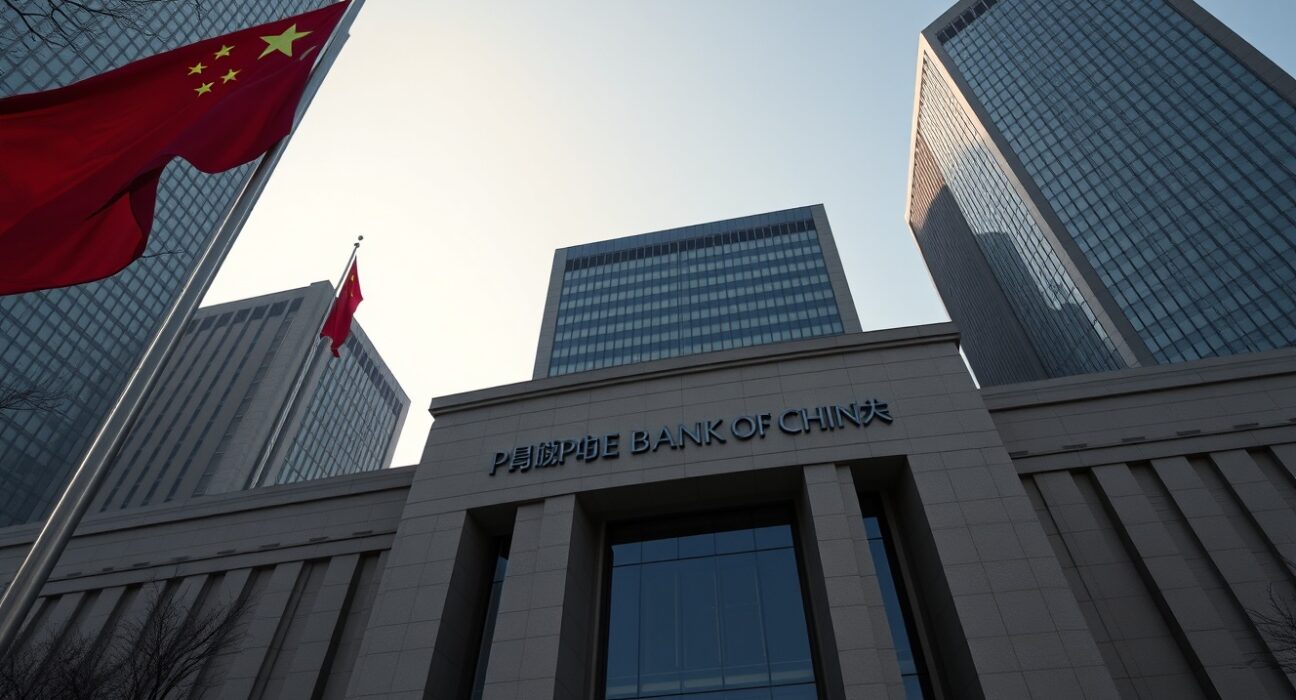
The People’s Bank of China (PBOC) set the USD/CNY central parity rate at 6.7895 on [Date], slightly weaker than the previous fix of 6.7889, a marginal adjustment that signals the central bank’s continued commitment to exchange-rate stability amid global currency fluctuations.
What Does the Slight Change Indicate?
The 0.0006 difference between the two fixes is minimal, reflecting the PBOC’s intention to keep the yuan’s trading band stable. The central parity rate is the daily reference point around which the yuan is allowed to trade within a 2% band on the Shanghai Interbank Foreign Exchange Market.
Analysts view such small adjustments as a sign of policy continuity, especially when global markets face volatility from interest rate expectations and geopolitical tensions. The modest change suggests the PBOC is not seeking to send a strong signal but rather to manage the currency’s gradual movement in line with market forces.
Context and Implications for the Yuan
The PBOC sets the daily fixing based on a basket of currencies and market supply-demand factors. A stable reference rate helps anchor market expectations, reducing speculative trading and promoting orderly conditions in the foreign exchange market.
For businesses and investors, the narrow change means no immediate impact on trade pricing or cross-border capital flows. However, the cumulative trend of the fixing rate over weeks or months can influence export competitiveness and import costs, making it a key metric to monitor.
Why This Matters to Global Markets
China is the world’s largest exporter and a major importer of commodities, so the yuan’s value has ripple effects on global trade and commodity prices. A stable yuan also supports regional currencies and emerging market assets, as it reduces uncertainty in international transactions.
Moreover, the PBOC’s management of the fixing rate is closely watched by investors for clues about the central bank’s policy stance, especially in the context of ongoing trade tensions and divergent monetary policies among major economies.
Conclusion
The PBOC’s latest fixing, while nearly unchanged, underscores its steady approach to currency management. Market participants will continue to watch for any significant deviation in future fixes, which could indicate a shift in policy. For now, the stability in the USD/CNY reference rate provides a predictable environment for global trade and finance.
FAQs
Q1: What is the USD/CNY central parity rate?
The central parity rate is the daily reference price set by the PBOC for the yuan against the US dollar. It serves as the midpoint for currency trading within a 2% fluctuation band.
Q2: Why is the daily fixing important?
The fixing influences market expectations and provides guidance for the yuan’s daily trading range. It is a key tool for the PBOC to manage the currency’s value and maintain stability.
Q3: How does a change in the fixing rate affect businesses?
A significant change can affect the cost of imports and the competitiveness of exports. A stable fixing helps businesses plan their foreign exchange exposure with more certainty.
Disclaimer: The information provided is not trading advice, Bitcoinworld.co.in holds no liability for any investments made based on the information provided on this page. We strongly recommend independent research and/or consultation with a qualified professional before making any investment decisions.
