

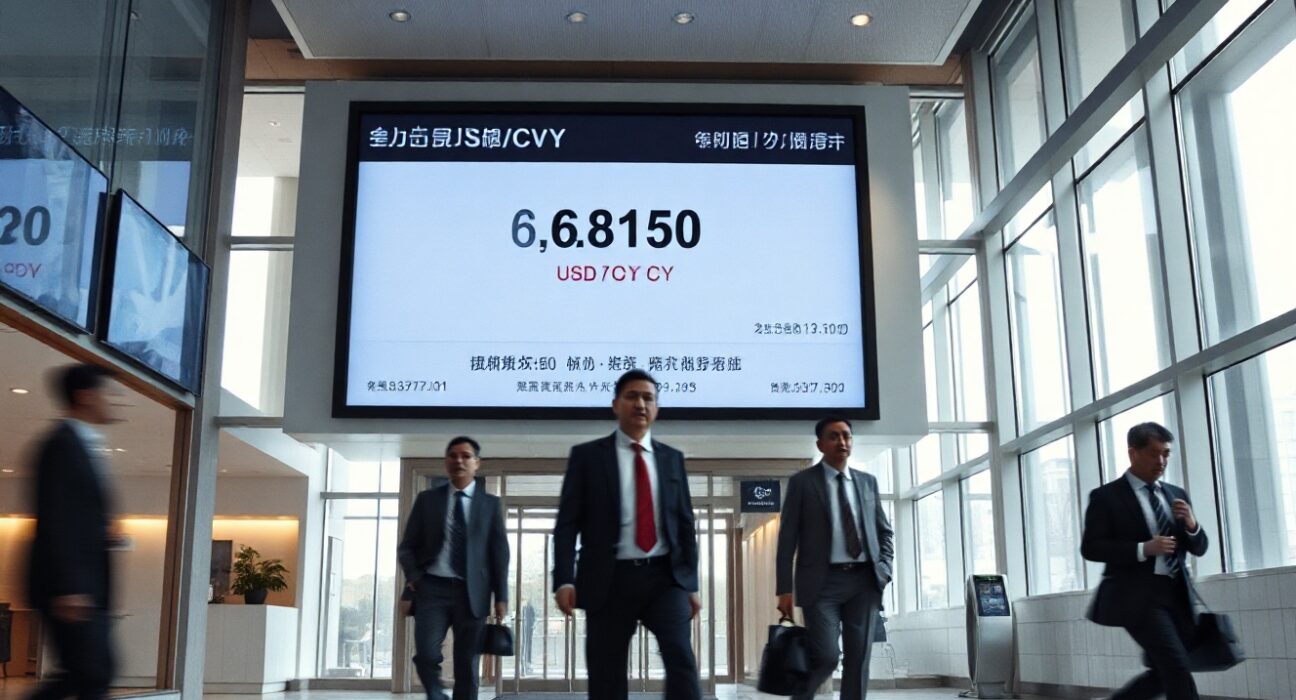
China’s central bank, the People’s Bank of China (PBOC), set the official reference rate for the yuan at 6.8150 per U.S. dollar on Tuesday. This represents a marginal weakening from the previous day’s fix of 6.8130, marking a slight adjustment in the currency’s trading band.
Understanding the PBOC’s Daily Fix
The daily reference rate, known as the ‘fix,’ is a key mechanism through which the PBOC guides the onshore yuan (CNY). The rate is calculated based on a weighted average of quotes submitted by a panel of market makers before the market opens. The PBOC allows the spot rate to trade within a band of 2% on either side of the fix, giving it a degree of flexibility while maintaining control.
Tuesday’s move to 6.8150, while small, signals the central bank’s current stance. A weaker fix can be interpreted as a signal to allow for a slight depreciation, potentially to support export competitiveness or to manage capital flows. Conversely, a stronger fix suggests a desire to curb depreciation pressures.
Market Context and Implications
The adjustment comes amid ongoing global economic uncertainties. The U.S. dollar has been under pressure recently due to shifting expectations around Federal Reserve interest rate policy, while the Chinese economy is navigating a post-pandemic recovery that has been uneven. The yuan has faced depreciation pressure over the past year, prompting the PBOC to use its fixing mechanism as a tool to manage expectations and prevent sharp, disorderly moves.
What This Means for Traders and Businesses
For currency traders, the daily fix is a critical data point. A consistent pattern of weaker fixes can signal a deliberate policy tilt. For businesses involved in import-export trade, even small changes in the yuan’s value can have significant implications for profit margins. A slightly weaker yuan makes Chinese exports cheaper on global markets, but it also increases the cost of imported goods and raw materials.
The PBOC has a range of other tools at its disposal, including reserve requirement ratios and direct intervention in the spot market, but the daily fix remains its most transparent and frequently used signal.
Conclusion
The PBOC’s decision to set the reference rate at 6.8150 is a minor but noteworthy adjustment. It reflects the central bank’s ongoing effort to maintain a stable and predictable currency environment while responding to both domestic economic conditions and external pressures. Market participants will continue to watch the daily fix for clues about the PBOC’s policy direction in the weeks ahead.
FAQs
Q1: What is the PBOC’s daily reference rate?
The daily reference rate, or ‘fix,’ is the midpoint rate set by the People’s Bank of China each trading day. It serves as the central guidance for the onshore yuan’s trading range.
Q2: How does the fix affect the yuan’s value?
The spot rate of the yuan is allowed to trade within a 2% band above or below the fix. A weaker fix allows the currency to depreciate more, while a stronger fix can support the currency.
Q3: Why does the PBOC change the fix?
The PBOC adjusts the fix to manage the yuan’s exchange rate in line with its policy goals, such as supporting exports, controlling inflation, or maintaining financial stability. It is a key tool for signaling policy intentions to the market.
Disclaimer: The information provided is not trading advice, Bitcoinworld.co.in holds no liability for any investments made based on the information provided on this page. We strongly recommend independent research and/or consultation with a qualified professional before making any investment decisions.
