

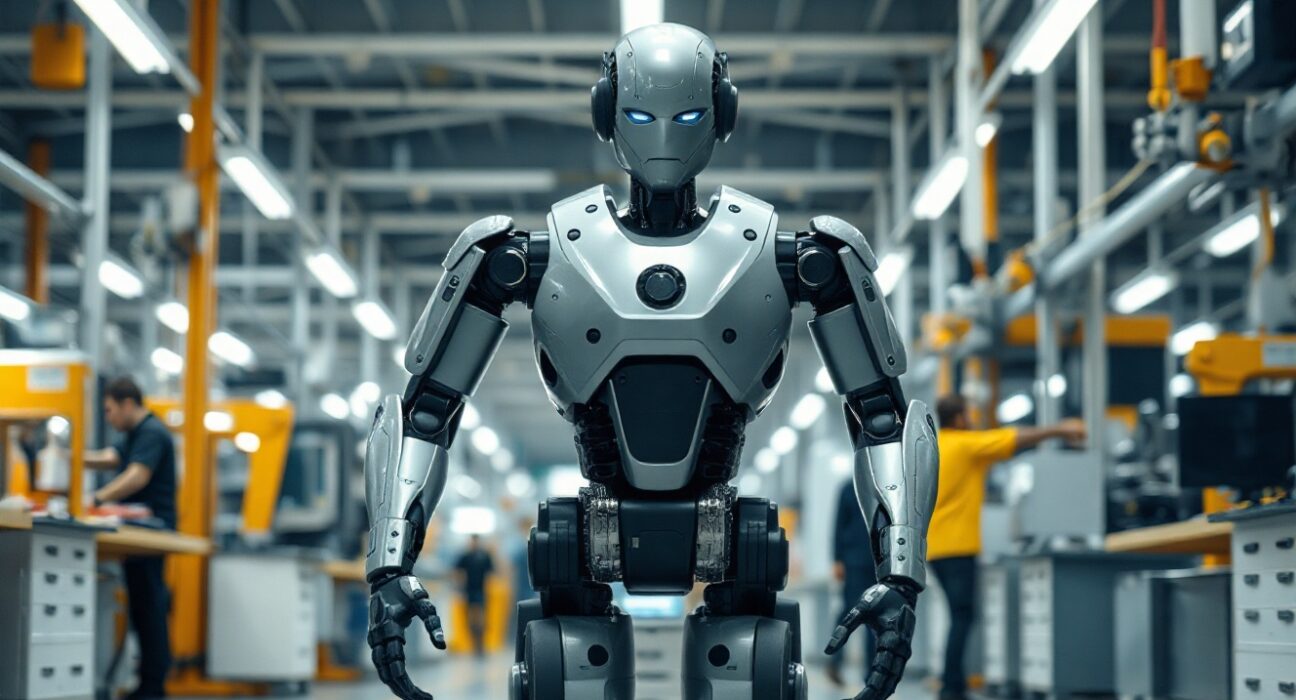
After years of polished demonstrations in controlled environments, physical artificial intelligence is finally stepping onto the factory floor. Robots equipped with advanced AI are now being tested in real-world manufacturing settings, where unpredictable conditions, safety concerns, and scalability challenges await.
From Lab to Production Line
Physical AI refers to systems that can perceive, reason, and act in the physical world. Unlike traditional industrial robots that follow pre-programmed paths, these machines use computer vision, natural language processing, and reinforcement learning to adapt to their surroundings. Major companies in automotive, electronics, and logistics are piloting these systems to automate tasks that were previously too complex or variable for conventional automation.
The Real-World Reality Check
Transitioning from a demo floor to a live production environment exposes critical gaps. Robots must handle inconsistent lighting, unexpected obstacles, and variations in part placement. They also need to operate safely alongside human workers, requiring robust collision detection and fail-safe mechanisms. Early adopters report that while Physical AI reduces waste and improves throughput in specific tasks, it still struggles with edge cases and requires significant retraining when processes change.
Why This Matters for Industry
The shift is significant because it moves robotics from a tool of repetition to one of adaptation. If Physical AI can reliably handle real-world variability, it could unlock automation in sectors like warehousing, agriculture, and healthcare. However, the current pace of deployment suggests that full-scale adoption is still years away, with most implementations remaining in pilot phases.
Conclusion
Physical AI is making a genuine move from the demo floor to the factory floor, but the path is not seamless. Real-world deployment reveals both the promise and the limitations of these systems. For now, the technology is best suited for targeted applications where flexibility offers a clear advantage over traditional automation.
FAQs
Q1: What is Physical AI?
Physical AI refers to artificial intelligence systems that can perceive, reason, and act in the physical world, often embodied in robots or autonomous machines.
Q2: How is Physical AI different from traditional industrial robots?
Traditional robots follow fixed programs, while Physical AI adapts to changing environments using sensors and machine learning, making it more flexible but also more complex to deploy.
Q3: What are the main challenges for Physical AI in factories?
Key challenges include handling unpredictable conditions, ensuring safety around human workers, managing edge cases, and scaling the technology beyond pilot projects.
Disclaimer: The information provided is not trading advice, Bitcoinworld.co.in holds no liability for any investments made based on the information provided on this page. We strongly recommend independent research and/or consultation with a qualified professional before making any investment decisions.
