

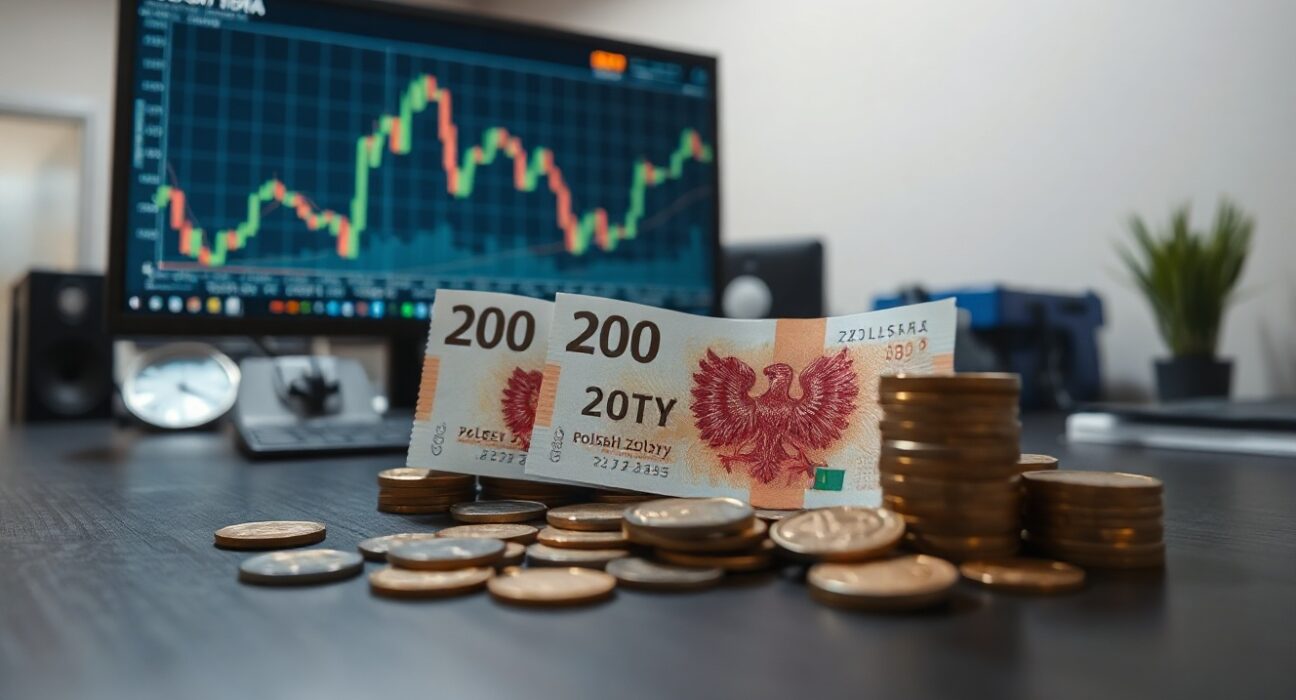
The Polish Zloty (PLN) remained stable against major currencies this week, as the National Bank of Poland (NBP) maintained its benchmark interest rate at 5.75% during its March meeting. Analysts at ING Bank Slaski noted that the central bank’s cautious stance continues to support the currency, even as markets speculate on the timing of potential rate cuts later in 2026.
NBP Holds Firm Amid Inflation Concerns
The NBP’s decision to keep rates unchanged was widely expected by economists, given that inflation in Poland remains above the central bank’s target range. ING’s research team highlighted that Governor Adam Glapiński’s recent comments emphasize patience, with the bank prioritizing inflation control over economic stimulus. This approach has helped the Zloty trade in a narrow range against the euro and the US dollar, avoiding the volatility seen in some other emerging market currencies.
Poland’s inflation rate, which stood at 4.2% in February, is projected to gradually decline toward the NBP’s 2.5% target by late 2026. However, risks from rising energy prices and robust domestic demand could delay the easing cycle. ING analysts believe the first rate cut is unlikely before the third quarter of 2026, barring a sharp economic downturn.
Market Reaction and Outlook
The Zloty’s resilience reflects broader investor confidence in Poland’s economic fundamentals. The country’s GDP growth, driven by strong consumption and EU fund inflows, remains above the eurozone average. ING’s report noted that the currency pair EUR/PLN is likely to stay near the 4.30 level in the near term, with a slight bias toward appreciation if global risk sentiment improves.
For businesses and investors exposed to Polish assets, the stable Zloty reduces hedging costs and provides a predictable environment for trade. The NBP’s patience also signals that any monetary easing will be data-dependent, which markets generally view as credible and supportive of long-term stability.
Implications for Importers and Exporters
Polish importers benefit from a steady Zloty, as it keeps input costs predictable. Exporters, however, may find the currency’s strength a headwind if it persists, potentially affecting competitiveness in price-sensitive markets. The NBP’s cautious stance suggests it is willing to tolerate a moderately strong Zloty as part of its inflation-fighting strategy.
Conclusion
The Polish Zloty’s steady performance reflects the NBP’s disciplined monetary policy and Poland’s solid economic backdrop. ING’s analysis reinforces the view that patience remains the central bank’s guiding principle, with rate cuts likely deferred until inflation is firmly under control. For now, the Zloty offers a stable anchor in a region facing varied economic pressures.
FAQs
Q1: Why is the Polish Zloty remaining steady?
The NBP has kept its key interest rate unchanged at 5.75%, signaling a patient approach to monetary policy. This stability, combined with Poland’s solid economic growth, supports the Zloty against major currencies.
Q2: When will the NBP start cutting interest rates?
ING analysts expect the first rate cut in the third quarter of 2026, provided inflation continues to decline toward the 2.5% target. Risks from energy prices and domestic demand could delay this timeline.
Q3: How does the Zloty’s stability affect Polish businesses?
A stable Zloty reduces exchange rate risk for importers, making costs more predictable. Exporters may face mild headwinds if the currency remains strong, but the overall environment supports trade and investment planning.
Disclaimer: The information provided is not trading advice, Bitcoinworld.co.in holds no liability for any investments made based on the information provided on this page. We strongly recommend independent research and/or consultation with a qualified professional before making any investment decisions.
