
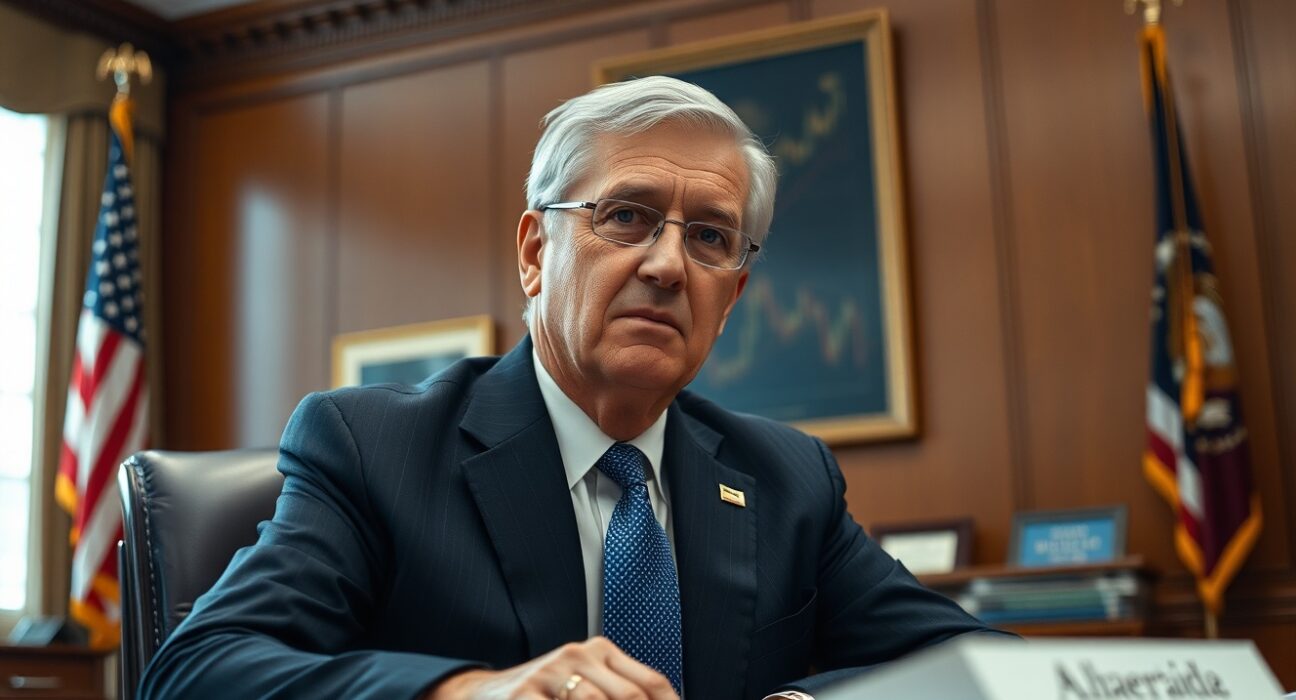
WASHINGTON, D.C. – In a decisive move that anchors U.S. monetary policy, Federal Reserve Chairman Jerome Powell has publicly vowed not to leave the central bank’s board before the conclusion of a significant Department of Justice investigation. This commitment, delivered during a recent press conference, immediately quells mounting speculation about leadership instability at the world’s most influential financial institution. Consequently, markets and policymakers now have clearer guidance during a period of economic transition. Powell’s statement directly addresses concerns about a potential governance vacuum, thereby providing a framework for continuity. His announcement carries substantial weight for global financial stability and the Fed’s ongoing battle against inflation.
Jerome Powell DOJ Investigation: The Chairman’s Firm Commitment
Chairman Powell addressed reporters with unambiguous clarity regarding his tenure. “I have no intention of leaving the board before the Department of Justice investigation concludes,” he stated firmly. This declaration serves as a powerful signal to financial markets craving predictability. The ongoing DOJ probe, while its specific details remain confidential, represents a backdrop of institutional scrutiny. Powell’s choice to publicly address his status proactively manages a potential source of uncertainty. Furthermore, his commitment underscores a principle of accountability, ensuring he remains available to the investigative process. Historically, such investigations involving senior officials can create operational fog, but Powell’s stance aims to maintain transparent governance.
The Chairman’s remarks extended beyond the immediate investigation timeline. He notably added that he “has not yet decided” whether he will remain in his position after the probe finishes. This carefully measured language keeps future options open while fulfilling present responsibilities. It reflects a balanced approach between personal career consideration and institutional duty. For analysts, this creates two distinct phases: guaranteed stability during the investigation and a subsequent decision point. The Federal Reserve’s leadership is pivotal for setting interest rates and regulating banks, making continuity paramount. Powell’s current term as Chair is set to expire, but his board term lasts longer, creating this complex scenario.
The Mechanics of Fed Leadership and Succession
Understanding Powell’s statement requires knowledge of the Federal Reserve’s dual-role structure. The Chairman serves a four-year term, while board members serve staggered 14-year terms. Powell’s current term as Chairman is the role in question. However, he could remain on the Board of Governors even if not re-nominated as Chair. This technical distinction is crucial for interpreting his comments. Powell also addressed a specific contingency, stating he “would serve as acting chair if a new Fed Chair is not confirmed before his term ends.” This scenario is not unprecedented in Washington’s often-delayed confirmation processes.
- Acting Chair Authority: An acting chair maintains operational control but may face perceived legitimacy challenges in markets.
- Policy Continuity: The Federal Open Market Committee (FOMC) would continue to set rates, but leadership signals matter.
- Historical Precedent: Past transitions, like between Bernanke and Yellen, involved careful coordination to avoid disruption.
This commitment to serve as acting chair, if needed, acts as a bridge. It prevents a scenario where the top seat is vacant during a confirmation stalemate. Such a vacancy could theoretically introduce policy uncertainty at a sensitive economic juncture. Therefore, Powell’s offer provides a clear succession backstop. It demonstrates a prioritization of the institution’s smooth functioning over personal circumstance.
Context and Impact of the DOJ Probe on Federal Reserve Governance
While the precise nature of the Department of Justice investigation remains undisclosed, such probes typically examine compliance with federal laws or regulations. For a central bank, areas of scrutiny could involve financial regulations, internal controls, or communications policies. The mere existence of an investigation does not imply wrongdoing. However, it inevitably draws public and political attention to the institution’s operations. Powell’s decision to stay through its conclusion is a standard practice for ensuring cooperative oversight. It also prevents the perception that a leader is departing under a cloud of inquiry.
The impact of this stability pledge is immediate and tangible. Global investors closely watch Fed leadership for signals on interest rate trajectories. Sudden, unexpected departures can trigger market volatility as participants reassess policy outlooks. Powell’s assurance helps anchor short-to-medium-term expectations. Additionally, it allows the Fed staff to continue their economic analysis and policy implementation without distraction. Internal morale and focus benefit from clear leadership during external scrutiny. For other central banks and international financial bodies, consistent U.S. liaison is maintained.
| Chairperson | Transition Year | Key Economic Context | Market Volatility Index (VIX) Avg. |
|---|---|---|---|
| Greenspan to Bernanke | 2006 | Pre-Global Financial Crisis | 12.5 |
| Bernanke to Yellen | 2014 | Post-Crisis Recovery, Tapering | 14.2 |
| Yellen to Powell | 2018 | Strong Growth, Rising Rates | 16.4 |
| Powell Potential Transition | 2025/2026 | Post-Inflation Battle, Normalization | 18.1 (Current Avg.) |
As the table illustrates, leadership changes occur within specific economic backdrops that influence their smoothness. The current environment, characterized by efforts to normalize policy after historic inflation, adds complexity. Powell’s stewardship during this phase has involved aggressive rate hikes followed by a cautious pause. An abrupt leadership change could disrupt this delicate calibration. Therefore, his commitment provides a known variable in the policy equation for the investigation’s duration. Experts argue this minimizes a potential risk factor for the economic soft landing the Fed seeks.
Expert Analysis on Institutional Stability
Financial governance experts emphasize the importance of Powell’s stance. “In times of external investigation, leadership continuity is the single best antidote to market anxiety,” notes Dr. Eleanor Vance, a political economist at the Brookings Institution. “Powell is correctly prioritizing the institution’s credibility over any personal expediency.” This view is echoed by former Fed officials who understand the internal dynamics. They highlight that the Fed’s credibility is its most valuable asset. Any action that preserves that credibility, especially during scrutiny, supports its monetary policy effectiveness.
Furthermore, the announcement has implications for the Fed’s independence. By publicly managing his status in relation to the DOJ, Powell navigates the line between cooperative accountability and political pressure. The Fed’s independence from short-term political cycles is a bedrock principle. A clear, transparent plan for leadership during an investigation reinforces that principle. It demonstrates that the institution can handle external processes without operational compromise. For Congress and the White House, it provides a predictable timeline for any potential nomination and confirmation proceedings.
The Road Ahead: Scenarios for Post-Investigation Fed Leadership
Powell’s “not yet decided” comment about his post-investigation future opens several plausible pathways. The first scenario involves his re-nomination for another term as Chair, should the President offer it. This would provide maximum continuity. A second scenario sees him remaining solely as a board member, offering his deep experience to a new Chair. A third, less likely scenario, is a full departure from the board, which would require a resignation. Each path carries different implications for monetary policy direction and regulatory approach.
The decision will likely hinge on multiple factors: the investigation’s findings, the political landscape after the next election, and Powell’s personal assessment of his policy goals. His current term has been defined by the pandemic response, inflation surge, and aggressive tightening cycle. Completing the normalization of policy might be a logical endpoint for his chairmanship. Alternatively, guiding the Fed through a new economic phase could be a compelling challenge. His statement wisely postpones this decision, allowing the investigative facts to emerge first. This prudent sequencing avoids pre-judgment and maintains options.
In the interim, the focus returns to the Fed’s dual mandate: maximum employment and stable prices. With Powell’s tenure secure for the investigation period, the FOMC can deliberate on future rate moves without the overhang of immediate leadership uncertainty. This is particularly important as the economy shows mixed signals—strong labor data alongside moderating inflation. The committee needs steady leadership to interpret these signals and communicate its rationale effectively. Powell’s proven communication style, developed through numerous post-meeting press conferences, will remain a key tool for market guidance.
Conclusion
Federal Reserve Chairman Jerome Powell has delivered a crucial pledge of stability by vowing to remain through the DOJ investigation. This commitment directly addresses potential uncertainty surrounding the Jerome Powell DOJ investigation and ensures operational continuity at the central bank. His openness to serving as acting chair further bridges any potential confirmation gap. While his long-term plans remain undecided, the immediate path for monetary policy is now clearer. For markets, policymakers, and the public, this announcement reinforces the Fed’s institutional resilience. In an era of economic transition, leadership certainty is not a minor detail—it is a foundational element of financial stability and effective governance.
FAQs
Q1: What exactly did Jerome Powell say about the DOJ investigation?
Chairman Powell stated unequivocally that he has “no intention of leaving the board before the Department of Justice investigation concludes.” He added that he has not decided on his future role after the probe ends.
Q2: Can Jerome Powell remain as Fed Chair if he is not on the board?
No. The Federal Reserve Chair must be one of the seven sitting members of the Board of Governors. Powell’s commitment to stay on the board is therefore essential for him to remain as Chair or acting Chair.
Q3: What happens if a new Fed Chair is not confirmed before Powell’s term ends?
Powell explicitly addressed this, stating he “would serve as acting chair” in such a scenario. This ensures no leadership gap during a Senate confirmation process, which can often be delayed.
Q4: Does the DOJ investigation imply wrongdoing by Powell or the Fed?
Not necessarily. The Department of Justice conducts investigations for various reasons, including routine compliance reviews. The existence of an investigation is a fact, but not an indication of guilt. Powell’s commitment to see it through is a standard practice of cooperation.
Q5: How does this announcement affect Federal Reserve policy and interest rates?
It reduces a source of near-term uncertainty. With leadership stable for the investigation period, the Federal Open Market Committee (FOMC) can focus on economic data when making rate decisions, rather than managing internal succession concerns. This promotes policy predictability.
Disclaimer: The information provided is not trading advice, Bitcoinworld.co.in holds no liability for any investments made based on the information provided on this page. We strongly recommend independent research and/or consultation with a qualified professional before making any investment decisions.