
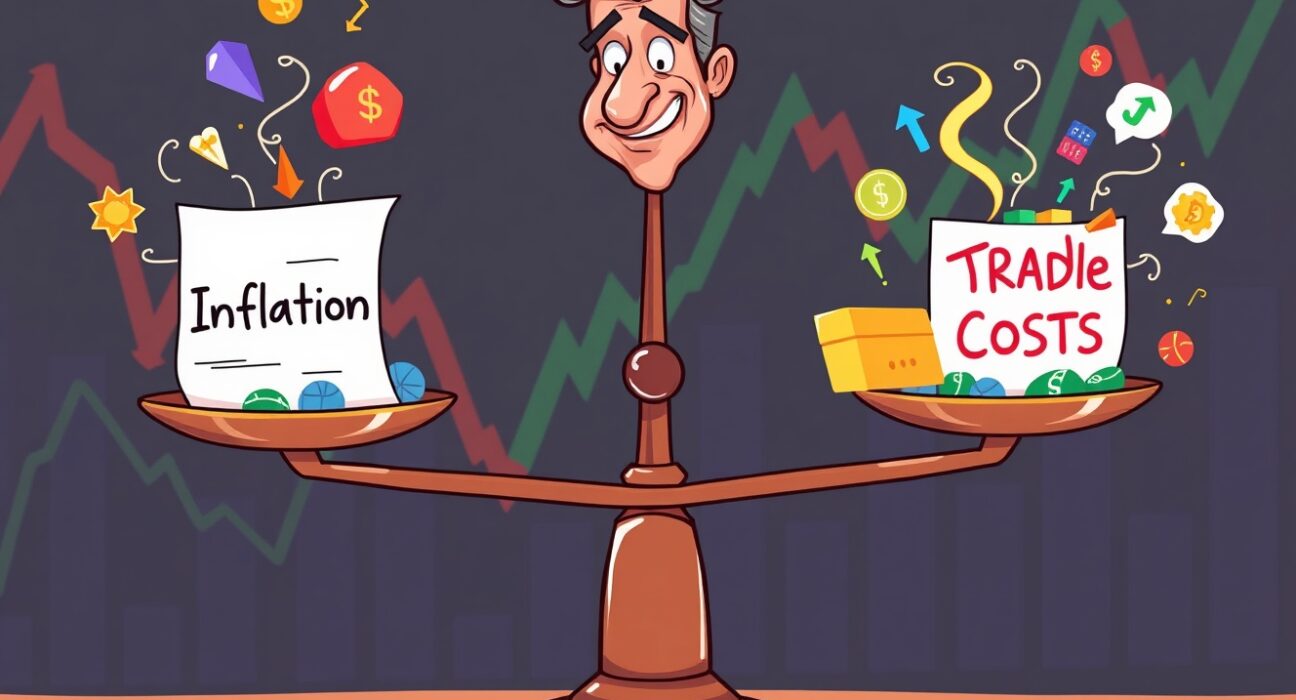
In a significant statement that connects trade policy directly to monetary goals, Federal Reserve Chair Jerome Powell has revealed that eliminating tariffs could be a key to achieving the 2% inflation target. For cryptocurrency investors and economic observers, this connection between trade barriers and price stability offers crucial insights into future Fed actions and broader market conditions.
How Could Tariff Elimination Help Reach the 2% Inflation Target?
Jerome Powell’s recent comments highlight a straightforward economic relationship. Tariffs act as taxes on imported goods, increasing costs for both businesses and consumers. When these additional costs are removed, downward pressure on prices naturally follows. This mechanism provides the Federal Reserve with an alternative tool beyond interest rate adjustments to pursue its mandated 2% inflation target.
Consider how this works in practice. Lower import costs translate to cheaper raw materials for manufacturers and more affordable products for consumers. This effect ripples through the entire economy, potentially easing the persistent inflationary pressures that have challenged central bankers in recent years. However, the path to tariff elimination involves complex political considerations alongside economic ones.
What Challenges Does This Inflation Strategy Face?
While the economic logic appears sound, implementing tariff reductions presents several hurdles. First, trade policy involves multiple government agencies beyond the Federal Reserve’s direct control. Second, geopolitical considerations often outweigh pure economic calculations in tariff decisions. Third, domestic industries protected by existing tariffs would likely resist changes that increase competition.
Despite these challenges, Powell’s statement signals an important recognition: achieving the 2% inflation target may require coordinated policy across different government domains. This holistic approach marks a subtle but significant shift in how central bankers view their inflation-fighting toolkit.
Why Should Crypto Investors Care About This Development?
The relationship between inflation policy and cryptocurrency markets is becoming increasingly important. Here’s why Powell’s tariff comments matter for digital asset investors:
- Monetary Policy Context: Alternative inflation tools could mean less aggressive interest rate hikes, affecting the risk environment for all assets
- Market Sentiment: Successful inflation management generally supports economic stability, which benefits long-term investment horizons
- Dollar Dynamics: Trade policy changes influence currency valuations, creating ripple effects across crypto markets
- Regulatory Climate: Cross-agency policy coordination on inflation could extend to digital asset regulation approaches
Understanding these connections helps crypto investors anticipate broader economic shifts that might impact their portfolios. The Fed’s pursuit of its 2% inflation target through multiple channels demonstrates the complexity of modern economic management.
What Are the Practical Implications of This Approach?
Powell’s suggestion carries several actionable implications for both policymakers and market participants. For the Federal Reserve, it represents acknowledgment that traditional monetary tools alone may be insufficient to reliably hit the 2% inflation target. For investors, it highlights the importance of monitoring trade policy developments alongside interest rate decisions.
This integrated perspective also suggests that future inflation battles will be fought on multiple fronts. While interest rates remain the primary weapon, trade policy, supply chain improvements, and productivity enhancements are becoming important supporting elements in the central bank’s strategy.
Conclusion: A Multifaceted Approach to Price Stability
Jerome Powell’s connection between tariff policy and inflation targeting reveals the evolving nature of central banking. Achieving the 2% inflation target in today’s interconnected global economy requires looking beyond traditional monetary tools. While tariff elimination presents political challenges, its potential economic benefits for price stability cannot be ignored.
For cryptocurrency market participants, this development underscores the importance of understanding broad economic policy intersections. The Fed’s willingness to consider unconventional approaches to its 2% inflation target suggests continued innovation in economic management approaches that will inevitably affect all financial markets, including digital assets.
Frequently Asked Questions
What exactly did Jerome Powell say about tariffs and inflation?
Federal Reserve Chair Jerome Powell stated that eliminating tariffs could help achieve the central bank’s 2% inflation target by reducing costs on imported goods and materials that contribute to overall price levels.
Why is the 2% inflation target so important to the Federal Reserve?
The 2% inflation target represents the Fed’s definition of price stability – enough inflation to encourage spending and investment but not so much that it erodes purchasing power or creates economic uncertainty.
Can the Federal Reserve directly eliminate tariffs?
No, the Federal Reserve cannot directly eliminate tariffs. Trade policy is set by Congress and the executive branch. Powell’s comments represent a suggestion rather than an action the Fed can take independently.
How would lower tariffs specifically help reduce inflation?
Lower tariffs reduce the cost of imported goods, components, and raw materials. These savings are typically passed through supply chains, resulting in lower consumer prices for many products, thereby reducing overall inflation measures.
What are the main arguments against eliminating tariffs?
Opponents argue that tariffs protect domestic industries and jobs from foreign competition, address unfair trade practices, and can be used as diplomatic leverage in international relations.
How might this affect cryptocurrency markets?
If tariff reductions help control inflation without aggressive interest rate hikes, it could create a more favorable environment for risk assets including cryptocurrencies, while also influencing dollar strength and global capital flows.
Found this analysis of Powell’s inflation strategy insightful? Share this article with fellow investors and economic observers on your social media channels to continue the conversation about how trade policy and monetary strategy intersect in today’s complex economy.
To learn more about how economic policy developments impact cryptocurrency markets, explore our article on key developments shaping Bitcoin and Ethereum price action amid changing monetary conditions.
Disclaimer: The information provided is not trading advice, Bitcoinworld.co.in holds no liability for any investments made based on the information provided on this page. We strongly recommend independent research and/or consultation with a qualified professional before making any investment decisions.