

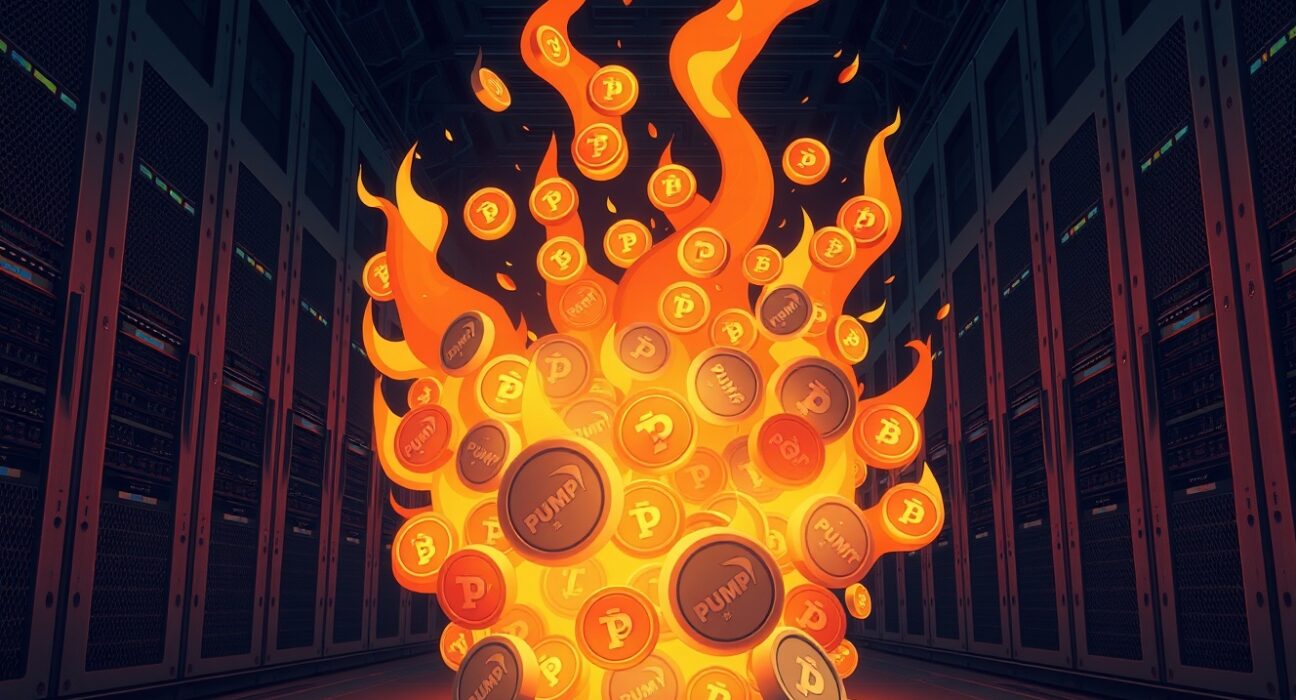
In a dramatic move that has sent ripples through the Solana ecosystem, Pump.fun has officially burned a staggering 128.2 billion PUMP tokens, valued at approximately $233 million. This massive token burn, confirmed by on-chain analytics firm Lookonchain, represents one of the largest single-token destruction events in recent cryptocurrency history.
What Does the Pump.fun Token Burn Mean?
A token burn permanently removes coins from circulation. The Pump.fun burn directly reduces the total supply of PUMP. This action often aims to create scarcity. Scarcity can theoretically increase the value of remaining tokens. The platform executed this burn in a single transaction. This event signals a strong commitment to tokenomics management.
The sheer scale of the $233 million burn is unprecedented for a memecoin platform. It dwarfs many previous burn events on Solana. The move has immediately captured the attention of traders and analysts. Many now watch for the resulting market impact.
Analyzing the $233 Million Token Destruction
Lookonchain data confirms the exact figures. The platform destroyed 128,200,000,000 PUMP tokens. At the time of the burn, this equaled $233 million. The transaction is publicly verifiable on the Solana blockchain. This transparency builds trust among users.
The burn represents a significant portion of the total PUMP token supply. Reducing the circulating supply can create deflationary pressure. This pressure may support the token’s price floor. However, market reactions depend on broader sentiment. The Pump.fun team has not yet detailed future tokenomics plans.
Why Did Pump.fun Execute This Burn?
Several strategic reasons likely motivated this decision. First, it demonstrates a commitment to token value. Second, it removes a large overhang of potential sell pressure. Third, it aligns with community expectations for deflationary mechanisms. Fourth, it generates significant media and market attention. Finally, it strengthens the project’s credibility within the Solana ecosystem.
The move also serves as a marketing event. It positions Pump.fun as a serious player in token management. This contrasts with many memecoin projects that ignore supply dynamics. The burn could attract new investors seeking projects with active token management.
Impact on the Solana Ecosystem and Memecoin Market
The Pump.fun burn has immediate implications for Solana. It showcases the network’s capability for large-scale token operations. Solana’s low transaction costs made this massive burn feasible. On Ethereum, such a transaction would cost significantly more.
Other memecoin projects may now face pressure to adopt similar strategies. The burn sets a new standard for token management. It could trigger a wave of supply reduction events across the ecosystem. This trend would benefit the entire Solana DeFi landscape.
The PUMP token price reacted positively to the news. Early data shows increased buying pressure. Volume on decentralized exchanges spiked following the announcement. Traders are now speculating on the next price target.
Historical Context of Major Token Burns
Token burns are not new to crypto. Binance regularly burns BNB tokens. Shiba Inu conducts periodic burns. However, the Pump.fun burn is notable for its size relative to the project’s market cap. It represents a higher percentage of total supply than most major burns.
The following table compares this burn to other notable events:
| Project | Amount Burned | Value at Time | Percentage of Supply |
|---|---|---|---|
| Pump.fun (PUMP) | 128.2 billion | $233 million | ~12% |
| Binance (BNB) | 1.6 million | $400 million | ~1% |
| Shiba Inu (SHIB) | 5 trillion | $100 million | ~0.01% |
The data shows the Pump.fun burn is proportionally larger than many established projects. This aggressive approach signals strong conviction from the team.
Expert Perspectives on the PUMP Token Burn
Market analysts have weighed in on the event. One analyst noted that the burn removes a significant supply overhang. This reduction could support a price rally. Another expert highlighted the psychological impact on holders. Seeing tokens destroyed creates a sense of value preservation.
However, some caution that burns alone do not guarantee price appreciation. Utility and demand remain crucial factors. The Pump.fun platform must continue to attract users. Its success depends on more than just supply reduction.
The broader market context also matters. Solana’s overall health influences PUMP token performance. Positive developments on the network could amplify the burn’s effects. Negative news could offset any gains.
Technical Analysis of the Burn Transaction
The burn transaction itself is a model of efficiency. It was executed in a single block. The transaction fee was minimal, thanks to Solana’s low costs. The destination address is a known burn wallet. This wallet has no private key. Tokens sent there are permanently locked.
Verification is straightforward. Anyone can check the Solana explorer. The transaction hash is publicly available. This transparency is a key feature of blockchain technology. It allows for independent confirmation of the event.
What Comes Next for Pump.fun and PUMP Token?
The Pump.fun team has not announced further burn plans. However, the community expects more deflationary measures. The project may implement a buyback-and-burn mechanism. This would use platform fees to purchase and destroy tokens.
Future utility for PUMP could also emerge. The token might gain staking features. It could become a governance token. It might grant access to exclusive platform features. These developments would increase demand.
The burn has reset market expectations. Traders now view PUMP more seriously. The project has differentiated itself from typical memecoins. This could attract long-term investors.
Conclusion
The Pump.fun token burn of 128.2 billion PUMP tokens, worth $233 million, marks a pivotal moment for the project. This massive supply reduction demonstrates a commitment to tokenomics and value creation. The event has captured market attention and set a new standard for memecoin projects on Solana. While the long-term impact depends on continued platform development and user adoption, the burn has undeniably strengthened Pump.fun’s position in the crypto landscape. Investors and enthusiasts will now watch closely for the next steps from the team.
FAQs
Q1: What is a token burn and why did Pump.fun do it?
A token burn permanently removes coins from circulation. Pump.fun executed this burn to reduce the total supply of PUMP tokens, creating scarcity that can potentially increase the value of remaining tokens and signal confidence in the project.
Q2: How much was the Pump.fun token burn worth?
The burn destroyed 128.2 billion PUMP tokens, valued at approximately $233 million at the time of the transaction, according to on-chain data from Lookonchain.
Q3: Is the Pump.fun token burn verifiable?
Yes. The transaction is recorded on the Solana blockchain and is publicly verifiable through any Solana block explorer. The tokens were sent to a known burn wallet with no private key.
Q4: Will Pump.fun conduct more token burns in the future?
The Pump.fun team has not announced specific plans for future burns. However, the community anticipates potential buyback-and-burn mechanisms or other deflationary measures using platform fees.
Q5: How does the Pump.fun burn compare to other major crypto burns?
The Pump.fun burn is proportionally larger than many established projects. It removed approximately 12% of the total supply, compared to around 1% for Binance’s BNB burns or 0.01% for Shiba Inu burns.
Q6: What impact does the burn have on the PUMP token price?
Early market data shows increased buying pressure and volume following the burn announcement. While burns can support price through reduced supply, long-term price appreciation also depends on platform utility and overall market conditions.
Disclaimer: The information provided is not trading advice, Bitcoinworld.co.in holds no liability for any investments made based on the information provided on this page. We strongly recommend independent research and/or consultation with a qualified professional before making any investment decisions.
